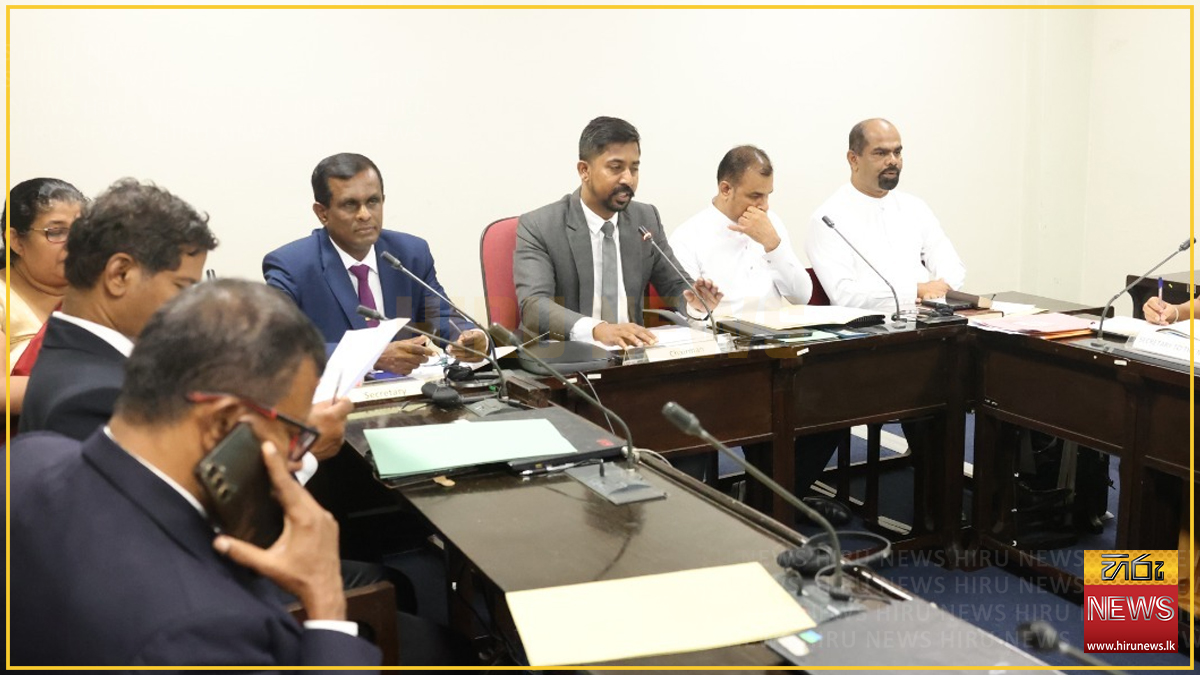
A parliamentary oversight committee has backed a set of rapid measures to cut prison overcrowding, centred on speeding up Government Analyst reports, diverting minor drug offenders to rehabilitation, and running court proceedings over video link, Hiru News reported on Monday, citing the Parliamentary Communications Department.
The meeting was held in Parliament under the chairmanship of MP Dr. Najith Indika.
The finding underneath the measures
The committee’s starting point was a diagnosis rather than a proposal. Officials told MPs that it is the number of suspects held on remand — not the number of convicted prisoners — that is driving congestion.
That reframes the problem. A prison system overcrowded with convicts is a sentencing-policy question. One overcrowded with people awaiting trial is a procedural-delay question, and the committee’s measures follow from that reading.
The 18-month bottleneck
The specific delay identified is forensic. Officials said suspects arrested on drug charges are left remanded for 18 months to two years without bail while waiting for Government Analyst reports.
That figure puts a number on a bottleneck this desk has tracked before. The Government Analyst’s Department said in August that drug cases account for 70% of all its reports, and that remand cases were being prioritised to speed proceedings up. The committee’s evidence suggests the prioritisation has not yet cleared the queue.
What was proposed
Beyond the three headline measures, the committee gave “special attention” to:
- diverting prisoners serving sentences under four years, and minor offenders unable to pay fines, to community service or work camps
- connecting detainees to courts by video technology instead of physical transport
- a special court mechanism to expedite cases involving mothers with children under five
- legal amendments to send people arrested with small quantities of drugs to rehabilitation centres rather than straight to prison
- construction of the new Milleniya/Horana prison complex
Several of these are already moving elsewhere in government. Cabinet cleared a community corrections bill for Parliament on 1 September while house-arrest legislation was being drafted, and the same committee turned to the police for proposals on overcrowding in August. Monday’s meeting is the continuation of that inquiry, not a new one.
A note on the committee’s name
Hiru names the body the “Sectoral Oversight Committee on Public Administration, Justice and Civil Security.” Parliament’s own committee register, and this desk’s earlier coverage of the same committee under the same chairman, give its title as the Sectoral Oversight Committee on Governance, Justice and Civil Protection. It is the same committee.
Not reported
Hiru gives no current prison population figure, no designed capacity, and no estimate of how many prisoners any of the measures would release. It does not say how many suspects are on remand, what share are drug cases, or how long the Government Analyst backlog actually is. Nothing is said about cost, timetable, or which measures need legislation as against administrative action — and no date, budget or capacity is given for the Milleniya/Horana complex.
Ada Derana carried the same committee statement on Monday but its site remains inaccessible to this desk, so it could not be verified and is not cited.