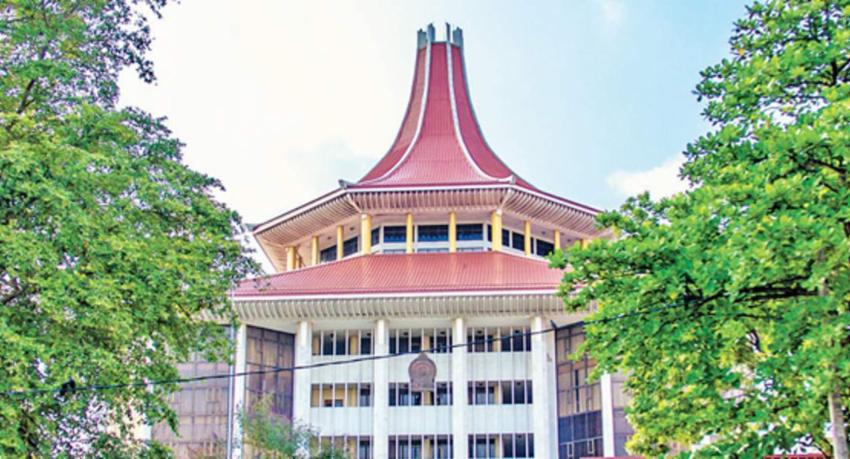
Speaker Jagath Wickramaratne told Parliament on Tuesday morning that the Supreme Court has determined the 22nd Amendment to the Constitution Bill does not require approval at a referendum, NewsFirst reported. Neither the Bill nor any part of it falls under Article 83, the court held.
Both the 22nd Amendment Bill and the Judicature (Amendment) Bill had been challenged under Article 121(1). The Judicature Bill was found not inconsistent with the Constitution and may be passed by a simple majority.
The court did not leave the Bill untouched
It recommended two changes to Clause 2.
The first is a single word. The phrase “upon attaining the age of 67 years” must be replaced with “upon completing the age of 67 years.” Attaining an age happens on a birthday; completing it happens a year later. On the court’s wording, an affected judge serves an additional year.
The second is a carve-out. A second proviso must be added, stating that the six-year term limit set out in the first proviso will not apply to any person holding the office of Chief Justice as at the date the Act comes into operation.
That exempts the incumbent from the term cap the amendment creates for the office. The limit will bind the Chief Justice’s successors, not the Chief Justice in post when the law commences.
What the Bill does
The 22nd Amendment raises the retirement age of Supreme Court judges from 65 to 67 and Court of Appeal judges from 63 to 65, fixes a retirement date for the Chief Justice, and increases the number of Court of Appeal judges.
It drew 67 petitions — the most ever filed against a constitutional amendment in Sri Lanka. The coincidence of numbers is a trap for anyone reading quickly: the petition count and the new retirement age are both 67, and they are unrelated.
The Bill was presented to Parliament on 18 August. A five-judge bench closed two days of argument at the start of September.
The sequence held
The determination reached the Speaker on Monday, as his office confirmed, and was read to the House on Tuesday — matching the calendar reported on 19 September down to the day.
The second reading debate is set for Thursday 24 and Friday 25 September. The government must first incorporate the court’s two amendments before the Bill is taken up.
A separate Bill was dropped from this week’s business
Hiru News reports that the government has decided not to proceed with the second reading debate of the Institute of Chartered Media Professionals Bill, which had been scheduled for Wednesday from 11.30 a.m. to 5 p.m.
The Parliamentary Business Committee, chaired by Deputy Speaker Rizvie Salih, postponed it indefinitely after objections from several media organisations. The Export Agriculture Promotion Bill takes the slot instead.
Not reported
Neither outlet gives the composition of the bench that issued the determination, says whether it was unanimous, or reports how the court disposed of the 67 petitions individually. Neither states whether a two-thirds majority is still required — clearing Article 83 removes the referendum, but not necessarily the special majority. Neither names the current Chief Justice or says how long they have served, which is what determines what the carve-out is worth in practice.