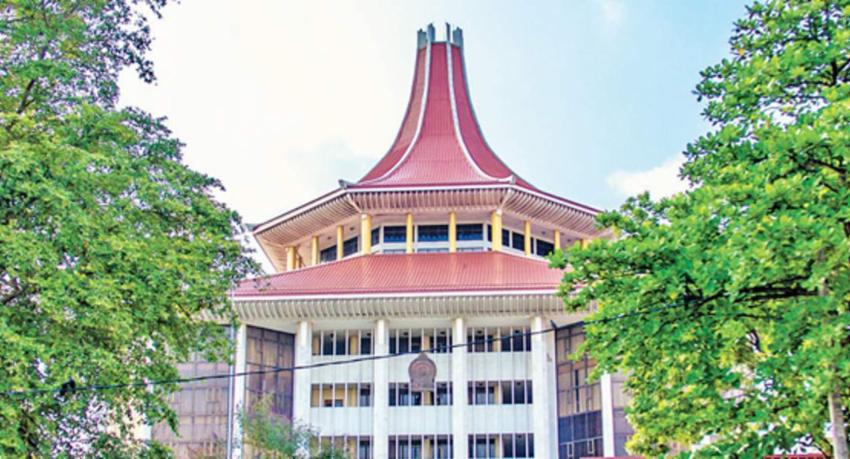
The Supreme Court has determined that the harshest provision in the proposed Anti-Corruption (Amendment) Bill — a clause restricting bail for offences created under the law — can become law only if Parliament passes it by a two-thirds majority and the people approve it at a referendum.
Speaker Jagath Wickramaratne delivered the determination to Parliament on Tuesday. He said most of the Bill is constitutional and can pass on a simple majority, but that three sets of provisions cannot.
What the court decided
Referendum required — Clause 17. The clause would bar Magistrates from granting bail for offences under the new law and place strict limits on the High Court’s power to grant it. The court found it inconsistent with Articles 3 and 4(c) of the Constitution, the provisions on sovereignty. “Clause 17 in its present form may become law only if it is passed with the special majority required under Article 84(2) and approved by the People at a referendum,” the Speaker said.
Two-thirds majority required. Clause 6(7) — which would require the owners, chairpersons and directors of media institutions registered with the Mass Media Ministry, and of entities licensed by the Telecommunications Regulatory Commission, to declare their assets and liabilities — needs a special majority. So does Clause 7, found inconsistent with Article 12(1). That clause would repeal Section 80(1)(e), dropping the requirement to declare the assets of anyone who has shared a household with a declarant for more than six months. The court recommended it be withdrawn unless passed by a special majority.
Simple majority. Clauses 3, 4, 6(4), 6(5) and 11 were cleared.
The challenge
Prime Minister Harini Amarasuriya presented the Bill to Parliament on 19 August. The government said it addresses operational bottlenecks, aligns the law with UN standards and meets conditions under the IMF programme.
Transparency International Sri Lanka petitioned against it, warning the amendments “introduce severe policy regressions, create major loopholes, restrict civic space and violate Fundamental Rights.” TISL argued that repealing Section 80(1)(e) would let officials conceal wealth through household members, and objected to raising the public-company declaration threshold to 50 percent and to removing judicial oversight of decisions not to prosecute accomplices.
The full determination was ordered printed in the official report of proceedings.
This is a separate determination from the one on the 22nd Amendment, which the Speaker read to the same sitting.


