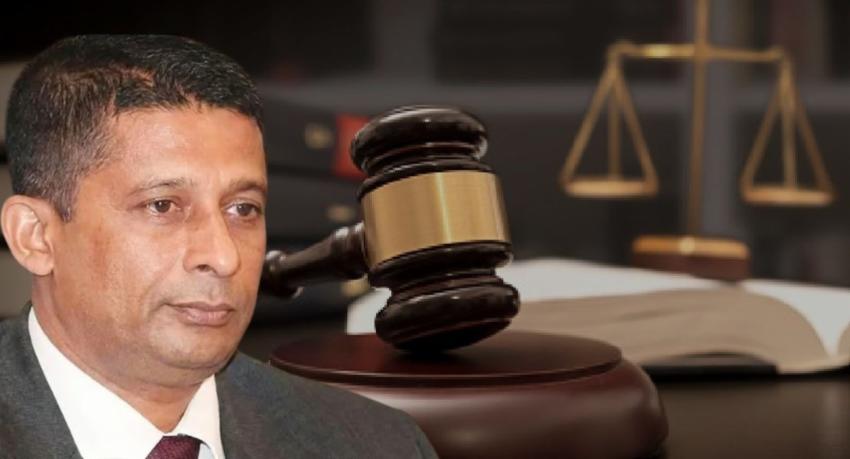
The National Hospital’s medical board has recommended that former State Intelligence Service chief Suresh Salley remain in hospital for treatment until 28 September, the Colombo Fort Magistrate’s Court was told on Tuesday.
A fresh assessment of his condition will be obtained by that date, NewsFirst reported.
The hospital director was under notice
National Hospital Director Dr. Sampath Indika Kumara appeared before Magistrate Pasan Amarasena in response to notices issued at the previous hearing. Those notices required him to explain a failure to submit a report on Salley’s condition and a failure to give records to the five-member medical board appointed to examine him.
Additional Solicitor General Dileepa Peiris appeared for the director, telling court the Attorney General’s Department was representing him because he is a public officer — while restating the prosecution’s own position on the hospitalisation.
“Your Honour, the Director of the National Hospital is a public officer and requested the Attorney General to appear on his behalf. Accordingly, I am appearing for him. However, as I stated previously, I continue to hold the view that this is a medical conspiracy.”
Salley still has not given up his passwords
Peiris also told court that Salley has still not provided investigators the passwords to his mobile phone and computer, despite a court order, maintaining that he cannot remember them.
The prosecutor pointed to the obvious difficulty, NewsFirst reported separately: “One of the most important qualities expected of a former intelligence chief is a strong memory.”
The magistrate ordered that steps be taken to access the devices by alternative means.
Context
Salley is held under a detention order over allegations of aiding, abetting and conspiring in relation to the 2019 Easter Sunday attacks — the same attacks in which a Trial-at-Bar today convicted 15 of 24 accused in the main conspiracy case. Salley is not a defendant in that case.
Not reported
Neither report states what Salley is being treated for, what the medical board found, what the “alternative methods” of accessing the devices are, or when the case is next called.


