Opposition Leader Sajith Premadasa has asked the International Monetary Fund to spell out which economic conditions and indicators would determine whether Sri Lanka needs a successor financing programme once the current Extended Fund Facility ends.
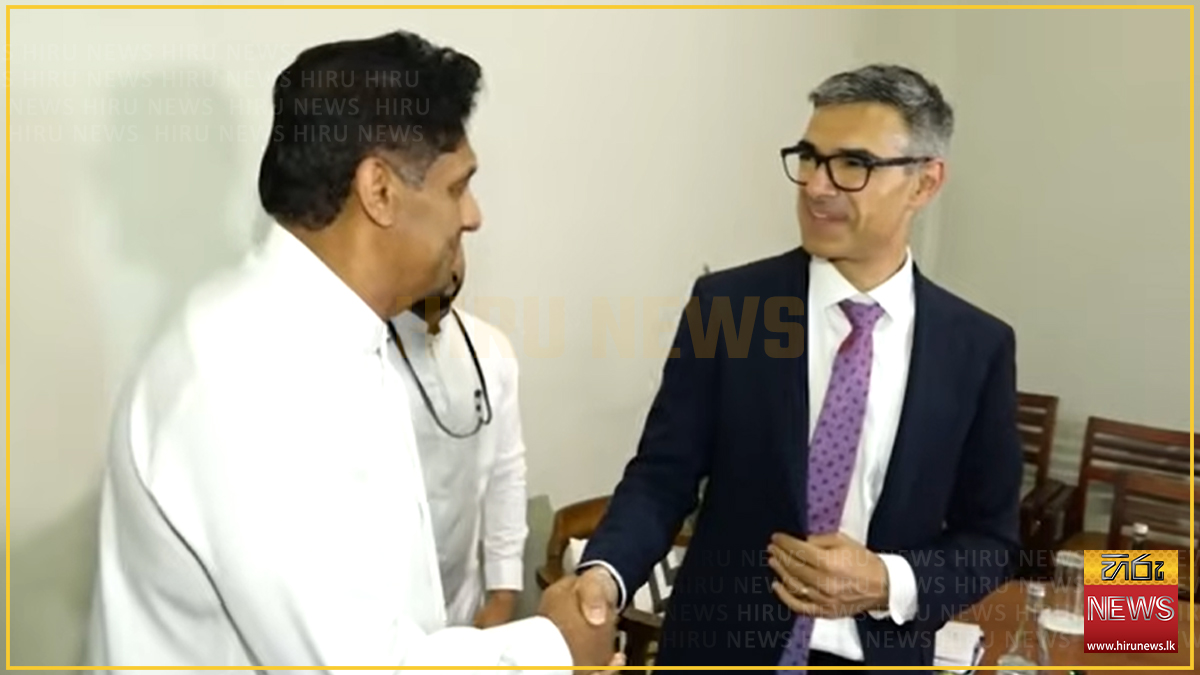
The question was put during a meeting with an IMF delegation at the Opposition Leader’s office in Parliament, attended by a group of Samagi Jana Balawegaya representatives.
It is the sharpest formulation yet of a demand Premadasa has been making since May, when he called on the government to open successor-programme talks immediately rather than negotiate later from a weaker position.
What was discussed
The talks covered Sri Lanka’s external sector, foreign exchange reserves, debt sustainability, the public financial position and economic growth, with both sides focused on the country’s economic resilience after March 2027, when the current arrangement concludes.
Under the programme, the seventh review is scheduled for October 2026 and the eighth for March 2027.
Discussion also turned to building a credible economic framework capable of holding macroeconomic stability beyond March 2027 and withstanding future external shocks.
The Opposition’s argument
Premadasa told the IMF representatives that fiscal consolidation and economic adjustment should not place a disproportionate burden on working people and vulnerable families, and asked for closer attention to the pressures facing households and micro, small and medium enterprises.
The success of the reform programme, he argued, should be measured not only by macroeconomic indicators but by its effects at household, individual and business level — pointing to poverty, the price of goods, inflation and household incomes. After stabilisation, he said, the country must move towards sustained growth through higher investment, employment and household income.
Context
The meeting came as an IMF staff team concluded a two-week mission without a staff-level agreement on the seventh review, saying talks would continue in the near term. The Fund put gross official reserves at US$6.9 billion at end-August.
Engagement between the Fund and the main opposition has itself been contested: in April the SJB complained of being left out of parliamentary discussions with the mission, a claim the IMF rejected, saying all parties had been invited through the Speaker’s office.