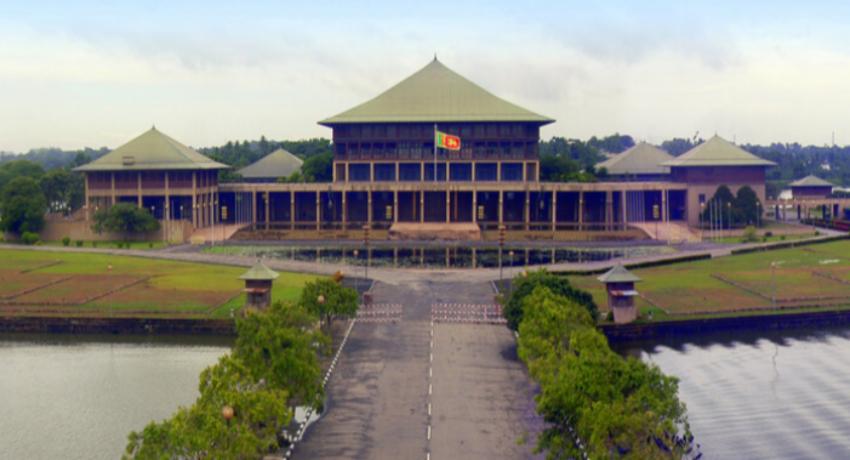
Parliament takes up the 22nd Amendment to the Constitution and the Judicature (Amendment) Bill for a second consecutive day today, with the vote on both due at 7.00 p.m., NewsFirst reported.
The amendment extends the retirement age of Supreme Court and Court of Appeal judges by two years. The Judicature (Amendment) Bill does the same for judges of the other courts. The 22nd Amendment needs a two-thirds majority; the Judicature Bill needs only a simple one, the Supreme Court having found its provisions constitutional and having determined that the amendment does not require a referendum.
The government’s case, made from the floor
Prime Minister Dr. Harini Amarasuriya used yesterday’s opening day of debate to argue the bill should be judged as one piece of a broader programme rather than on its own, the Daily Mirror reported.
Justice must be accessible to all without discrimination, she told the House, and establishing the rule of law and ensuring equal access to justice remain among the government’s key commitments. Improving access to justice could not be achieved through a single constitutional amendment, or by reforming one institution alone.
She listed what the government says it has already done: steps over the past two years to strengthen independent investigations and improve the capacity of the Police and the Criminal Investigation Department to investigate fairly and impartially, and measures to improve impartiality in recruitment, promotions and appointments. On efficiency, she cited filling vacancies, increasing opportunities for hearings, directing resources towards courts with heavy caseloads, introducing technological support and providing additional staff.
The Government Analyst’s Department — whose longstanding vacancies have contributed to investigative delays — is also being strengthened, she said.
Courts of Appeal outside Colombo
The Prime Minister said the amendment would allow Courts of Appeal to be established in provinces where necessary, improving access to appellate justice for people outside Colombo.
She argued that delays in justice had fallen on ordinary citizens while benefiting an elite, with prolonged investigations and proceedings feeding a cycle in which accountability weakened each time governments changed.
”Not aimed at any particular judge”
Responding to the central criticism of the bill — that raising the retirement age is designed to keep specific judges in place — Amarasuriya said the increase applies across the board and is not aimed at any particular judge or court.
She cited two international comparisons: the United Kingdom raised its judicial retirement age from 70 to 75 in 2021, and Hong Kong raised its from 65 to 70 in 2019.
She also rejected the argument that the amendment hands the Executive special powers over the Judiciary or alters the balance of power between the institutions of government.
The Opposition has made the opposite case outside the chamber, where the Samagi Jana Balawegaya protested at Polduwa Junction as the debate opened and the Bar Association asked parties to release MPs for a conscience vote.
An aside on the railway strike
Closing on a different note, the Prime Minister said growing public confidence in the possibility of building stronger institutions was itself a sign of change, and pointed to the response of young people after the recent railway strike — including those who bought additional tickets once services resumed — as a small but meaningful indication of a growing sense of responsibility towards public institutions.
Not reported
Neither outlet reports how the two-thirds threshold is expected to be met, whether any government MP has signalled a vote against, or how the Opposition intends to vote. The Daily Mirror’s account of the Prime Minister’s speech does not say which provinces might receive Courts of Appeal first, or what the amendment’s provincial provision would cost. No outlet has yet reported the result of tonight’s vote.