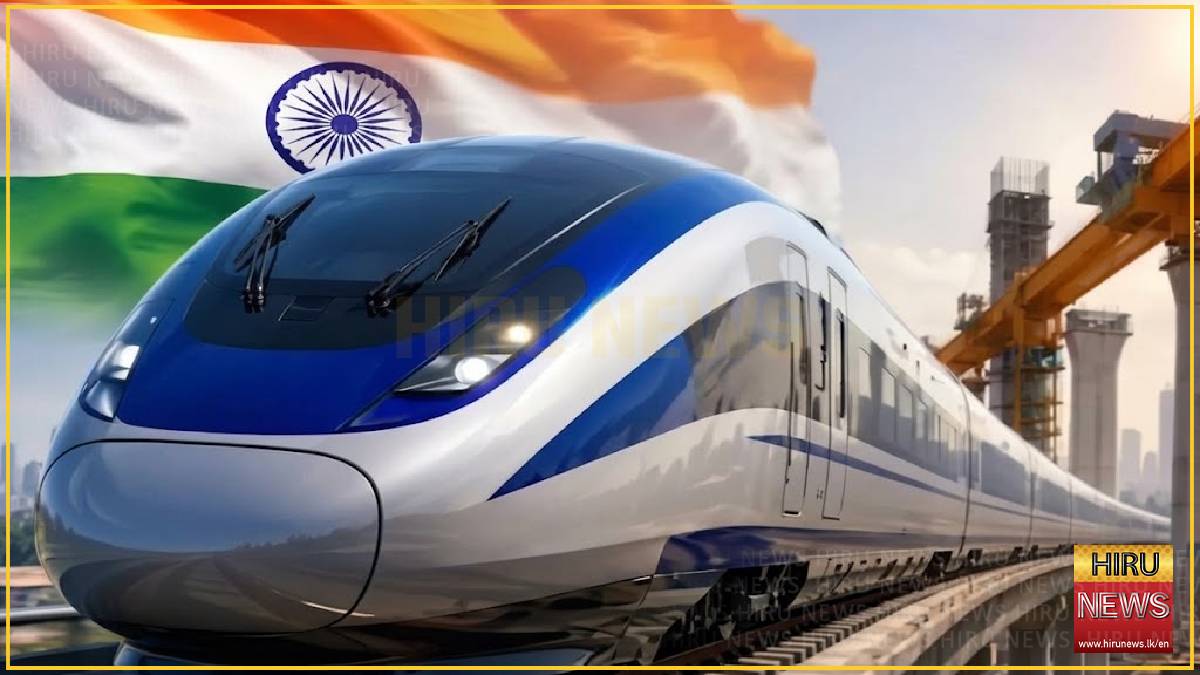
Indian Railways is developing a domestically built high-speed trainset designated the B35, designed to run at up to 350 kmph, as the cost of the country’s first bullet train line climbs past Rs 2 lakh crore.
The programme is part of a push to build more rail technology at home and cut dependence on foreign suppliers, Hiru News reported. India is aiming to have the trains developed by 2030, alongside the track and systems needed to run them.
A doubled budget
The Union Cabinet has approved a higher budget for the Mumbai-Ahmedabad High Speed Rail (MAHSR) project. The total has now passed Rs 2 lakh crore — reported by Hiru as 2,000 billion Indian rupees — which is close to double the first estimate made in 2015. About Rs 1 lakh crore will come from the Union Budget, the Daily Mirror reported.
The line runs 508 km through Gujarat, Maharashtra and Dadra & Nagar Haveli, with 12 stations planned: Mumbai, Thane, Virar, Boisar, Vapi, Billimora, Surat, Bharuch, Vadodara, Anand, Ahmedabad and Sabarmati.
Why India started building its own
Both outlets attribute the account to a Times of India report. Work on the B35 began after Japan said in December 2024 that it would phase out production of the E5 series trainsets originally tied to the project. Japan’s replacement E10 is not expected to enter production until 2030 or enter service until 2034 — a gap of several years that India would otherwise have to absorb. Indian officials may still take E10 sets once they are available.
India is separately developing the B28 high-speed train and the Bharat Train Control System (BTCS), an indigenous signalling and train-control system intended to regulate speeds and maintain safe separation between trains. Both outlets compare it to China’s CTCS, used on conventional and high-speed lines alike.
The Integral Coach Factory (ICF) and Bharat Earth Movers Limited (BEML) are designing and building the new sets.
One figure both outlets leave unclear
Each report gives the B35 a top speed of 350 kmph in its opening lines, then closes by saying the trainsets being built by ICF and BEML are designed for “speeds of up to 280 kmph.” Neither outlet reconciles the two figures. The lower number matches the separately named B28 programme, which suggests the closing paragraph refers to that train rather than the B35 — but neither report says so.
Neither account gives a delivery schedule for the B35, a unit cost, or a revised opening date for the Mumbai-Ahmedabad line.
Sri Lankan context
India is the principal external funder of Sri Lanka’s own railway modernisation, including the Indian-financed signalling upgrade on the Maho-Anuradhapura line. Indian rolling stock and signalling technology developed under programmes like BTCS are the systems most likely to reach Sri Lankan track in future upgrades.