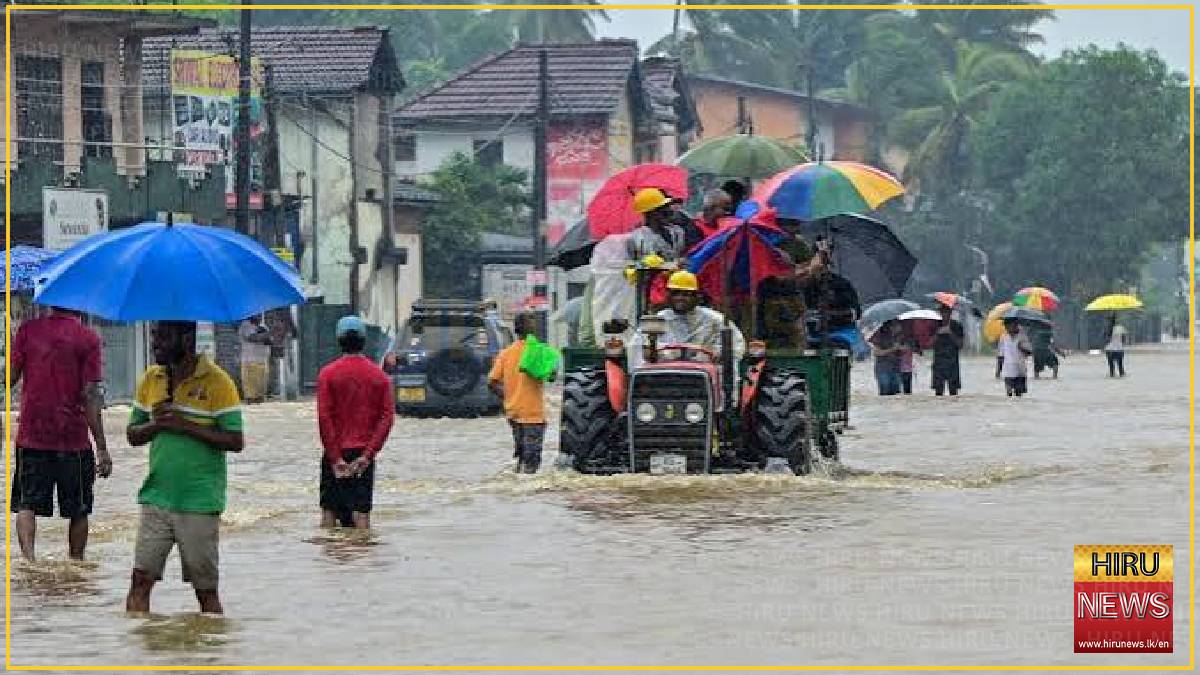
Sri Lanka could see increased rainfall during October and November, and authorities may need to prepare for flood conditions, an official of the Department of Meteorology has said.
Current forecasts indicate a rise in rainfall across the island over the two months, the official said. October and November are periods in which Sri Lanka regularly experiences flooding, particularly when activity increases in the Bay of Bengal.
Depending on how intense the rainfall turns out to be, preparations may be needed for possible floods.
Immediate outlook
Wetter conditions are expected over the next few days, especially in the south-western parts of the country.
Afternoon thunderstorms could begin developing from around 28 and 29 September and continue into October, bringing rain to areas that have recently seen relatively dry weather.
For the immediate forecast, showers are expected at times in the Western and Sabaragamuwa provinces and in the Galle, Matara, Kandy and Nuwara Eliya districts.
At sea
Sea conditions are expected to become rough in some areas, with waves reaching heights of around two to three metres in certain coastal waters. Coastal communities and fishing and naval personnel have been advised to remain vigilant.
The advisory follows a week of heavy rain that the Disaster Management Centre says has affected more than 2,800 people across 15 districts, with flood warnings extended for the Gin and Nilwala river basins.
Not reported
Neither report names the Meteorology Department official who issued the assessment, and neither gives a numerical rainfall forecast — how far above average the October–November totals are expected to run is not stated. No specific districts or river basins are identified as being most at risk of flooding, and no agency is named as leading the preparations referred to. Neither account says whether the warning was issued as a formal advisory or in response to questions at a briefing.
A separate Meteorology Department warning about heightened October–November flood risk was reported in late August and attributed the outlook partly to El Niño conditions in the Pacific. Today’s filings do not mention El Niño, and it is not stated whether this assessment updates or repeats that earlier one.