Indian External Affairs Minister S. Jaishankar held a run of meetings on the margins of the 81st United Nations General Assembly on Friday, covering the conflict in the Gulf, BRICS cooperation and India’s relations with the Gulf states, Hiru News reported.
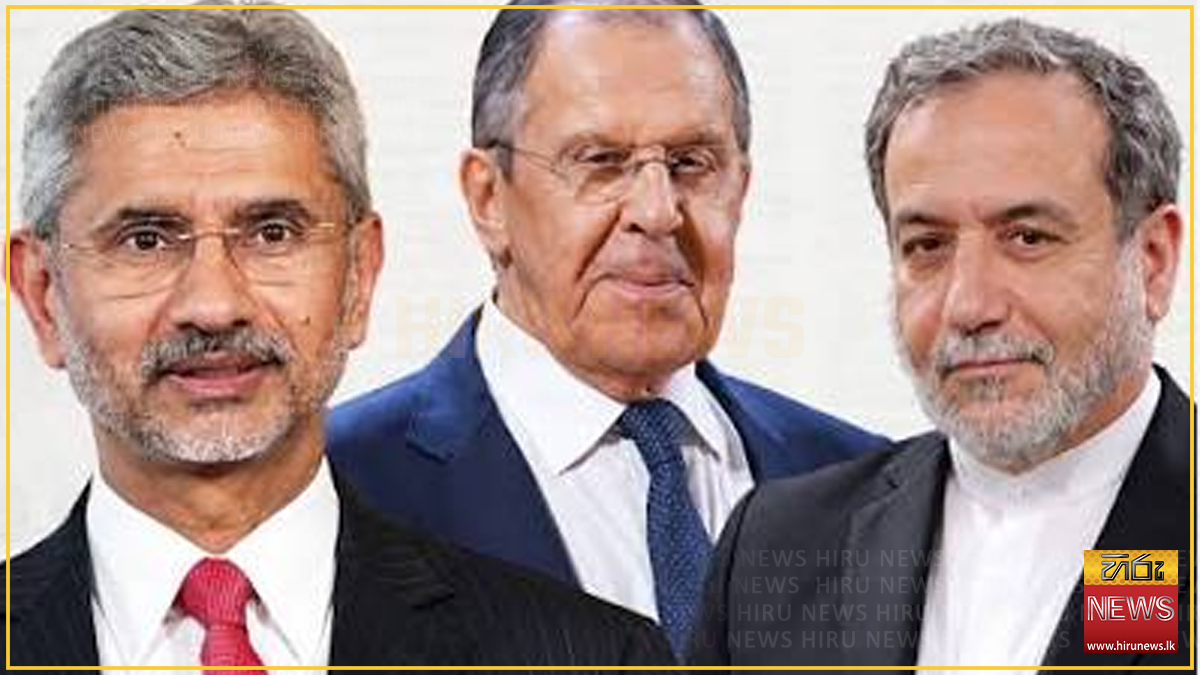
He met Russian Foreign Minister Sergey Lavrov and Iranian Foreign Minister Abbas Araghchi separately during the high-level week in New York.
“A good meeting with FM Sergey Lavrov of Russia today #UNGA81. Exchanged views on a number of ongoing issues. Also took stock of our bilateral and BRICS cooperation,” Jaishankar wrote on X.
Russia’s foreign ministry separately confirmed the meeting, saying the two had met on the sidelines of the high-level week, ANI reported.
Of his meeting with Tehran’s foreign minister, Jaishankar wrote: “Appreciate the conversation with FM @araghchi of Iran at the @UN #UNGA81. We discussed the latest developments with regard to the Gulf conflict. Will continue to be in touch.”
A wider Gulf round
ANI’s account carries two further engagements that Hiru’s does not.
Jaishankar met Oman’s Foreign Minister Badr Albusaidi, and said he valued Muscat’s read-out on the situation in the Gulf region.
He also co-chaired the India–Gulf Cooperation Council Troika Ministerial Meeting in New York, which reviewed progress on the India–GCC Joint Action Plan 2024–28 and discussed ways to deepen the partnership.
“Glad to co-chair the India-Gulf Cooperation Council Troika Ministerial Meeting in New York on the margins of #UNGA81,” he wrote.
BRICS backdrop
The BRICS grouping Jaishankar discussed with Lavrov now spans Brazil, China, Egypt, Ethiopia, India, Indonesia, Iran, Russia, Saudi Arabia, South Africa and the United Arab Emirates.
India hosted the BRICS Leaders’ Summit earlier this month, attended by Russian President Vladimir Putin and Iranian President Masoud Pezeshkian — putting New Delhi in contact with both Moscow and Tehran weeks before this week’s UN meetings.
Why it matters here
The Gulf conflict that dominated Jaishankar’s conversations with Iran and Oman bears directly on Sri Lanka. Iran’s seven-day offer over the Strait of Hormuz concerns the corridor through which much of the region’s oil moves, and fuel costs feed into Sri Lankan transport and production prices — a channel First Capital Research has repeatedly flagged in its inflation commentary. The Gulf is also the main destination for Sri Lankan migrant labour and a significant market for Ceylon tea.
A note on sourcing
Hiru News credits the New Indian Express for its account. ANI is not among the newsrooms this site counts as verified for credibility purposes, but its report was independently datable and carries the additional Oman and GCC engagements. We found no verified newsroom outside Hiru carrying the story.