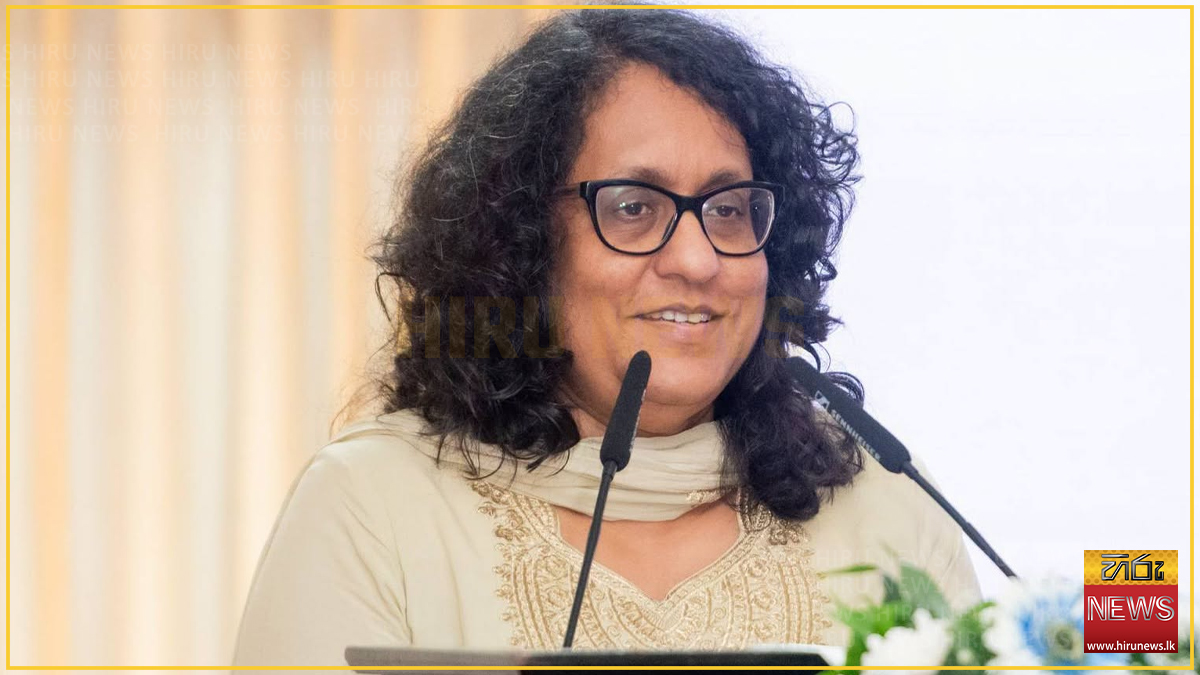
Prime Minister Harini Amarasuriya said building an environmentally friendly tourism industry that empowers local communities without damaging the environment or cultural heritage is a central objective of the government, and that tourism earnings must reach small-scale entrepreneurs at village level.
She was speaking at the National Conference on “Digital Innovation for Sustainable and Culturally Integrated Tourism”, held on September 27 at the Western Provincial Council Auditorium to mark World Tourism Day. The conference was organised jointly by the Western Province Tourism Board and the Postgraduate Institute of Archaeology of the University of Kelaniya, under the theme “Digital Agenda and Artificial Intelligence to Redesign Tourism”.
A Smart Tourism Platform developed by the Western Province Tourism Board with Sri Lanka Telecom was launched at the event. It serves Alawala in the Gampaha District, which is being developed as a community-based sustainable tourism village. The Prime Minister also presented awards to schoolchildren who won a digital competition run by the provincial tourism board for school tourism and travel clubs.
Amarasuriya said Sri Lanka’s heritage, built on centuries of creativity, traditional knowledge and cultural diversity, had to be safeguarded while contributing to economic development. Strengthening the economy by equipping every sector with modern technology is a stated goal of the government’s “A Thriving Nation – A Beautiful Life” manifesto, she said.
She set out the sector’s recent numbers: more than 2.05 million arrivals in 2024 generating USD 3.17 billion, and 2,362,521 arrivals in 2025 generating USD 3.22 billion in foreign exchange. The government is targeting 4 million visitors a year and USD 8 billion in revenue by 2030.
Those figures imply a sharp shift in earnings per visitor. Arrivals rose about 15 percent between 2024 and 2025 while revenue rose roughly 1.6 percent, taking average spend per visitor from about USD 1,550 to about USD 1,360. The 2030 target works out at roughly USD 2,000 per visitor — close to half as much again as last year’s average.
Amarasuriya said reaching the target would require the expertise of universities and research institutions to be applied directly to developing the sector, alongside cooperation between the public and private sectors and heritage conservation bodies. She added that tourism would receive greater attention under the new education reforms, and encouraged schoolchildren to consider it as a career.