South African police are hunting the gunmen behind two separate mass shootings that killed 27 people within hours of each other over the weekend, Daily Mirror and Hiru News reported on Sunday. No arrests had been made in either case.
Wedela, near Johannesburg — 17 dead
Gunmen opened fire at a tavern in Wedela township, about 80 km from Johannesburg, at around 9.30 p.m. on Saturday. Seventeen people were killed and 15 injured.
Police said 13 men and four women died. Daily Mirror reports that eight gunmen took part, firing on customers outside the bar before continuing the attack inside and torching two vehicles as they fled. Hiru, citing police, says the attackers carried AK-47 rifles.
Soldiers and police pathologists were deployed to the township, a gold-mining area where residents told reporters that illegal miners known as zama zamas live. The tavern carried a sign reading “No weapons allowed” beneath its trading hours.
Lwandle, near Cape Town — 10 dead
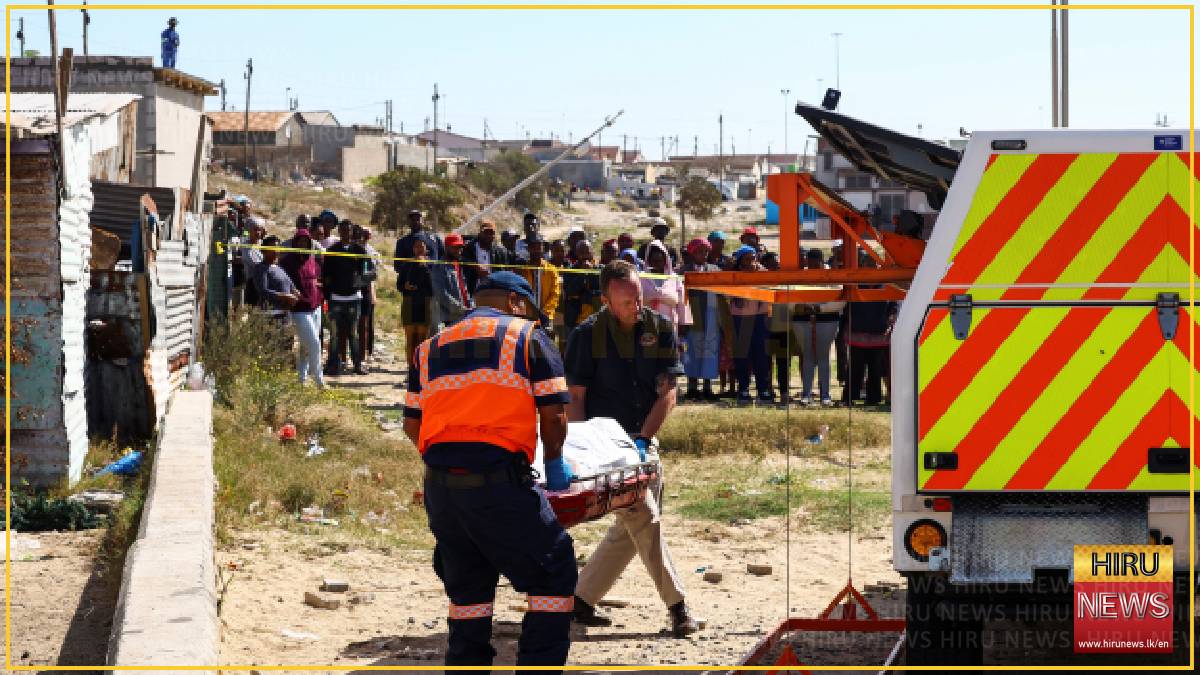
About four and a half hours later, at roughly 2 a.m. on Sunday, gunmen opened fire at a venue selling grilled meat in Lwandle, on the outskirts of Cape Town. Ten people were killed and 11 injured. Five died at the scene and five more in hospital.
Police have given no motive for either attack. Onlookers at the Lwandle scene declined to speak to journalists, saying they feared for their safety.
Context
The shootings follow the killing of 11 people at a house party in the KwaMakhutha area near Durban on Tuesday night.
South Africa records about 60 murders a day in a population of 62 million, one of the highest rates in the world. Violence is frequently tied to turf wars between gangs involved in drug trafficking and illegal mining.
“South Africa has a serious illegal firearms problem,” crime expert Yusuf Abramjee told Reuters. “Every mass shooting should therefore trigger more than an investigation into the immediate perpetrators. Authorities need to look at the wider networks behind the violence.”
President Cyril Ramaphosa said earlier this year that organised crime was “the most immediate threat to our democracy, our society and our economic development,” and deployed the army alongside police in the worst-affected areas. Crime is expected to be a major issue at municipal elections in November.