The United States and Sri Lanka have agreed a set of standard operating procedures for detecting the illicit movement of nuclear and radioactive material, following a five-day workshop held in Colombo from 21 to 25 September.
The training was run by the US Embassy in Sri Lanka through the US Department of Energy’s Office of Nuclear Smuggling Detection and Deterrence (NSDD), in partnership with the Sri Lanka Navy.
What the workshop produced
American specialists worked with Sri Lankan participants to draft operating procedures for nuclear smuggling detection, drawing on international practice while keeping the procedures within Sri Lanka’s existing legislative and regulatory framework. A second strand of the workshop focused on improving coordination between the various national agencies that would have to act together in a live interdiction.
The US Embassy said the intention was to convert the training into written procedures that Sri Lankan agencies can keep using after the workshop ends, rather than leaving it as a one-off exercise.
Who took part
Participants were drawn from across government: the Sri Lanka Atomic Energy Regulatory Council and Sri Lanka Atomic Energy Board, Sri Lanka Customs, the Sri Lanka Ports Authority, the Disaster Management Centre, the Director General of Merchant Shipping, the Sri Lanka Coast Guard and the Attorney General’s Department.
The ambassador’s framing
US Ambassador Eric Meyer placed the programme in a trade-route context rather than a purely bilateral one.
“Nuclear material in the wrong hands can have consequences far beyond any one country’s borders,” Meyer said.
“Through this partnership, we’re giving Sri Lankan agencies practical tools to detect illicit nuclear material and stop it before it can move through Sri Lanka’s ports or waters. That strengthens security here, protects vital Indian Ocean trade routes, and helps keep Americans and our partners safer.”
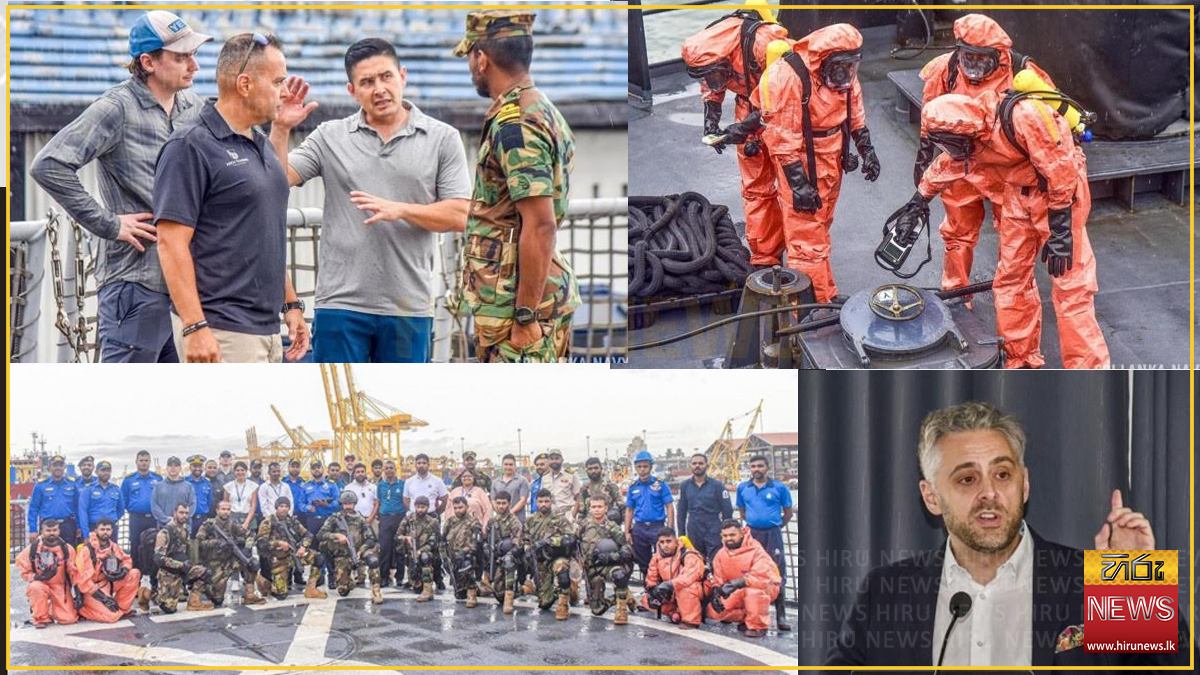
Both Daily Mirror and Hiru News carry the same account and the same quotations, indicating a common US Embassy release. Hiru’s accompanying images show personnel in hazardous-material suits working with handheld detection equipment on a vessel’s deck, and a group photograph taken at a container terminal.