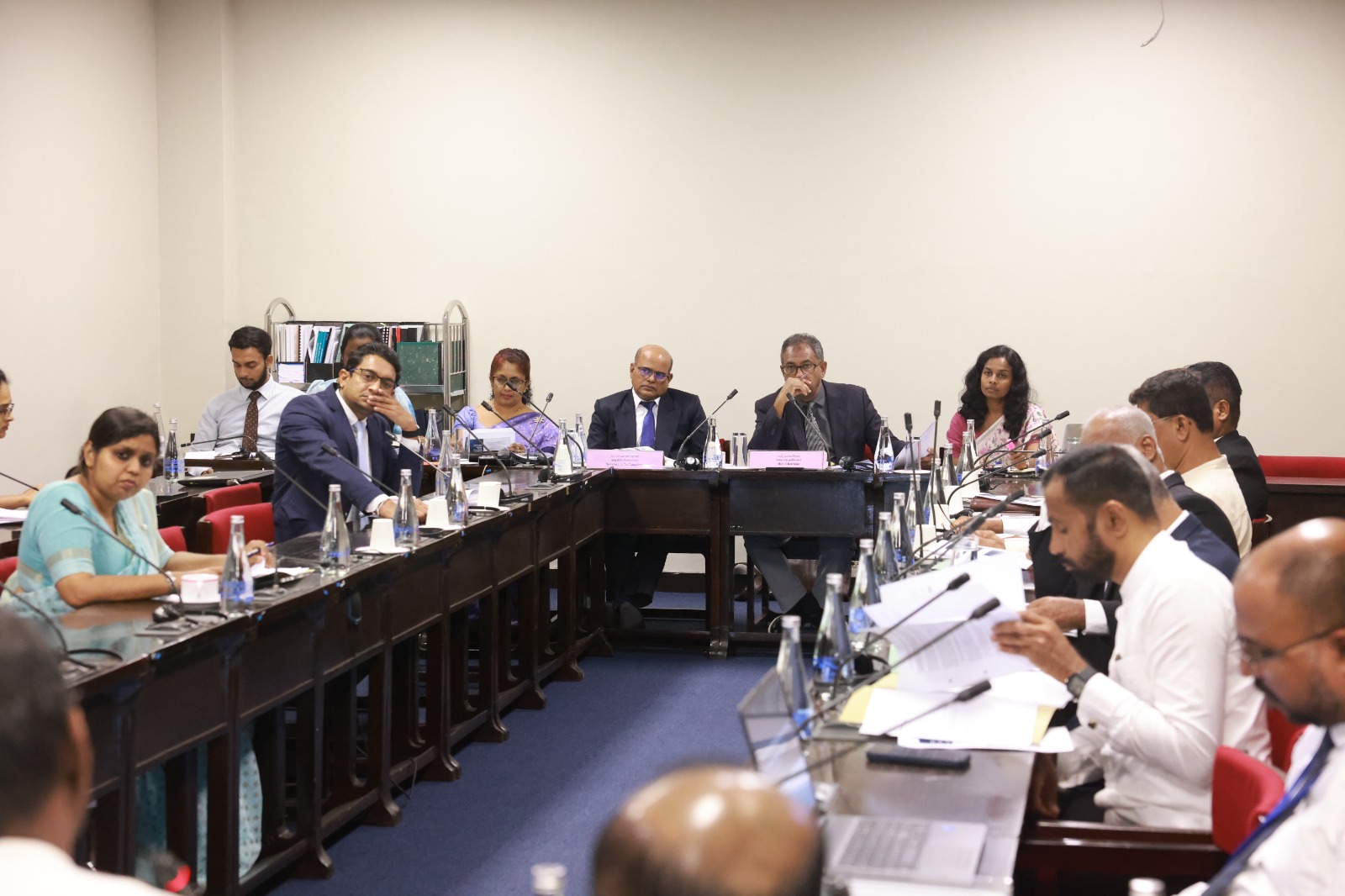
Sri Lanka will keep its inflation target at 5%, with a band of two percentage points on either side, for the next three years — and the government has accepted the Central Bank’s recommendation to do so, Governor Dr. Nandalal Weerasinghe said on Wednesday.
The decision will be formally announced through a Gazette Notification shortly, the Daily FT reported. Weerasinghe was speaking at the media briefing held to announce the latest monetary policy decision, at which the Board left the Overnight Policy Rate unchanged at 8.75%.
The first statutory review
The target now being retained was agreed with the Finance Minister under the Monetary Policy Framework Agreement in October 2023. That framework sits under the Central Bank of Sri Lanka Act of 2023, which requires the target to be reviewed once every three years — making this the first review the law has called for.
Keeping the target at 5% with a ±2 percentage point band leaves the accountability range at 3% to 7% unchanged. Inflation has been above that upper bound since July and held at 8.0% in September, a 37-month high.
Weerasinghe said the Central Bank sent its recommendation to the Finance Minister before the International Monetary Fund set out its own view last week — a sequence he was explicit about, and which places the decision ahead of the Fund’s intervention rather than in response to it.
A contested number
At the close of its staff visit on 23 September, the IMF recommended retaining the 5% target and the existing accountability band. Mission Chief Evan Papageorgiou said the current target gives Sri Lanka the flexibility it needs given volatile food and energy prices, and that a move to a lower target could be considered at the next review once a record of low and stable inflation is established.
That recommendation came against growing calls from some government officials and independent economists for a lower target, with some advocating around 2%.
Weerasinghe addressed the disagreement directly:
“The IMF has one view. Other local experts have different views. Some politicians have other views. Our recommendation is based on pure technical and empirical analysis of the country’s situation and what the best inflation target for the next three years is.”
He said it was too early to predict what the target would be beyond the three-year period.
IMF deal “very soon”
At the same briefing, the Governor said he expects Sri Lanka to reach a staff-level agreement on the Seventh Review of its Extended Fund Facility shortly. The IMF team ended its visit without one on 23 September, and Weerasinghe attributed the delay to technical and analytical work on certain aspects of the programme — much of which, he said, the government has already completed.
“I would expect the staff-level agreement to be reached very soon. It won’t take much longer,” he said, adding that Sri Lanka will receive the disbursement tied to the review by the end of this year.
Asked whether Sri Lanka would seek another IMF programme once the current EFF expires in March 2027, he said the decision rests with the government and falls outside the Central Bank’s remit. “The Government will make that decision at the appropriate time.”
Hiru News reported that Weerasinghe also defended the Bank’s response to rising prices, saying it had acted proactively — including the 100 basis point tightening in May — and that the effects were already filtering through the economy via slower growth. He attributed the recent acceleration in inflation largely to exceptionally high global energy prices rather than to domestic demand.