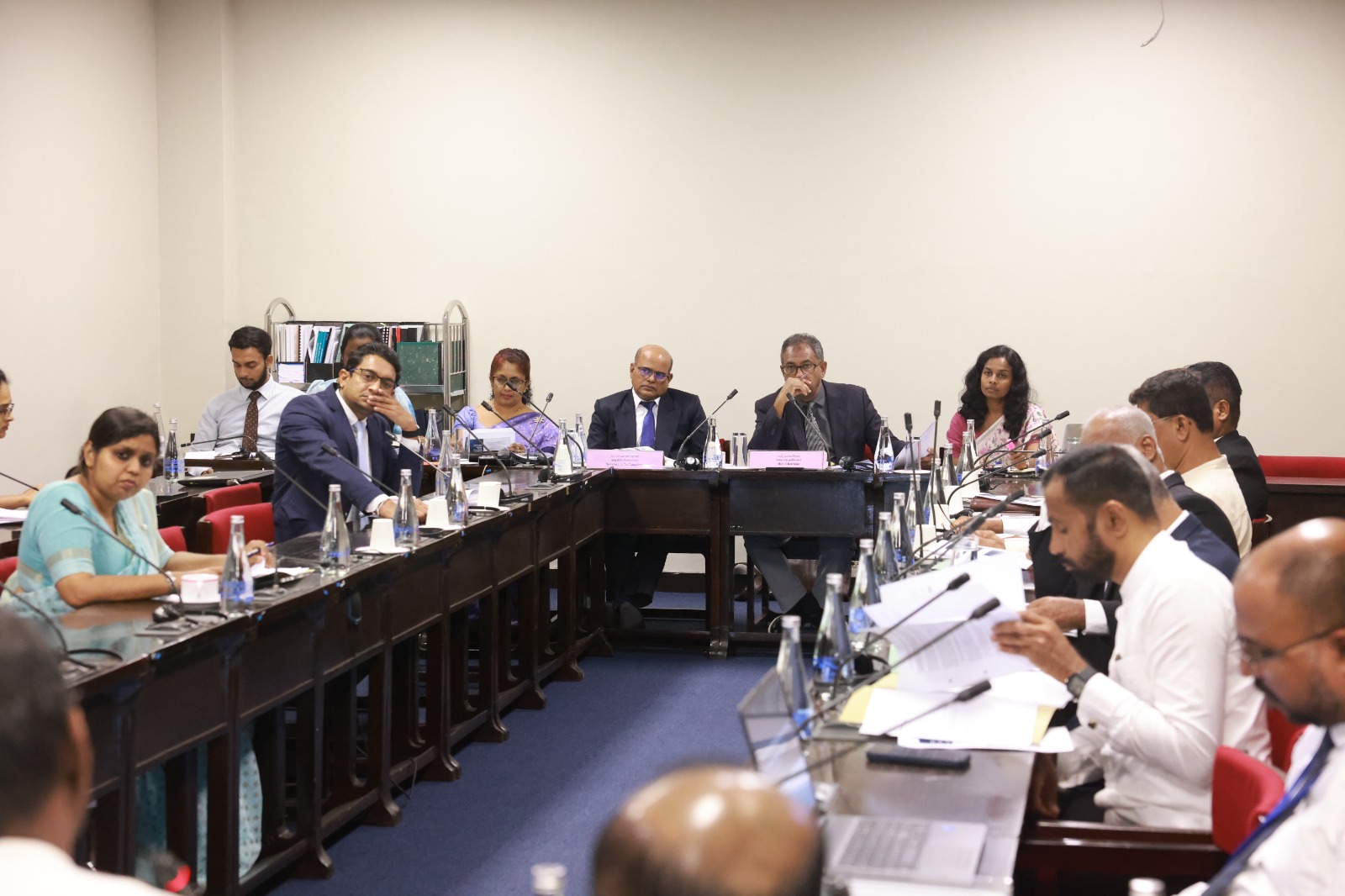
The Export Development Board has brought the government agencies responsible for delivering Sri Lanka’s National Export Development Plan into one room and asked each of them to nominate a named official accountable for its share of the work.
The coordination meeting was convened on 29 September at the auditorium of the Ministry of Industry and Entrepreneurship Development, which co-hosted it, Lanka Business Online reported. It drew the institutions designated as Lead Implementing Agencies under the plan.
From plan to assignment
The NEDP 2026–2030 sets a target of raising Sri Lanka’s exports to roughly US$36 billion by 2030, counting merchandise and services together. The framework covers export competitiveness, product and market diversification, trade facilitation and logistics, access to trade finance and investment, quality and standards, innovation, skills and sustainable export growth.
Tuesday’s meeting was not about any of that. It was about machinery. Three concrete things came out of it:
- Focal points. Each lead agency was asked to nominate a specific official to handle coordination and communication on NEDP implementation.
- Guidelines circulated. Guidelines approved by the Secretary to the Ministry of Industry and Entrepreneurship Development, in line with the Cabinet decision on the plan, were distributed to the lead agencies.
- Bottlenecks named. Agencies were asked to identify what is actually obstructing delivery and to propose practical fixes to speed it up.
The Secretary to the ministry opened the session, and the EDB’s Chairman and Chief Executive Officer presented the plan’s strategic direction, priority sectors and implementation framework, setting out what each lead agency is responsible for. The EDB’s chairman is Mangala Wijesinghe, who has fronted the board’s export-growth work through the year; the release does not name the officials who spoke.
Why accountability is the agenda
The plan itself is not new — Cabinet recognised it as official strategy in May, and an ADB team reviewed its rollout in April under a technical assistance programme. What has not been settled in the months since is who inside government is answerable for which commitment.
That is the recurring difficulty with a cross-cutting export plan: the targets sit with the EDB, but delivery sits with ports, customs, standards bodies and line ministries that each have their own priorities. Asking for a named focal point at each agency is a small administrative step, but it is the one that makes a missed commitment attributable to somebody.
This is also not a standalone event. A similar sector-level session was held with the Ports and Civil Aviation Ministry in mid-September on port and logistics commitments under the same plan — Tuesday’s meeting gathered the lead agencies collectively rather than one sector at a time.
Not reported
The release does not say which agencies were designated as Lead Implementing Agencies, what the bottlenecks identified were, or what deadline applies to nominating focal points. No other verified newsroom had filed its own account of the 29 September meeting at the time of writing.