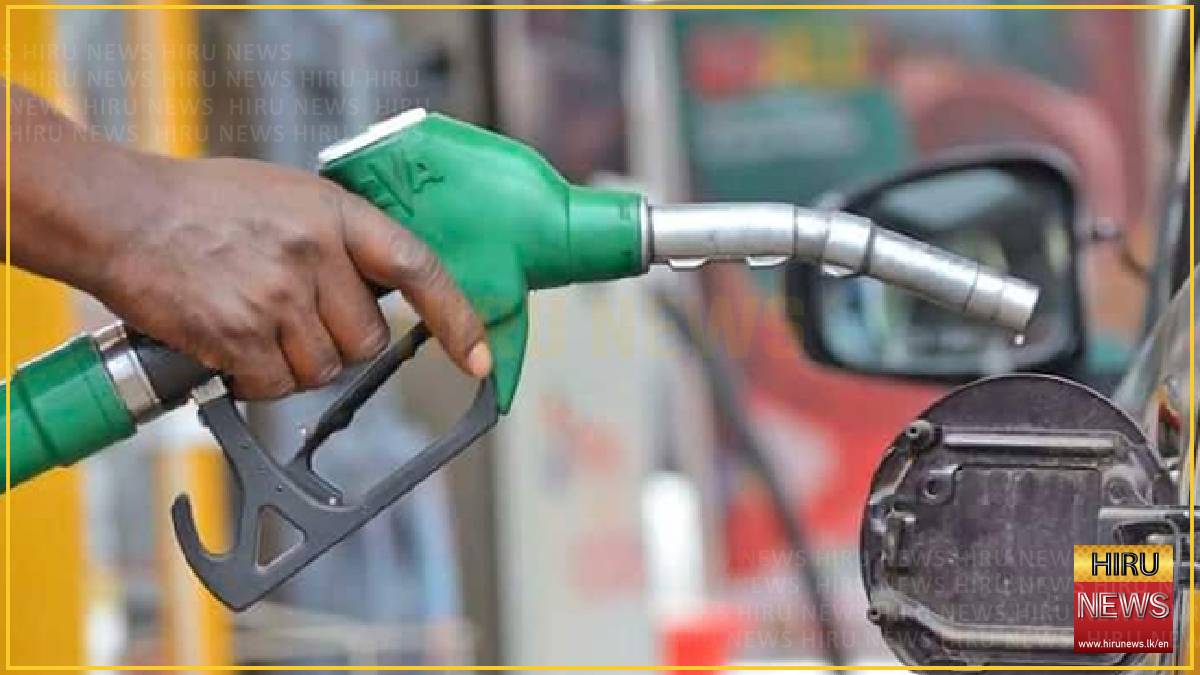
Former minister Patali Champika Ranawaka has called on the government to publish Sri Lanka’s fuel pricing formula, arguing that the public has no way of knowing how international product prices translate into the prices paid at the pump.
In a statement reported by Hiru News and Newswire, Ranawaka compared current retail prices with Singapore FOB prices as of 2 October, converted at Rs. 330 to the US dollar.
The comparison he set out
| Product | Barrel price cited | Estimated FOB per litre | Current retail price |
|---|---|---|---|
| Petrol 92 Octane | USD 141 | Rs. 292 | Rs. 414 |
| Petrol 95 Octane | USD 147 | Rs. 305 | Rs. 475 |
| Auto Diesel | USD 169 | Rs. 350 | Rs. 392 |
| Super Diesel | USD 177 | Rs. 367 | Rs. 528 |
He also put crude oil at USD 103 a barrel, or roughly Rs. 213 a litre at the same exchange rate.
The retail prices he cites are current. They match the schedule the Ceylon Petroleum Corporation brought into effect at midnight on 30 September, when Auto Diesel rose Rs. 10 to Rs. 392, Petrol 92 rose Rs. 15 to Rs. 414 and Super Diesel rose Rs. 50 to Rs. 528.
Ranawaka said consumers — including motorcyclists, three-wheeler drivers and bus operators — should be told what components make up the price. He separately questioned the supply of fuel oil to the Ceylon Electricity Board at Rs. 210 a litre, asking the government to clarify what profit is earned on those transactions.
What an FOB price does and does not cover
A free-on-board price is the cost of the product at the loading port. It excludes freight and insurance, port and storage charges, excise duty, VAT and other levies, CPC’s own distribution costs and dealer margins — all of which sit between the import price and the pump.
CPC’s published figures show how large that wedge is. Its August pricing structure put the formula-based cost of Petrol 92 at Rs. 398.70 a litre, against the Rs. 292 FOB estimate Ranawaka cites — and the corporation’s chairman has since said diesel is being sold well below its landed cost. On CPC’s own accounting, petrol margins cross-subsidise diesel and kerosene rather than accruing as straightforward profit.
That does not answer Ranawaka’s actual request, which is for the formula itself to be published line by line. The pricing formula has been a live issue this week on a second front: private tanker owners resumed deliveries after CPC agreed to review their commission, a dispute that also turns on a cost formula the parties cannot inspect.
The government has not responded publicly to the call.
