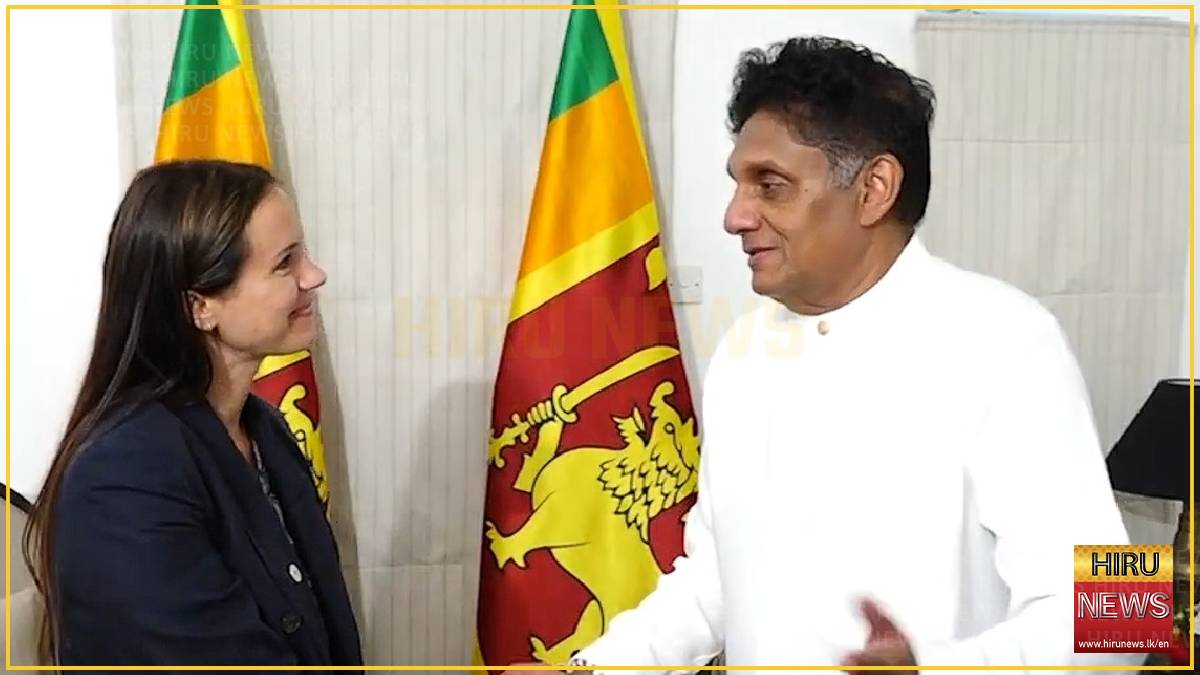
Opposition Leader Sajith Premadasa met the International Committee of the Red Cross head of delegation in Colombo on Sunday and said an approach grounded in factual evidence and inclusiveness is essential in addressing the cases of people who went missing during the war.
Premadasa stressed the need to strengthen the institutions responsible for providing humanitarian assistance, and said such institutions should be independent and protected from any form of external influence, the Daily Mirror reported, citing the Opposition Leader’s Office.
The ICRC asked for the meeting
The two accounts frame the encounter differently, and the difference matters.
The Daily Mirror presents it as Premadasa delivering a position to the ICRC. Hiru News reports that the meeting was held at the request of the ICRC, to discuss the organisation’s planned interventions in Sri Lanka, with particular attention to humanitarian issues left unresolved by past armed conflicts.
On Hiru’s account the agenda was broader than a statement about evidence. The discussions covered:
- the needs of families seeking information about missing relatives
- strengthening forensic capacity
- improving coordination among state institutions
- promoting wider understanding and implementation of international humanitarian law
Forensic capacity and inter-institutional coordination are the practical substance of what “evidence-based” means in this context — identifying remains, and getting the bodies that hold records to work from the same ones. Neither outlet reports any commitment, figure or timeline attached to those items.
The organisation
The ICRC has operated in Sri Lanka since 1989 and currently focuses on humanitarian needs arising from past conflicts, including support for the families of missing persons.
The two outlets give the delegation head’s name differently: the Daily Mirror calls her Angelique Appeyroux, Hiru News Angélique Apperré. Appeyroux is the form used in her public engagements in Sri Lanka, where she has headed the delegation since mid-2025. LankaNewz has not been able to establish which rendering the ICRC itself prefers.
The scale of the problem being discussed
Neither report gives numbers, but the caseload is documented. The Office on Missing Persons said in August that it had compiled a verified list of 23,352 missing individuals after consolidating roughly 42,000 complaints inherited from past presidential commissions, UN agencies and international organisations — the ICRC among them.
Many families had filed the same case with several institutions, and the absence of National Identity Cards during earlier periods of conflict made tracking difficult. Of the verified list, 16,966 are civilian cases, with a separate category for missing military and police personnel. OMP officials have met 9,072 families directly, and more than 5,700 families have received one-time interim relief payments.
That is the record-keeping problem the forensic and coordination items on Sunday’s agenda speak to.
Not reported
Neither outlet says what the ICRC is proposing to do, whether it sought anything from the opposition, or whether equivalent meetings have been held with the government. Neither reports which institutions Premadasa considers insufficiently independent, nor what external influence he was referring to. No ICRC statement on the meeting is quoted.
A note on dating: the Daily Mirror’s filing carries a “Colombo, September 4” dateline against its own 4 October timestamp, and describes the meeting as having taken place “today”. Hiru News filed the same meeting on 4 October, and the Daily Mirror article sits at the top of its latest-news listing. LankaNewz dates the meeting to 4 October 2026 on that basis and treats the dateline as a production error.