Cabinet has approved a fertilizer subsidy of Rs. 30,000 per hectare for paddy and other field crops cultivated in the 2026/2027 Maha season, capped at a maximum of two hectares per farmer, with an estimated Rs. 16 billion allocated.
The Cabinet paper was presented by the Minister of Agriculture, Livestock, Lands and Irrigation, K.D. Lal Kantha, NewsFirst reported on Tuesday afternoon.
This is not a rate increase
The headline figure reads as news, and it is worth being precise about what has and has not changed.
Rs. 30,000 per hectare is already the in-force rate. The subsidy was raised by Rs. 5,000 from Rs. 25,000 in June, when Commissioner General of Agrarian Development Dhammika Ranatunga announced the step-up for the Yala 2026 crop and said 502,836 farmers would benefit from it. Rs. 10,947 million was allocated for that season, and by 21 June the department said 90 per cent of Yala farmers had been paid.
What Cabinet approved on Tuesday is therefore the extension of an existing rate into the next cultivation season, together with the money to pay for it. Readers encountering the figure for the first time should not read it as a fresh increase on what farmers received for Yala.
The money is the part that moved
The allocation is where the two seasons genuinely differ. Maha gets Rs. 16 billion against Yala’s Rs. 10.95 billion — about 46 per cent more.
That is consistent with Maha being the main cultivation season, drawing on the northeast monsoon and covering substantially more land than Yala. At Rs. 30,000 a hectare, a Rs. 16 billion envelope would fund subsidy claims on roughly 533,000 hectares if drawn down in full. NewsFirst does not give a target extent or a projected number of beneficiary farmers, so that figure is a ceiling implied by the allocation rather than a published target.
Field crops, at the paddy rate
One element of the decision does appear to be new in substance. NewsFirst says the Rs. 30,000 applies to “paddy and other field crops cultivated during the 2026/2027 Maha season” — a single rate for both.
Previous rounds of the scheme have paid field crops grown on paddy land at a lower rate than paddy itself, and our June coverage of the Rs. 30,000 step-up described it as a paddy-farmer subsidy. If other field crops now draw the same per-hectare amount, that is a widening of the scheme and not merely its continuation. NewsFirst does not say so in terms, does not list which crops qualify, and does not state what field crops were paid previously — so the point is visible in the wording rather than confirmed by the reporting.
The supply side is the open question
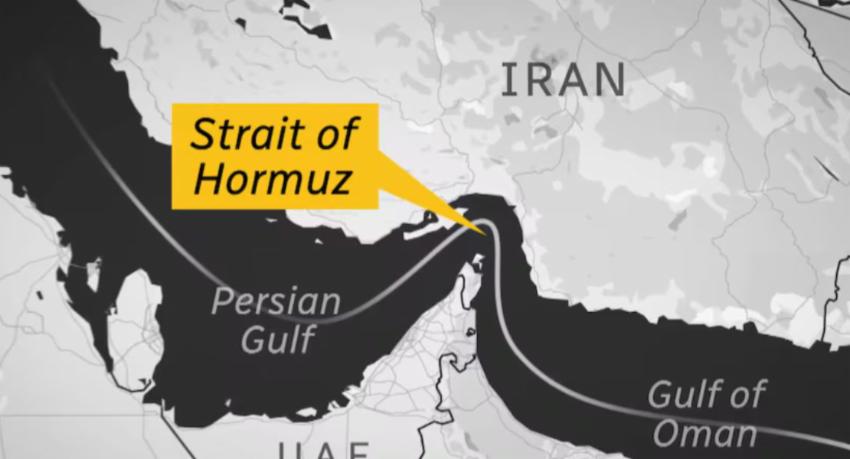
A subsidy pays for fertilizer that has to exist. On the same day, the Fertilizer Secretariat confirmed that a 21,000-tonne urea vessel bound for Sri Lanka is anchored off Oman near the Strait of Hormuz, while Maha season stocks hold at about 180,000 tonnes and a separate potash cargo discharges in Colombo.
Cash support and physical availability are separate problems, and Tuesday’s decision addresses only the first.
A caution on near-identical headlines
“Cabinet approves fertilizer subsidy for Maha season” is one of the most repeated headlines in Sri Lankan agricultural reporting, and search results for it are dominated by earlier rounds at different rates. The Rs. 16 billion figure is not a reliable marker: a 2022/23 Maha season proposal to subsidise organic fertilizer carried the same Rs. 16 billion estimate at a rate of Rs. 20,000 per hectare. Earlier editions of the cash scheme sat at Rs. 25,000 per hectare for paddy with Rs. 15,000 for field crops on paddy land.
The markers that identify this decision are the combination of Rs. 30,000 per hectare, the two-hectare cap, the 2026/2027 Maha season and Minister Lal Kantha as the paper’s sponsor — not the headline and not the Rs. 16 billion.
A single-source report
This article rests on one verified newsroom. The Daily Mirror, Hiru News, EconomyNext and the government’s own news.lk had not filed on the fertilizer decision at the time of writing, though all three of Tuesday’s other Cabinet decisions — the e-Court digital upgrade, the Sri Lanka–Thailand visa waiver and Rs. 1.6 billion for 2027 school textbooks — were carried by the Daily Mirror. Ada Derana reported this decision, but its site has returned a CloudFront block for 14 consecutive days and the report could not be retrieved, which is the direct reason this story publishes without corroboration.
Not reported
NewsFirst does not say when payments will begin, whether the money will be credited to farmers’ bank accounts in a single transfer as it was for Yala, or how farmers register a claim. It does not give the qualifying extent cut-off for smallholders, name the field crops covered, or say whether the two-hectare cap is per farmer or per holding.
No figure is given for the number of farmers expected to claim, and the decision’s relationship to the separate 75 per cent fertilizer cost subsidy used in the Yala round is not addressed.