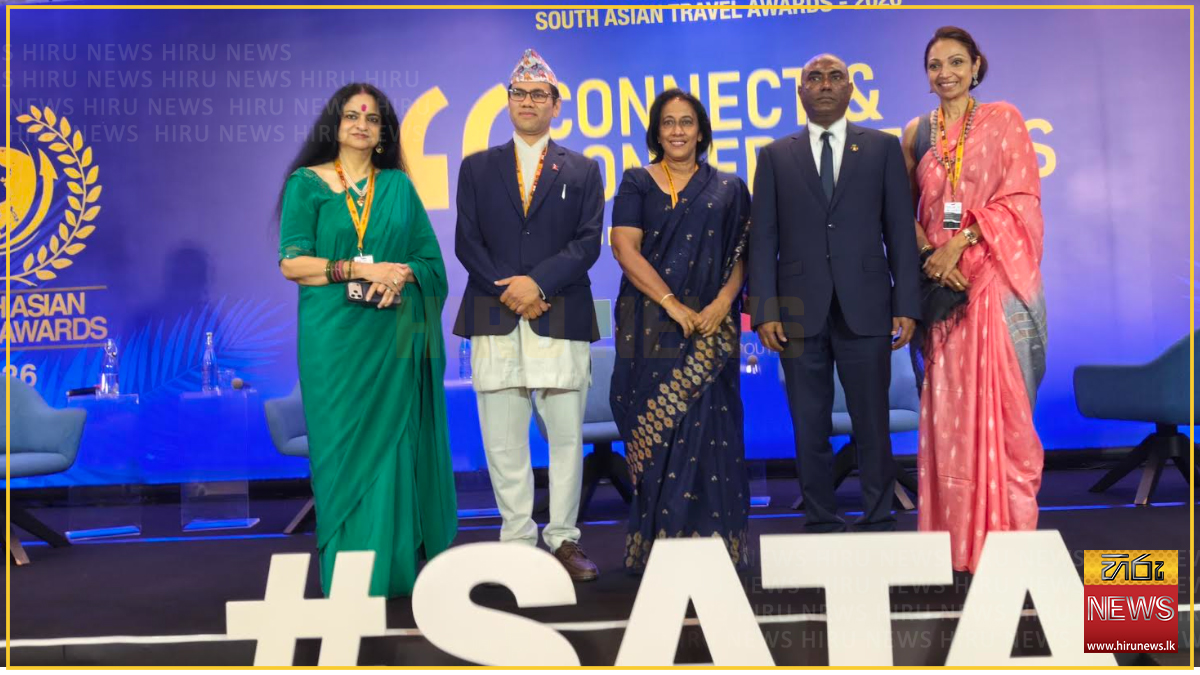
India is examining a visa-free travel card that would let tourists move more easily between South Asian countries, Travel and Hospitality Skills Council Chairperson Jyot Mayal told a panel discussion at the South Asian Travel Awards (SATA) 2026, Hiru News reported.
“It will be similar to a visa-free entry travel card for the region,” Mayal said, describing a document that would cover both tourists and business travellers.
Mayal linked the proposal to the spread of regional digital payments, saying Indian currency is increasingly accepted through platforms such as UnionPay in several destinations, Sri Lanka among them, and expressing hope the card would work in a comparable way.
Fifteen years of discussion
Panellist Amal Gunatillake said a common visa-free arrangement — and the possibility of a common currency — had been under discussion in the region for more than 15 years without materialising, citing terrorism-related concerns and other geopolitical obstacles.
Easier movement of people would let South Asian countries market themselves as a single destination and sell multi-destination packages, the panel heard, rather than competing individually for the same international visitors. Panellists also said the industry has been slow to adopt AI tools despite their potential in tourism promotion.
The event
The 10th edition of SATA opened at the Nasandhura Palace Hotel in Malé, drawing industry representatives from Sri Lanka, India, the Maldives, Nepal, Bangladesh and Bhutan, Hiru reported separately. The programme runs to three panel discussions and an awards ceremony, scheduled for Thursday.
An earlier panel brought together Abdulla Ghiyas, Chairperson of Visit Maldives; Jasim Janah, CEO of Hotels and Resorts Maldives; and Mohammed Hussein Alshaali, Chairman of Gulf Craft, moderated by Dinushka Chandrasena, Editor of TravTalk.
That session turned on the experience arriving tourists get at immigration, with panellists arguing the first exchange at an airport shapes a visitor’s view of a destination, and that Asian entry points are generally more welcoming than some European and African ones.
Alshaali said technology would not displace the human element of travel, because people travel to experience cultures, people and nature, and that South Asia had not marketed its attractions as aggressively as competing destinations.
“The Maldives has extraordinary global brand recognition. The challenge now is how to evolve that brand,” Ghiyas said, arguing that airports, resorts, yachts, investment and destination marketing are treated as separate sectors but experienced by travellers as one journey.
The discussion also weighed measuring tourism by revenue rather than arrivals alone — a shift from raising visitor numbers towards raising spending per visitor.
Not reported
No filing says which Indian ministry or agency is examining the travel card, what stage the work has reached, whether any other South Asian government has been approached, or whether Sri Lanka has taken a position on it. The proposal was described at an industry panel, not announced by a government.
The report gives Mayal’s title but not the full name of the body; the Travel and Hospitality Skills Council is an Indian sector skills organisation. Hiru’s copy uses both “he” and “she” for Mayal in successive paragraphs, and likewise for Gunatillake, so this report avoids pronouns for both.
No Sri Lankan outlet other than Hiru News appears to have covered the panel. Searches returned only earlier SATA editions, and this report relies on the two Hiru filings alone.
Sources: Hiru News — visa-free travel card, Hiru News — SATA opens.