A five-year proposal worth Rs. 96 billion to expand digital education in Sri Lankan schools has received policy-level approval, alongside a set of internet safety guidelines covering five age groups that goes to pilot in November.
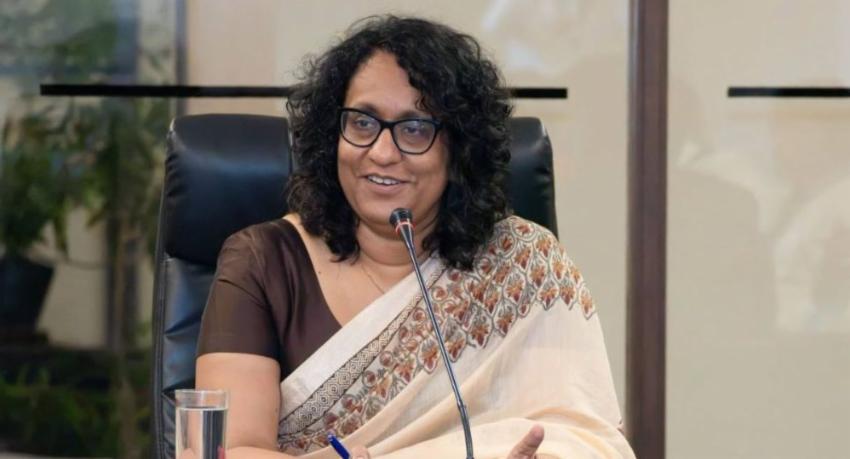
The Prime Minister, Dr. Harini Amarasuriya, set out the developments at a meeting of the Ministry of Education’s volunteer advisory council, held at Parliament on 9 October (NewsFirst; Hiru News).
The guidelines are intended to promote students’ internet safety and digital well-being. Hiru reports that after the November pilot, full implementation is planned for early 2027 — a timeline NewsFirst’s account did not carry.
The Rs. 96 billion digitalisation proposal
The five-year digital education proposal has cleared the policy stage but not yet the Cabinet. The broader policy on digitalisation of the education sector has been submitted to the President and is expected to go before Cabinet separately.
At Rs. 96 billion over five years, the proposal averages a little over Rs. 19 billion a year. No breakdown has been published of what the money buys — devices, connectivity, teacher training or content.
Curriculum approvals
Addressing the meeting, the Prime Minister said Cabinet approval had been granted for several proposals and policies tied to the education reforms now under way. These include:
- the concept paper on education reforms prepared by the National Education Commission
- the revised National Curriculum Framework
- the Student Assessment Framework for Grades 1 to 11
The last two were submitted by the National Institute of Education. Hiru adds that the assessment framework for students sitting the G.C.E. Advanced Level examination is still being developed — so the approved framework stops at Grade 11.
Cabinet has also approved a report on establishing an Education Council and a policy to regulate non-state degree-awarding institutions.
The Prime Minister also said a subcommittee was working to strengthen quality assurance across both the state and non-state education sectors — a scope that takes in private and international schools as well as government ones.
A single admissions platform from 2028
The Government plans to introduce one application platform through which students finishing their A-Levels can apply to universities, National Colleges of Education and vocational training institutions, instead of submitting separate applications to each.
The University Grants Commission and other institutions have been directed to develop the policy, with a pilot expected to begin in 2028. The Prime Minister said the aim was to ease the administrative burden on students.
Higher education policy committees
Deputy Minister of Education Dr. Madhura Seneviratne told the same meeting that special committees had been appointed to formulate policies for engineering, medical and agricultural education at the higher education level.
Those three fields are the ones where Sri Lanka’s state system faces the sharpest competition from private and overseas providers, and where the question of recognising non-state qualifications has been most contested.
The meeting also took up teacher recruitment and transfers, school sanitation, student nutrition and reforms to technical and vocational education, along with the use of artificial intelligence in education and expanding industry-based training.
Not reported
Neither filing identifies the five age groups the guidelines cover, describes what they require of schools or teachers, or says who drafted them. Neither names the schools or districts in the November pilot, gives a start date within that month, or says how the pilot will be evaluated.
Neither states the dates of the Cabinet approvals, gives the content of the revised curriculum and assessment frameworks, or names the members of the quality assurance subcommittee or the three higher education committees.
On the Rs. 96 billion proposal, neither reports what the money would be spent on, where it would come from, when it would go to Cabinet, or what “policy-level approval” commits the Government to. Neither gives a date for the A-Level assessment framework still in development, explains how a 2028 pilot of the admissions platform relates to that year’s intake, or says what the Education Council would do or what the non-state degree regulation would require.
The two outlets name the body differently — NewsFirst calls it the Volunteer Advisory Council, Hiru the Voluntary Advisory Council. Hiru’s filing also carries a “-Reuters” credit line at its foot, which does not fit a domestic announcement reported from Parliament and appears to be a template error.