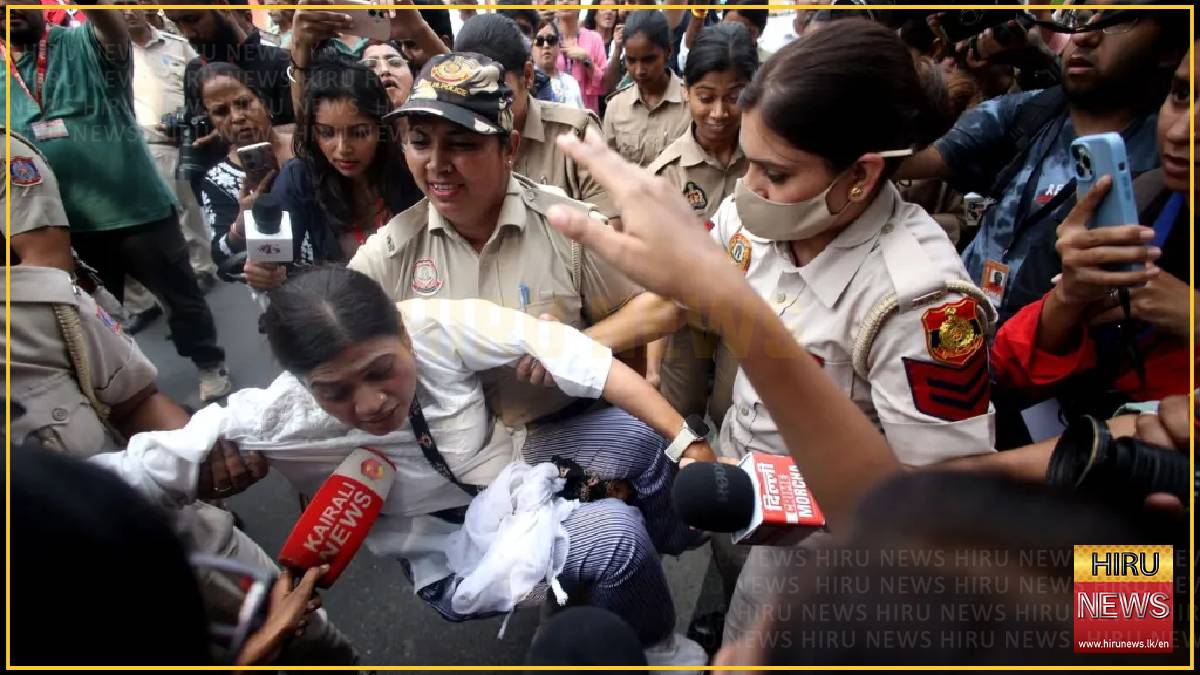
India has dismissed United Nations concern over mass detentions at a Delhi protest as “an unacceptable interference in the internal affairs of India”, a day after police detained the founder of the Gen-Z led Cockroach Janta Party within hours of his arrival in the capital.
The movement’s demand is unchanged from the protests this desk covered on 3 October: the resignation of Chief Election Commissioner Gyanesh Kumar over the nationwide revision of India’s electoral rolls. What is new is the scale of the police response and the entry of the UN into the dispute.
The detentions
Hundreds of protesters were detained during Saturday’s demonstration, the Daily Mirror reported, carrying BBC copy.
Founder Abhijeet Dipke was held with other leaders shortly after landing in Delhi, along with Saurav Das and Ashutosh Ranka. Dipke had been defiant beforehand: “If you think you can stop us by threatening us with jail or trying to intimidate us with the fear of imprisonment, you are mistaken.”
Tens of thousands of security personnel were deployed and roads barricaded ahead of the protest. Delhi Police had refused permission for it to be held at Jantar Mantar, a landmark site for demonstrations in the capital, and has not commented on the detentions. The group said it would go ahead regardless.
Dipke began the movement in May after India’s Chief Justice likened some jobless young people to “cockroaches” — the remark the party took its name from. It is not registered as a political party, and is pressing for electoral reform months before a set of state elections.
How many were held is not settled. The BBC account carried by the Daily Mirror says hundreds; the Indian Express account carried by Hiru News refers to reports of thousands. Neither figure comes from the police, who have not given a number.
The UN statement, and India’s answer
The UN Human Rights Office issued its concern on Saturday evening. “We are concerned by reports of mass detentions in India of demonstrators, protest leaders, members of civil society organisations, lawyers and journalists,” spokesperson Thameen Al-Kheetan said, in remarks carried by Hiru News.
Restrictions on peaceful protest “must meet strict tests of necessity and proportionality”, the office said, calling on police to exercise “utmost restraint” and saying that “all those arbitrarily detained must be immediately and unconditionally released”.
India responded twice within twelve hours. Its permanent mission in Geneva first called the concerns misplaced. On Sunday, Ministry of External Affairs spokesperson Randhir Jaiswal went further.
“India is the world’s largest democracy, where the right to peaceful assembly is guaranteed by our Constitution and safeguarded by robust institutions, an independent judiciary and a free media,” he said. Citizens exercise that right “subject to the maintenance of public order and safety”, and the courts “remain available to all for the redressal of any grievances”.
“The OHCHR’s concerns are therefore unwarranted and constitute an unacceptable interference in the internal affairs of India.”
He then accused the office of “extreme selectivity”: “Violent responses to protests in our neighbourhood have gone uncommented, as indeed have law enforcement actions in its own vicinity. Such double standards only erode the credibility of its standing and contribute to the loss of faith in multilateralism.” Hiru’s account reads those two references as Pakistan and France; Jaiswal did not name either country.
The underlying dispute
Under Kumar, the Election Commission has run a nationwide exercise to update electoral rolls, which it says is routine work to remove dead, duplicate and ineligible voters. In several states it has become contentious, with tens of thousands saying they were struck off wrongly. The Cockroach Janta Party and opposition parties say the revision favours Prime Minister Narendra Modi’s Bharatiya Janata Party. The Commission and the BJP deny it.
Not reported
Neither filing says how many of those detained have since been released, whether any have been charged, or where Dipke is being held. Neither reports any court challenge to the refusal of permission for Jantar Mantar, nor whether the Election Commission has responded to Saturday’s protest. Neither says whether the OHCHR has replied to India’s rejection.
Both accounts are reprints — the Daily Mirror carrying the BBC, Hiru News carrying the Indian Express. Neither outlet has reporters at the scene.