The World Bank is in discussions with 30 to 40 countries over possible crisis aid to help them absorb the energy shock and price increases caused by the war in the Middle East, its president Ajay Banga told Reuters ahead of the annual meetings of the Bank and the International Monetary Fund, carried by Hiru News.
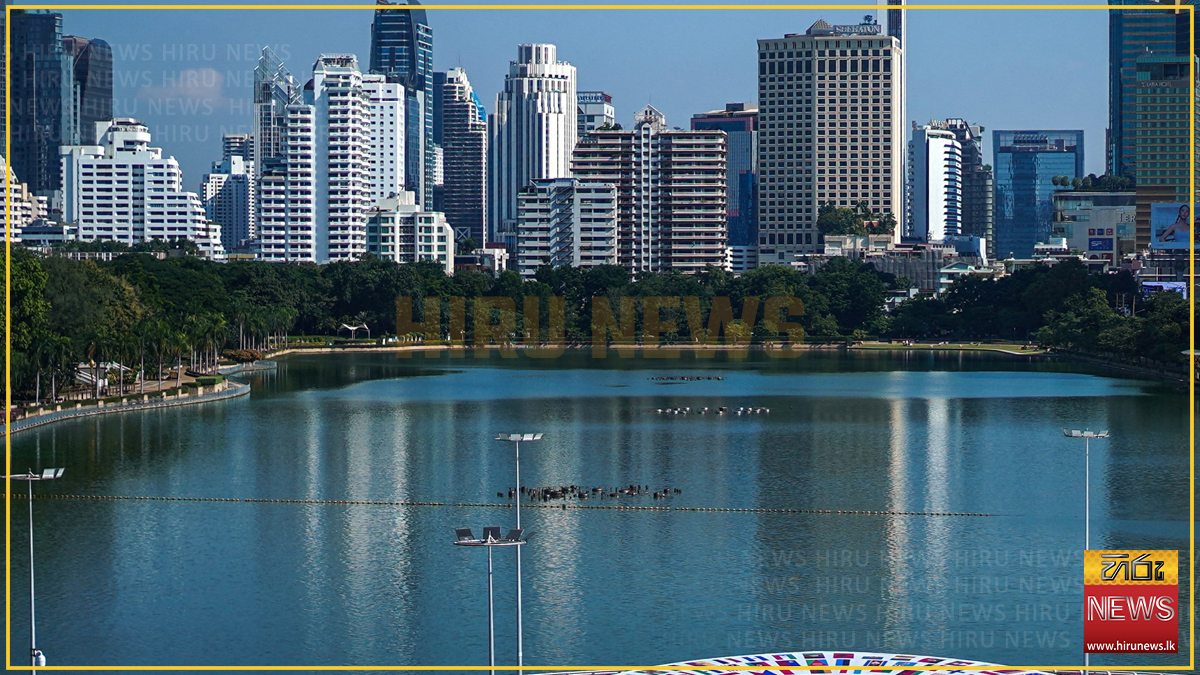
The meetings opened in Bangkok this week — the first time in three years they have been held outside Washington.
“There is pressure, and so I think maybe over the coming months, more countries will come for some slice of that first $50 to $60 billion,” Banga said. That figure is the $25 billion the Bank made available when the war began in late February, plus a further $35 billion countries could reach by diverting resources from already-approved projects. Few have drawn on the initial tranche so far.
The ceiling has moved since April
Banga set out the same framework at the Spring Meetings in Washington in April, when this desk reported it as a three-tier plan totalling up to $80 billion: $20–25 billion available almost immediately, $50–60 billion if the conflict ran to six months, and $80 billion in an extended crisis of 15 months or more.
Two things have changed. The war is now in its eighth month, which puts it inside the band Banga costed at $50–60 billion — and that is precisely the slice he now describes countries queuing for. And the outer limit has risen: if conditions worsen, he said, the Bank could make as much as $100 billion available, against the $70 billion disbursed during the pandemic. Neither Reuters filing notes the increase.
What is driving it
Banga said the global economy had proved fairly resilient, helped by large AI investments and adjustments in oil supply and demand. But a sharp spike in diesel and fertiliser prices, high interest rates and a looming “super” El Niño are landing together on developing countries whose finances were already depleted by the pandemic.
The Bank estimates developing countries owe external creditors about $400 billion in 2026, with interest payments alone accounting for a third of that.
“The real thing is not just El Niño by itself; it’s the combination,” Banga said. “What’s happening to fertiliser prices? What’s happening to energy costs? What’s happening to debt? It’s that put together that creates its own challenges.”
IMF Managing Director Kristalina Georgieva struck a similar note in her curtain-raiser speech, telling her audience that “winter is coming”.
The agenda in Bangkok
The war — now in its eighth month, after the closure of the Strait of Hormuz shut off some 20% of the world’s oil — is expected to dominate both the formal sessions and the corridors.
US Treasury Secretary Scott Bessent will not attend, sending two senior officials instead while he handled what a US official called “domestic engagements”. He is also skipping a meeting of the G20, which the United States chairs this year.
The Group of Seven has agreed to release 100 million barrels of diesel and crude from emergency reserves. More than a billion barrels have been released since the war began on 28 February, but industry executives say accessible storage is running low, leaving the market more fragile.
Banga said the Bank was not cutting its global growth forecasts for now, but was watching closely. On financing he was blunt: “There is no one answer that fits when the world has these kinds of issues. What you need to do is figure out how to cut your coat to suit your cloth.”
Why it matters here
Sri Lanka is a debt-distressed economy inside an IMF programme, and it imports both the diesel and the fertiliser whose prices Banga named. The World Food Programme warned in April that Gulf volatility could reverse Sri Lanka’s inflation and household gains through energy, food, remittance and tourism channels at once. A Sri Lankan delegation attended the Spring Meetings in April.
Not reported
Neither filing names any of the 30 to 40 countries in dialogue with the Bank, so it is not known whether Sri Lanka is among them, nor whether Colombo has sought any part of the crisis window. Neither says who is representing Sri Lanka in Bangkok, nor whether the country’s next IMF review is on the agenda there.
Both reports are Reuters copy carried by Hiru News. No other verified Sri Lankan newsroom searched by this desk — Daily Mirror, EconomyNext, NewsFirst, Daily FT — had filed on the Bangkok meetings at the time of writing, so this account rests on a single Sri Lankan outlet.