Australian biosecurity officials have stopped a traveller arriving from Sri Lanka from bringing in a set of fridge magnets made from elephant dung, warning that animal waste products can carry risks to agriculture, the environment and wildlife, Hiru News reported.
The traveller declared the souvenirs on arrival. Officials said animal waste can contain harmful bacteria, parasites, insect larvae and weed seeds, with the potential to endanger livestock and introduce invasive plant species. Although the magnets are sold commercially as souvenirs, they are not permitted entry under Australia’s biosecurity rules.
The traveller surrendered the items voluntarily and they were disposed of before they left the airport. No penalty is reported.
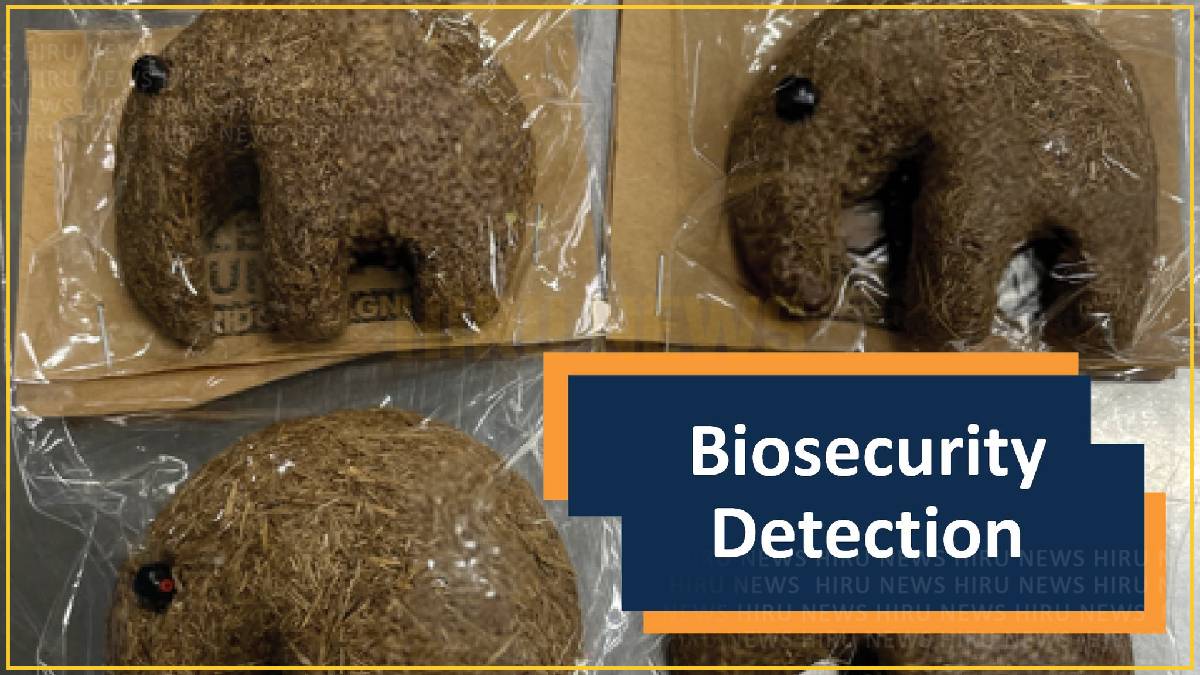
The photograph supports the stated concern
The image released with the detection shows the magnets still in their clear retail packaging, laid out on an inspection surface: elephant-shaped mouldings with a single black bead for an eye, each sealed in plastic with a printed backing card.
What is visible in the material itself is the point. The mouldings are coarse and fibrous, with loose straw and plant stalks plainly embedded in the surface of each one. That is the physical basis for the warning about weed seeds and plant matter — it is not a processed or sterilised product with a decorative finish, but compressed plant fibre that has passed through an animal, retained in a form a quarantine officer can identify by eye.
The lesson officials drew
Authorities used the detection to remind travellers that goods sold legally as souvenirs in one country do not automatically meet another’s import rules, and urged passengers to check Australia’s biosecurity requirements before travelling with animal-based products or anything else that could pose a risk to its agriculture and natural environment.
Declaring the items is what kept this a disposal. Australia’s biosecurity regime distinguishes sharply between goods declared on arrival and goods found undeclared, and the report records a declaration followed by voluntary surrender.
Not reported
Hiru’s account does not say when the interception occurred, at which airport, or how many magnets were involved. It does not identify the traveller’s nationality or residency, or say whether the items were bought in Sri Lanka or carried through it.
It also does not name the agency. The report attributes the action only to “Australian biosecurity officials.” Several Sri Lankan aggregator sites carried the same story on Tuesday and named an agency, but they did not agree with one another on which one, so no agency is named here. Those sites do not count as verified newsrooms under this desk’s sourcing rules and are not cited. No other verified newsroom had filed on the detection at the time of writing, and this desk has no previous coverage of Sri Lanka’s elephant-dung souvenir trade to set it against.