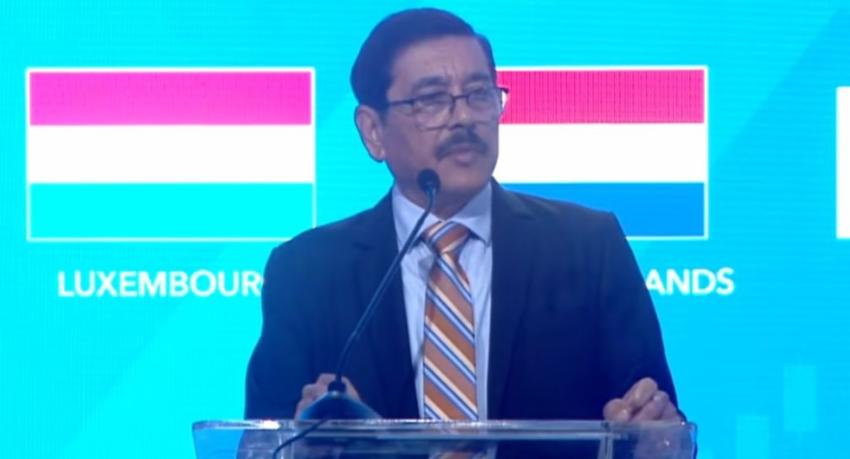
Sri Lanka’s reconstruction of its public finances after the 2022 collapse offers lessons for other South Asian countries attempting the same thing, the Finance Ministry’s Director General of Fiscal Policy told an IMF forum in Thailand, NewsFirst reported.
Dr. Kapila Senanayake, answering a question at the event, set out five lessons from the reform programme.
The five lessons
Use the crisis. The 2022 collapse exposed structural weaknesses that had been in place for decades, Senanayake said, while also creating the political momentum needed to pass reforms that had not previously been possible — among them the Public Financial Management Act.
Fix the problem before buying the technology. Digital systems attract attention, he said, but technology alone cannot repair weak processes. Governance and institutional reform has to come first.
Data quality and data architecture matter as much as the systems. Sri Lanka rebuilt its fiscal reporting and government accounting structures alongside the technical upgrades, rather than automating the existing arrangements.
The invisible reforms count. Senanayake singled out stronger commitment controls — the mechanisms that keep spending inside approved budget limits — as an example of work that attracts little attention but does much of the load-bearing.
Build local capacity. He credited the IMF’s South Asia Regional Training and Technical Assistance Center (SARTTAC) with strengthening domestic expertise rather than creating dependence on outside help, and said more than half of the IMF technical assistance missions Sri Lanka has received since January 2023 have involved it.
“The broader lesson is that digital public financial management is not simply an IT project. It is an institutional reform process that combines technology, sound governance, effective systems, skilled personnel and strong local ownership,” Senanayake said.
What SARTTAC actually does here
The claim is checkable against this newsroom’s own record. In September, SARTTAC ran a five-day course on the IMF’s Sovereign Risk and Debt Sustainability Framework in Colombo, from 7 to 11 September, for officials of the Public Debt Management Office and the Central Bank. That is capacity development of the kind Senanayake describes — training staff to run an analysis themselves — and it is distinct from programme negotiation.
Digitising tax collection, not leaping to AI
Asked separately about tax administration and artificial intelligence, Senanayake said Sri Lanka is accelerating the modernisation and digitisation of existing collection systems rather than attempting a rapid move to advanced AI-based platforms.
Measures announced in recent budgets — Point-of-Sale systems and the planned introduction of e-invoicing — are part of that effort. The Ministry is also working to integrate tax and revenue collection platforms that currently run independently of one another.
Digitalisation requires substantial investment, he acknowledged, and the government is therefore phasing the work rather than attempting everything at once. Sri Lanka’s Medium-Term Revenue Strategy treats digitalisation as a central pillar of tax administration reform, and he said technology-driven revenue collection is expected to receive further emphasis in the coming national budget — the 2027 Budget, now attracting competing claims on its contents.
Progress since the crisis has been significant, Senanayake said, but Sri Lanka still has “a long road ahead” before it has a fully integrated, digitally driven tax administration.
The control that is not the current problem
One lesson sits awkwardly against the recent record. Commitment controls are designed to stop spending exceeding approved limits. Sri Lanka’s current difficulty runs the other way: under 30% of the 2026 capital budget had been spent nine months into the year, on the narrower of the two allocation figures in circulation. Controls that prevent overspending do not address under-execution, and NewsFirst’s account does not report whether the question was put.
Not reported: NewsFirst does not name the forum, say which organisation convened it or where in Thailand it was held, give the date of the session, or name the other participants. It does not say how many IMF technical assistance missions Sri Lanka has received since January 2023, which would turn “more than half” into a number, nor when e-invoicing is due to begin. No other verified newsroom had filed on these remarks at the time of writing; a domain-restricted search returned nothing on the session, so this account rests on a single source.