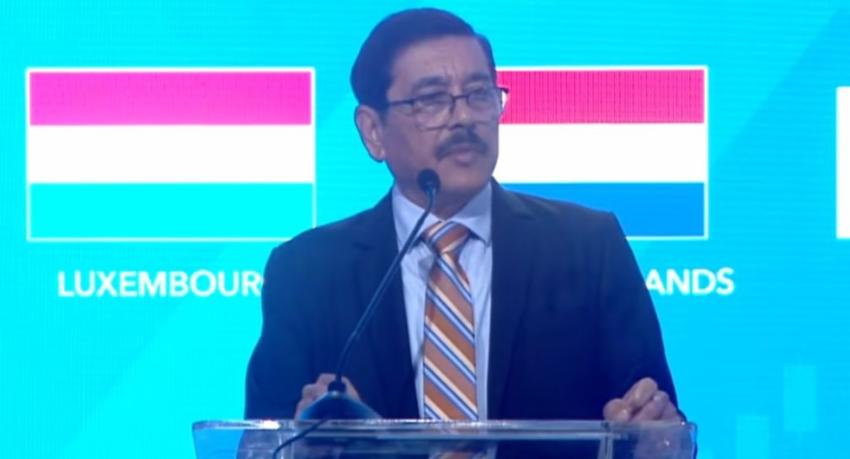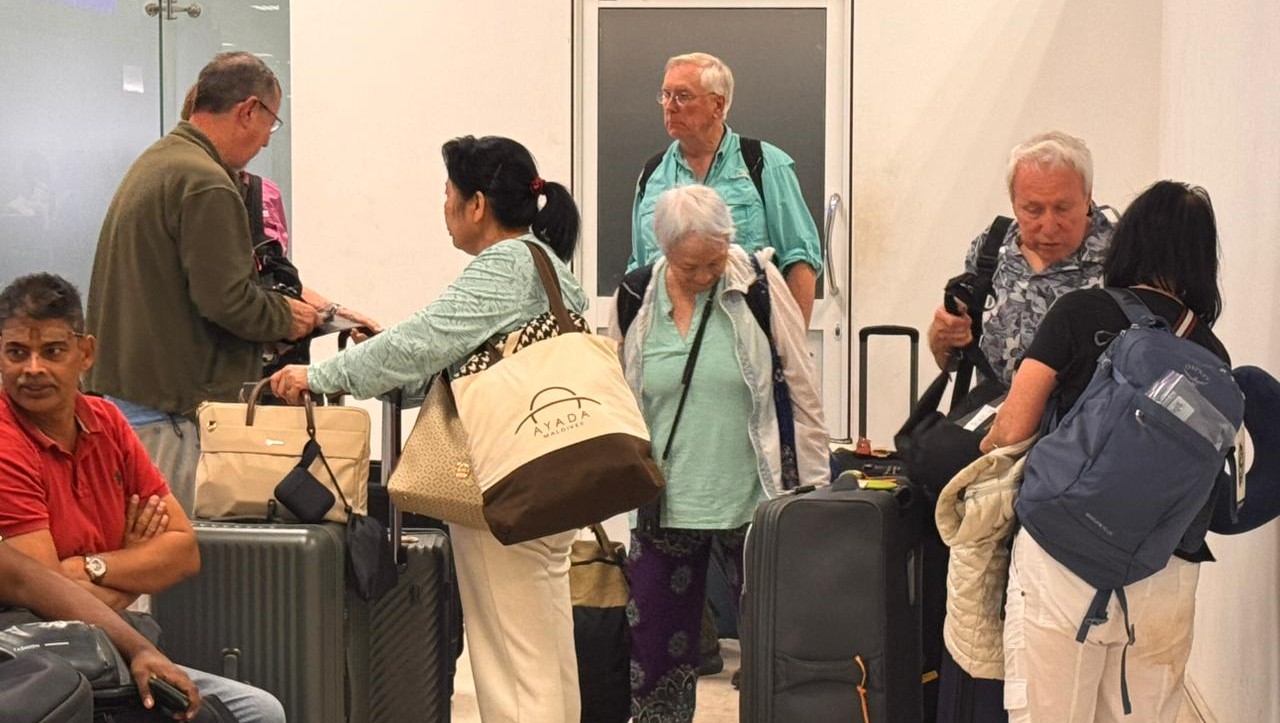
The government is considering paying a cash or dollar incentive for every tourist brought into the country above a set threshold, President Anura Kumara Dissanayake has said, responding to a proposal from the tourism industry.
Speaking at the Sri Lanka Economic and Investor Summit 2026 on Monday (12), the President said the industry had asked for incentives to be raised for operators who bring in visitors above the target set by the government, EconomyNext reported.
“We are currently considering provisions in the upcoming budget to offer a cash or dollar incentive per tourist above that threshold through the Tourism Development Authority,” he told the summit. “This would incentivize companies and institutions to bring in higher numbers of tourists.”
The payment would apply only to the surplus, not the whole volume. The President’s own illustration: “if 100 tourists visited previously and 120 arrive the following year, an incentive wouldn’t apply to the base 20, but rather on the excess beyond a certain growth threshold.”
The threshold is the whole scheme, and it is not defined
Everything about this proposal turns on the number it is measured against — and the report describes that baseline two different ways in the space of a few paragraphs.
The industry’s request, as relayed, is for incentives on arrivals above the target set by the government. The President’s worked example instead measures against the previous year’s actual arrivals (“if 100 tourists visited previously”). Those are not the same benchmark, and in Sri Lanka’s case they are far apart.
This matters because the government’s 2026 target has already moved. Sri Lanka cut its 2026 visitor goal from 3 million to 2.7 million and its tourism revenue target from US$5 billion to US$4.2 billion part-way through the year. A third figure — a 2.5 million annual target — was reported alongside the August arrivals data. No outlet has reconciled the three, and none has said whether 2.5 million is a further revision or a different measure altogether.
A scheme keyed to a government target therefore has a trigger that has demonstrably been lowered when arrivals disappointed. A scheme keyed to last year’s actual arrivals has a fixed and considerably harder trigger: 2.36 million visitors came in 2025.
What this year’s run-rate implies
On the current trend, the distinction is not academic.
| Milestone | Arrivals |
|---|---|
| Through August 2026 | 1,535,122 |
| Through 14 September 2026 | 1,609,759 |
| End-September 2026 (minister’s figure) | roughly 1.7 million |
| Full year 2025 (actual) | 2.36 million |
Reaching even the reduced 2.7 million target would require about 291,000 arrivals a month across the closing stretch. No month in 2026 has come close — the year’s strongest was February at 279,328, and August delivered 191,704. August had itself opened 8 percent below the previous year, and September’s daily run-rate ran at roughly three-quarters of early August’s.
An incentive that pays only on growth above 2025’s actual volume may, on these numbers, pay very little.
Not reported
The account leaves the operative details open. It gives no rupee or dollar amount per tourist, and no threshold or “growth rate” figure. It does not say who qualifies — tour operators, airlines, hotels, or all three. It does not say whether the “Tourism Development Authority” named by the President is the Sri Lanka Tourism Development Authority (SLTDA) in its existing statutory form, or a new disbursing body. And it does not confirm that the provision survived into the budget: the President said only that it is being considered.
The remarks came at the Ceylon Chamber of Commerce summit where Dissanayake also offered the East Container Terminal to a private operator and set out a procurement overhaul. EconomyNext filed this angle two days after the speech; no other verified newsroom had carried the tourism-incentive remarks at the time of writing, and ft.lk’s front-page, top-story, business and travel-tourism sections all returned nothing on it.
Sources: EconomyNext.