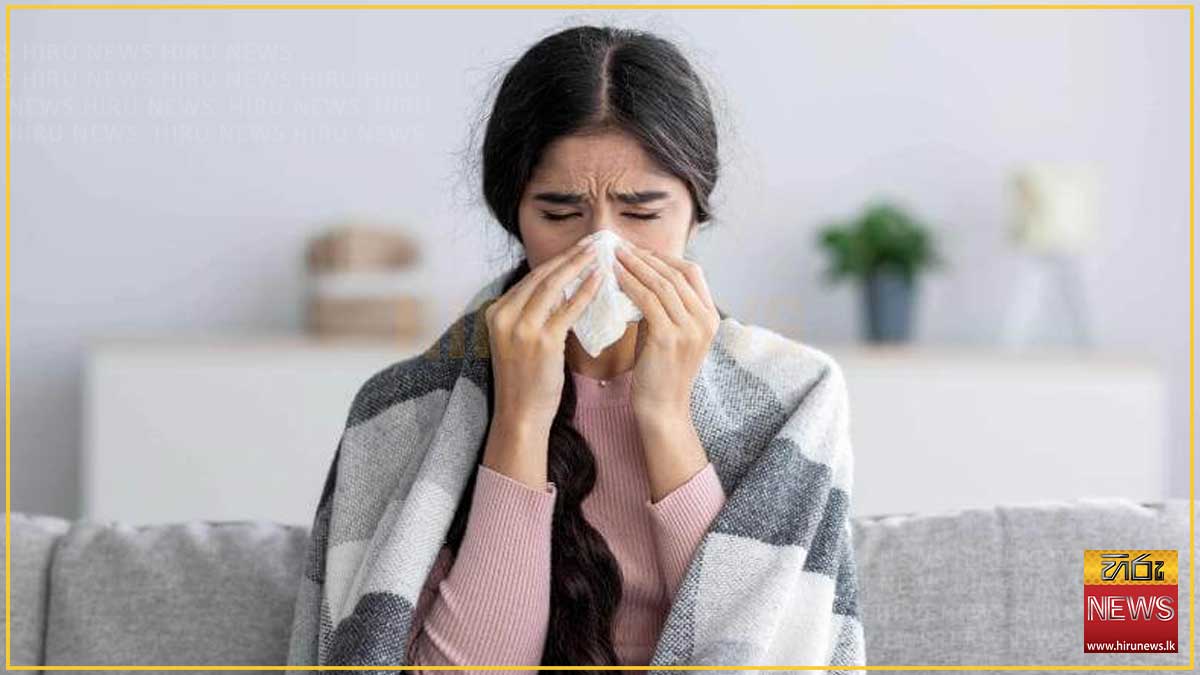
About 35% of samples taken last week tested positive for influenza, the Health Ministry’s Chief Epidemiologist at the Epidemiology Unit, Specialist Dr. Palitha Karunapema, told a media briefing, Hiru News reported on Thursday.
That single figure is the one piece of hard national data in a day’s reporting otherwise built on clinical advice, and it supplies the scale that a separate Daily Mirror report, published at 11.13 a.m., describes only as cases “on the rise” with “entire families falling sick”.
Dr. Karunapema said the coughs, colds and fevers circulating at present are in many cases influenza. He added that the illness usually resolves with treatment and that there is no cause for undue alarm, but that pregnant women, young children, the elderly and people with non-communicable diseases can develop complications. He advised frequent handwashing with soap, drinking plenty of water, paracetamol for fever — and seeing a doctor when a cough develops.
The season is early
Dr. Maheshaka Wijayawardena, Consultant Paediatrician at Base Hospital Marawila, told the Daily Mirror that influenza activity in Sri Lanka traditionally rises from April to June and November to January, spreading quickly among children in schools, preschools and daycare centres.
Mid-October falls in neither window. Neither filing notes that the current wave is running ahead of the seasonal pattern the paediatrician himself describes, and neither offers an explanation for it.
“We are currently seeing an increasing number of influenza patients, with whole families getting affected,” Dr. Wijayawardena said.
What parents are being told to look for
Influenza is caused mainly by influenza A and B viruses and spreads through respiratory particles from coughing, sneezing and talking, with symptoms usually appearing within one to four days. It begins suddenly — fever, cough, runny nose, sore throat, headache, body aches and fatigue — and children may also have poor appetite, vomiting or diarrhoea. Most recover within a week, but some develop pneumonia and, rarely, inflammation of the brain or heart.
The warning at the centre of the Daily Mirror’s report is against assuming every child with fever and a cough has the flu. COVID-19 and other respiratory viruses produce similar symptoms, and in Sri Lanka dengue and chikungunya must also be considered.
Dengue is the reason for the headline advice. A child’s condition can deteriorate as the fever subsides, so a falling temperature does not mean recovery. Dr. Wijayawardena listed the signs that warrant urgent assessment:
- Severe abdominal pain
- Persistent vomiting
- Bleeding
- Unusual drowsiness
- Cold extremities
- Difficulty breathing
Parents should watch the child’s overall condition rather than the thermometer reading alone.
Where this sits
This desk last reported on influenza in late September, when the Medical Research Institute confirmed H1N1 circulation and warned against certain painkillers. Neither of today’s filings identifies which influenza subtype is driving the current rise, so whether this is a continuation of that H1N1 activity is not established by either report.
Not reported
Neither filing gives the absolute number of samples tested or cases confirmed, the trend across preceding weeks, or any regional breakdown — so “35% of samples” cannot be converted into a case count or compared with a baseline. Neither says which laboratories or sentinel sites the samples came from.
Neither reports hospital admission or ICU figures, any deaths, or whether school closures are being considered. Neither mentions influenza vaccination — availability, cost, or whether it is being recommended for the risk groups Dr. Karunapema named — which is the most consequential omission for readers in those groups.
Sources: Hiru News, Daily Mirror.