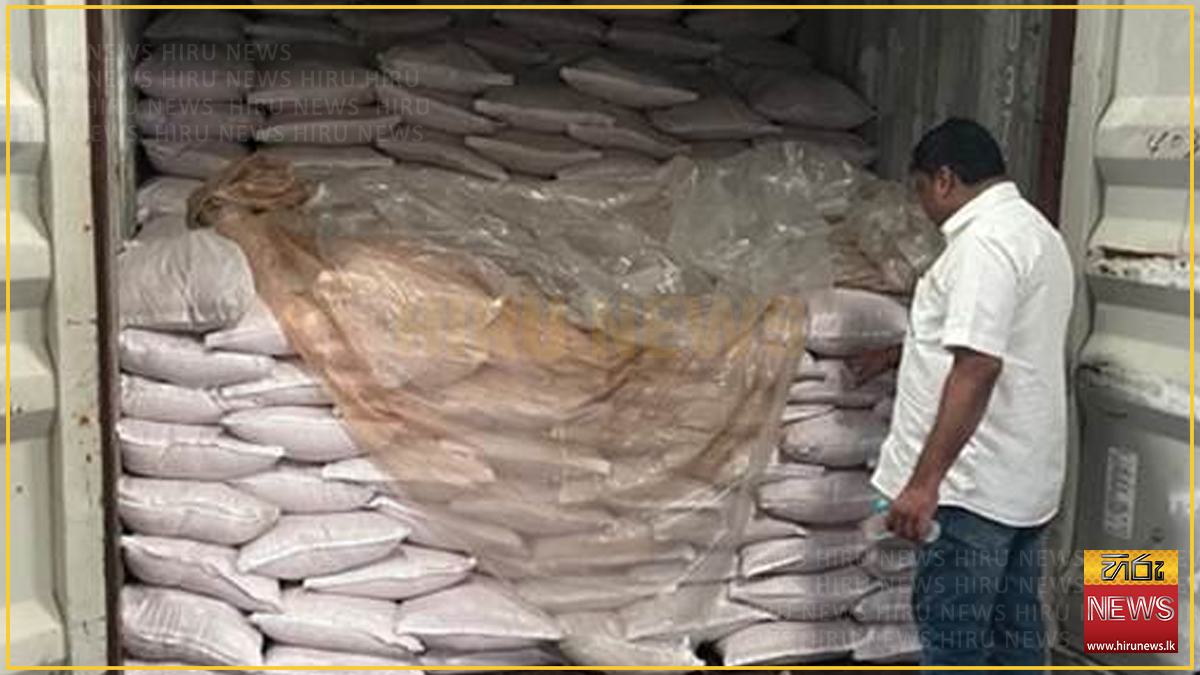
India’s Directorate of Revenue Intelligence says it has broken up a network that moved 7,311 metric tonnes of Pakistan-origin rock salt into India through Colombo Port, using forged certificates of origin to evade India’s ban on Pakistani goods.
The agency detected 295 containers of industrial and Himalayan rock salt with an estimated market value of about ₹30 crore, the Daily Mirror reported on Thursday morning, carrying an account of the DRI operation. Hiru News reported the same case earlier the same day.
The operation is named “Operation Deep Manifest”.
The Sri Lankan leg was declared honestly — the falsification came after
This is the detail that matters most from Colombo, and it cuts against the headline framing.
According to the DRI account carried by the Daily Mirror, the bills of lading for the Pakistan–Sri Lanka leg of the shipments, and the customs declarations filed with Sri Lanka Customs, expressly named Pakistan — as the origin of the goods, with India as the destination.
In other words, the paperwork lodged in Sri Lanka was accurate. What the network allegedly fabricated were the certificates of origin and invoices issued by UAE-based entities, used to re-document the cargo for the onward leg into India. Colombo functioned as the transhipment point at which the goods changed their paper identity, not as the place where the false documents were filed.
That distinction is doing real work. Indian investigators are describing their own case, and the Sri Lankan declarations are evidence for the prosecution — the honest Colombo filings are part of how the Pakistani origin was established.
What the DRI says it found
- Nine importers brought the 295 containers into India through Mundra and Kandla ports from March 2026 onwards.
- A fortnight-long coordinated operation ran from 26 September to 11 October 2026, with searches at premises in Gandhidham, Adipur, Veraval, Panipat, Pune, Patiala, Delhi and Mumbai.
- Five containers holding 140 tonnes, valued at ₹24.41 lakh, were seized at Kandla Port.
- ₹20.96 lakh in sale proceeds held in importers’ bank accounts was also seized.
- Four people were arrested under India’s Customs Act, 1962: two proprietors or partners of importing firms, a Customs Broker’s G-card holder, and the owner of a Dubai-based supplier who had also set up an importing firm in his father’s name.
The DRI says preliminary investigation uncovered a transnational network of entities owned by Pakistani, UAE, Sri Lankan and Indian nationals, which coordinated both the shipments and the supporting documentation.
That Sri Lankan nationals are named among the network’s beneficial owners is the second Sri Lankan element of the case, and it is distinct from the question of the port. No Sri Lankan individual or company is identified in either filing, and neither report says whether any Sri Lankan authority is investigating.
Why the ban exists
India prohibited the direct or indirect import or transit of all goods originating in or exported from Pakistan following the Pahalgam attack of April 2025, on national-security and public-policy grounds. The prohibition covers indirect routing, which is what makes a third-country transhipment through Colombo an offence rather than ordinary trade.
The DRI says it seized more than 362,000kg of Pakistan-origin dry dates in 13 containers at Nashik last month in a similar case, and frames both as examples of third-country routing, false origin declarations and fabricated trade documents.
A note on the wire trail
Neither Sri Lankan outlet reported this independently. Hiru attributes its account to the Hindustan Times; the Daily Mirror attributes its own to Greater Kashmir. Both are reproducing an Indian agency announcement through different Indian intermediaries, which is worth stating because the two Sri Lankan reports are not independent confirmations of each other — they are two channels carrying one source.
The figures nonetheless match across both, and across the Indian reporting reviewed for this article.
Not reported
Neither filing says which shipping lines or terminal operators handled the containers at Colombo, nor whether Sri Lanka Ports Authority or Sri Lanka Customs has been asked for records or has opened any inquiry of its own.
Neither says how the consignments were classified on arrival in Colombo, how long they stayed, or whether they were landed and re-exported or transhipped alongside. Neither reports the Sri Lankan entities’ names, nor whether any Sri Lankan national is among the four arrested — the four are described by role, not nationality.
No response from the Government of Sri Lanka, Sri Lanka Customs or the Pakistani authorities appears in either report, and the remaining 290 containers’ status is not stated.