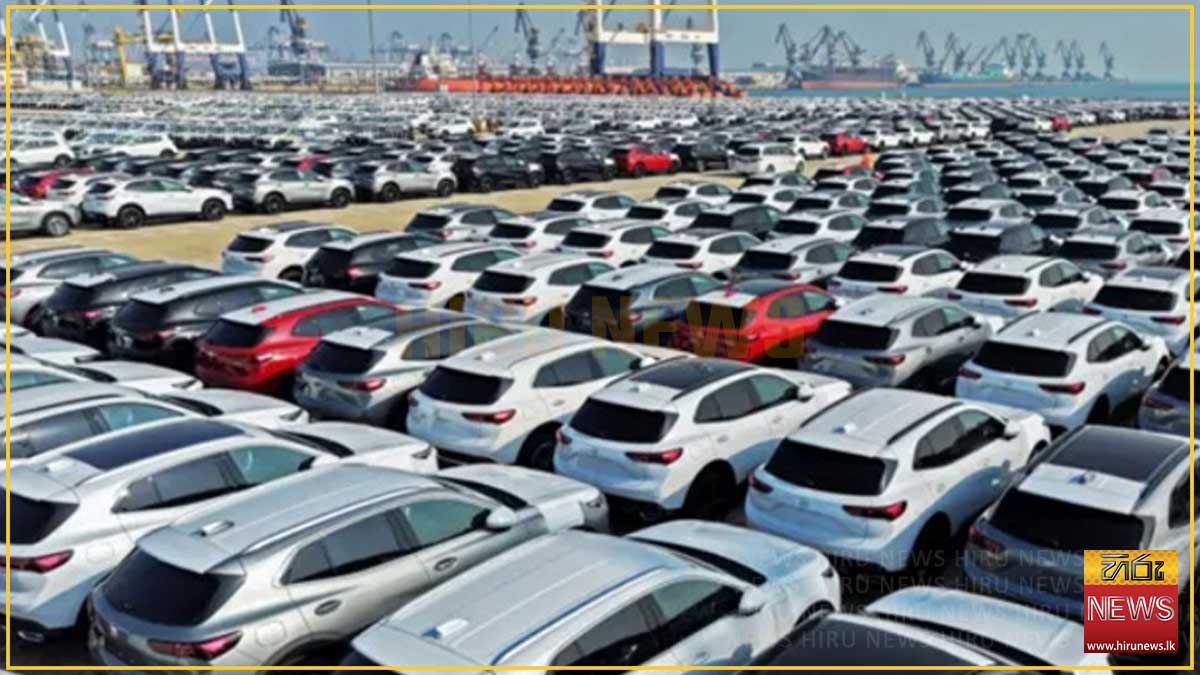
Hambantota International Port released 167,569 vehicles between March 2025 and September 2026, the port authority has said — a 19-month run covering the period in which Sri Lanka’s vehicle imports resumed, Hiru News reported on Friday.
The port said it handled the volume while supporting importers through surges in demand and through disruptions to vehicle re-shipment operations.
The split, and what it shows
| Period | New | Used | Total |
|---|---|---|---|
| March–December 2025 | 30,809 | 55,580 | 86,389 |
| January–September 2026 | 25,018 | 56,162 | 81,180 |
| 19 months | 55,827 | 111,742 | 167,569 |
The figures reconcile: the two sub-totals sum exactly to the headline number, and each year’s new and used components sum to its total.
The report presents the 19-month figure as a single achievement, but the two periods are of different lengths — ten months and nine — and comparing monthly rates changes the picture. Overall throughput is slightly up, from about 8,639 vehicles a month in 2025 to about 9,020 in 2026.
Underneath that, the composition moved in opposite directions. New-vehicle releases fell from roughly 3,081 a month to 2,780, a decline of about 10%. Used-vehicle releases rose from roughly 5,558 a month to 6,240, a gain of about 12%.
Used vehicles accounted for 64.3% of the 2025 volume and 69.2% of the 2026 volume. The port’s business is growing modestly and becoming more concentrated in second-hand stock. No filing draws this comparison; the monthly rates and shares are this desk’s calculations from the figures reported.
Concessions on charges
The port said it waived or relieved demurrage charges on vehicles that had been held at the terminal for long periods during the import restriction period, to make it easier for importers to clear them and to reduce the financial burden of doing so.
It also introduced a mechanism capping storage fees for vehicles affected by recent disruptions to re-shipment through the Gulf region, which it said allowed importers to control additional storage costs and plan their expenses with more certainty.
That second measure places the port inside a wider story this desk has been tracking. Disruption to shipping through the Gulf has already forced Sri Lanka to abandon Iranian bitumen supply and seek alternative markets, with carriers and insurers — not suppliers — identified as the obstacle. The vehicle trade is carrying a version of the same problem, and the port is absorbing part of the cost.
Importers went on the record
The Vehicle Importers Association of Lanka (VIAL) commended the Hambantota International Port Group for what it described as flexibility, prompt responses and practical support in resolving the difficulties importers faced.
HIPG chief executive Wilson Qu said the association had become an important channel of coordination for identifying the operational problems vehicle importers encounter, and that this allowed the port to respond more effectively to market conditions.
A note on sourcing
Hiru attributes the figures to a report in an English-language newspaper rather than to its own reporting or to a direct statement from the port. This desk has not located that original report, and no other verified newsroom it searched has carried the same figures. The numbers are therefore published here as relayed by one outlet at second hand, and should be read with that caveat.
Not reported
The 19-month window opens in March 2025, but no filing says why that month is the starting point, or what the port handled before it. The report gives no revenue, no comparison with Colombo Port’s vehicle throughput, and no figure for how many vehicles remain uncleared at the terminal.
It does not say how much the demurrage waivers and storage-fee caps cost the port, how long the capping mechanism will run, or which Gulf disruptions specifically triggered it.
Source: Hiru News (Sinhala).