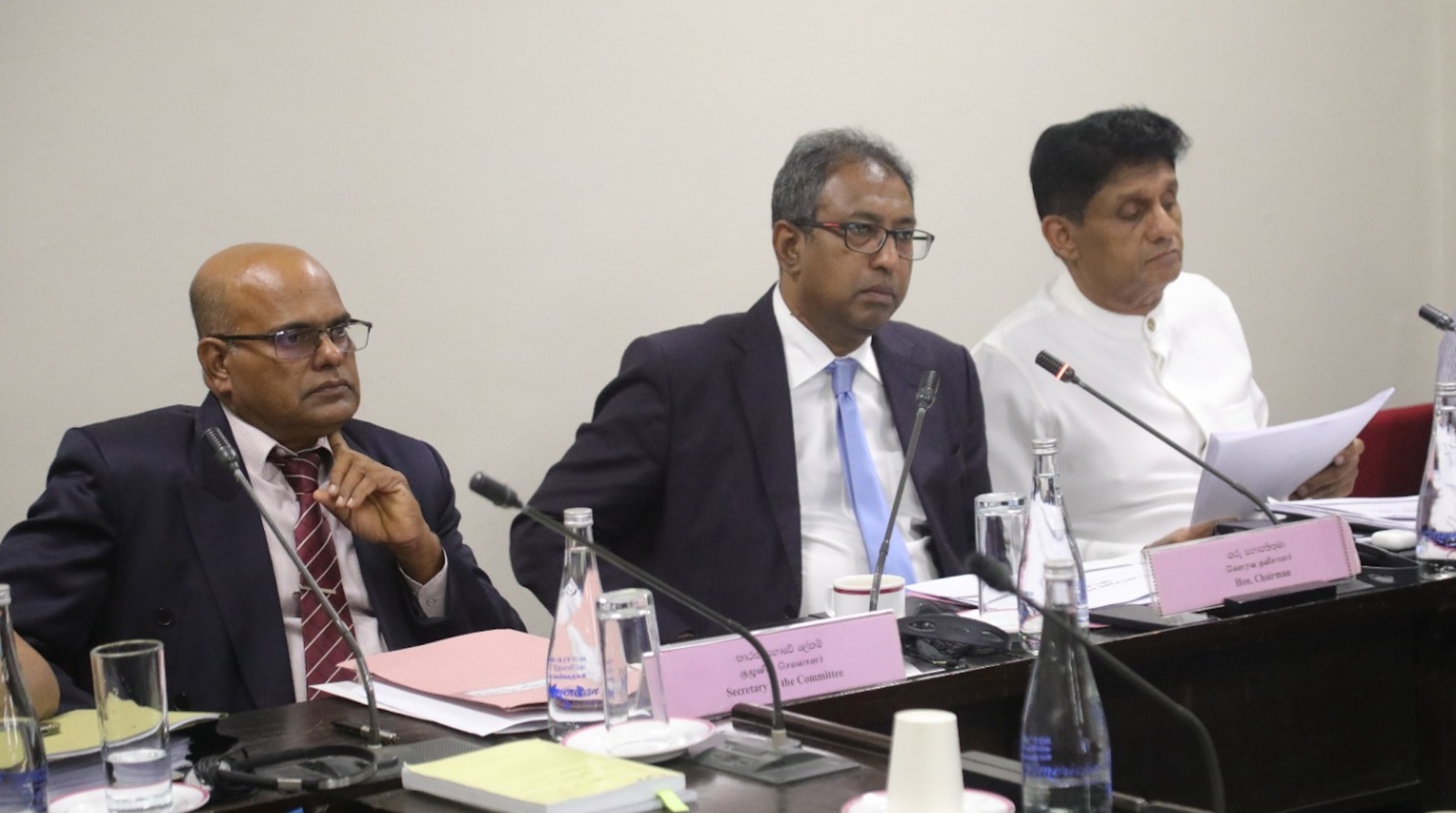
The release of Sri Lanka’s Household Income and Expenditure Survey (HIES) report for 2025 has been pushed back by two months, from October 2026 to December 2026, officials told Parliament’s Committee on Public Finance.
The reasons given were “complexities in data cleaning, delays in computerization, cadre vacancies, and work related to the Economic Survey”, according to a Parliament statement issued on Friday (16) and reported by EconomyNext.
The survey drew on data gathered from 25,000 households island-wide over a 12-month period. Cleaning, verification and analysis are still under way. The data is collected and compiled by the Department of Census and Statistics (DCS), which sits under the Ministry of Finance, Planning and Economic Development.
What the committee actually went after
The delay is the news, but it is not the whole of it. The committee met earlier in the week to examine poverty, income distribution and household welfare — specifically the scientific methodologies used to calculate the poverty line and how the resulting data feeds policy.
Members pressed on whether the consumer basket used to calculate the poverty line is out of date. Discussion “particularly focused on whether calculations based on outdated data and commodity baskets accurately reflect the current cost of living and basic public needs”, the statement said. It also recorded the need to publish survey results “in a timely manner”.
Attention was drawn to a second consequence: that the data used to identify beneficiaries for welfare programmes such as Aswesuma must reflect current household income and expenditure levels. Four bodies were named as collecting the relevant data — the Finance Ministry, the DCS, the Central Bank and the Welfare Benefits Board.
Why a two-month slip matters more than it sounds
A government committee questioning whether official poverty figures rest on outdated baskets lands on contested ground.
Three weeks ago, Opposition Leader Sajith Premadasa challenged the government to a public debate over the socio-economic report compiled by the Central Bank and the DCS, arguing that its sections on poverty, household income and expenditure drew on data from 2016 to 2019 while its headline macroeconomic indicators used far more recent figures. He called the mix of vintages a failure of “chronological consistency and integrity”.
The HIES is the survey that supplies precisely those sections. A delayed 2025 edition means the older data stays in service two months longer — and the committee has now, in its own words, raised the same objection about outdated baskets that the Opposition raised about outdated data.
The timing compounds it. The survey covers 2025, and the fieldwork ran a full twelve months. Even on the original October date the published picture would have been roughly a year old; in December it will be closer to two years behind the households it describes.
The figures that depend on it
This is not an abstraction. The DCS publishes a monthly official poverty line derived from a consumer basket — the threshold stood at Rs. 17,592 per person in June, up 6.7% on a year earlier. That monthly series is calculated from the basket the committee is now questioning.
Aswesuma eligibility runs off the same household data. The scheme’s first-phase caseload fell to 985,283 families in October, a drop of nearly 14,000 in a month — the kind of movement that is difficult to interpret without current income and expenditure benchmarks.
Not reported
The statement does not say when the last HIES edition was published, nor what the new December date is anchored to beyond “more time needed for accurate compilation”. It gives no indication of how many DCS posts are vacant, or how long the computerisation delays have run.
It does not say whether the consumer basket will actually be revised, who would decide that, or whether any revision would apply to the 2025 report or only to later editions — a consequential distinction, since changing the basket changes the poverty line and therefore the measured poverty rate.
Nor does it explain how “work related to the Economic Survey” came to compete with the HIES for the same staff, or whether the December date carries any risk of slipping again.
No other verified newsroom reachable from this desk had filed on the delay at the time of writing, and the underlying Parliament release was not retrievable from the committee’s own news pages.