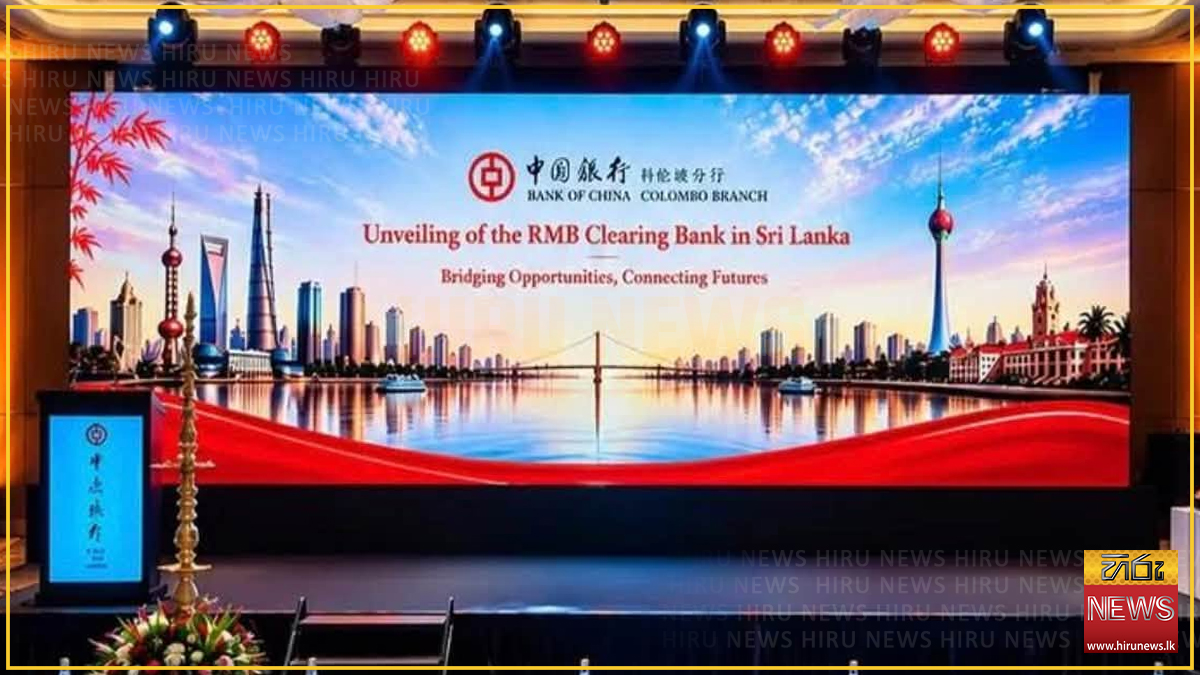
A Chinese yuan (RMB) clearing bank has formally opened in Sri Lanka, giving trade and investment flows between the two countries a route to settle in renminbi rather than passing through a third currency.
The launch ceremony was held at a private hotel in Colombo and organised by the Bank of China’s Colombo branch, Hiru News reported on Friday.
The event ran under the theme “Bridging Opportunities, Connecting Futures” and was attended by senior diplomats from both countries, chief executives from the financial sector and invited guests. The RMB clearing service was formally inaugurated, and the programme included an explanatory presentation and a video setting out how yuan transactions will be settled.
The facility is expected to make trade, investment and financial links between Sri Lanka and China easier, faster and more efficient, the report said.
What a clearing bank actually does
A clearing bank is the local institution authorised to settle payments in a foreign currency directly. Without one, a Sri Lankan importer paying a Chinese supplier in yuan generally has to route the payment through a correspondent bank abroad, usually converting through US dollars on the way — which adds a conversion spread, a second set of fees and settlement delay.
With a designated clearing bank in Colombo, those payments can settle locally in renminbi. The practical effects are lower transaction costs, shorter settlement times, and the removal of dollar exchange-rate risk from the leg of the trade that is denominated in yuan.
This is financial plumbing rather than a headline investment, but it is the kind that changes behaviour: it lowers the cost of choosing to invoice in renminbi at all.
One source, and why that is being said plainly
This desk found no other verified newsroom carrying the opening. Searches across Daily Mirror, EconomyNext, Daily FT, Lanka Business Online, Colombo Gazette, Island, Ada Derana, NewsFirst, News.lk and the Central Bank’s own site returned only older material — coverage of an earlier RMB clearing arrangement and of renminbi internationalisation forums held in previous years — not this week’s event.
The article is therefore published on a single source. One piece of independent corroboration does exist within that source: Hiru’s own photograph of the venue shows the event backdrop, which reads “Unveiling of the RMB Clearing Bank in Sri Lanka” above the Bank of China Colombo Branch name and the “Bridging Opportunities, Connecting Futures” line. The image confirms the organiser, the event and the theme as reported.
Not reported
Hiru’s filing is brief and omits most of what would make the announcement assessable.
It does not name which institution has been designated the clearing bank — the Bank of China’s Colombo branch organised the ceremony, but the report does not state that it is itself the clearing bank, and no other candidate is named. It gives no date on which the facility begins operating, and names no official who spoke, on either side.
It does not say which authority made the designation, whether the People’s Bank of China or the Central Bank of Sri Lanka, nor when the underlying arrangement was agreed. No figure is given for the volume of Sri Lanka–China trade currently settled in renminbi, nor any projection for what the facility is expected to handle.
This desk’s archive contains no previous coverage of a renminbi clearing arrangement for Sri Lanka, so none of the above can be filled in from earlier reporting. These questions are left open rather than answered from inference.
Source: Hiru News (Sinhala).