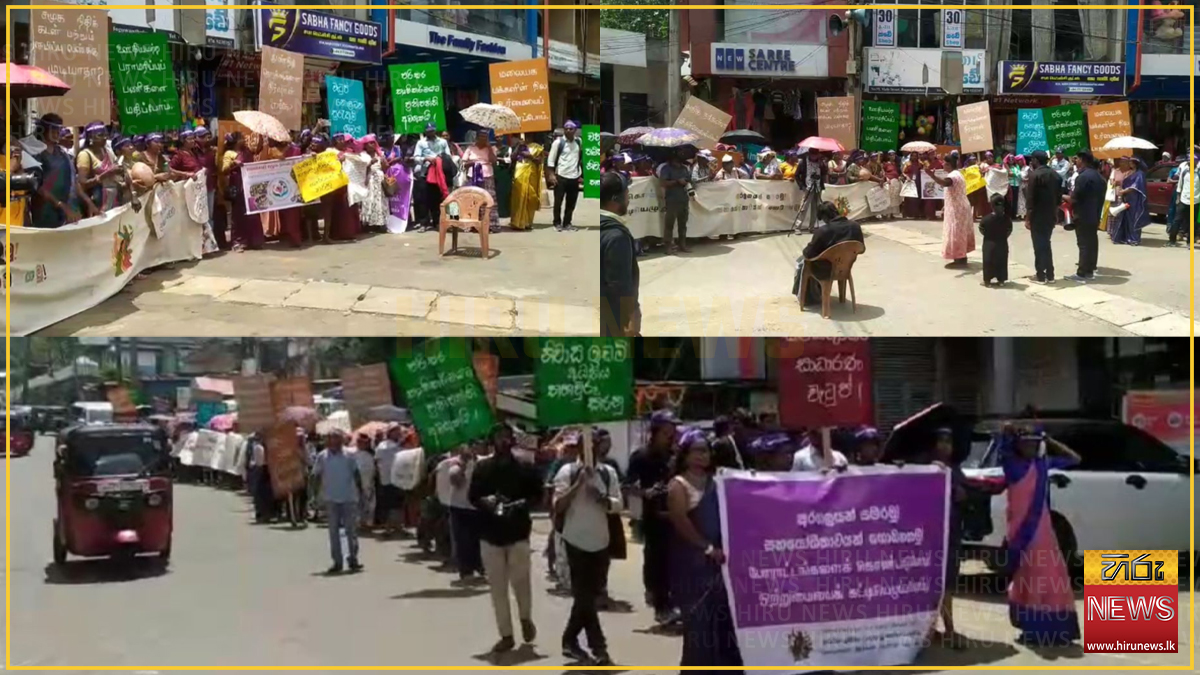
A group of women marched through Bogawantalawa town on Sunday and held a demonstration demanding rights for estate workers, Hiru News reported, attributing the account to its own correspondents.
Hiru describes the organisers as a women’s organisation working on economic issues. Footage filed with the report shows the march moving along a shop-lined street in the town, participants in matching purple caps, with placards and banners carried in both Sinhala and Tamil — the two languages of the upcountry plantation districts.
A broader platform than estate wages
What stands out is how little of the demand set is about pay. The slogans Hiru lists range well beyond the wage disputes that usually drive plantation protest:
- policies for ecological agriculture
- protection for unpaid care labour
- housing and land rights for estate workers
- farmers’ seed rights
- an end to highly toxic pesticides
- solutions to the microfinance crisis
That combination joins plantation-sector grievances to agricultural and household-debt demands that are usually voiced separately. Microfinance debt in particular has been a running political issue: Opposition Leader Sajith Premadasa pressed the government on microfinance debt relief earlier this month. Estate housing and land tenure have their own long history, including state and Indian-funded plantation housing programmes and a pension scheme for tea estate workers.
Not reported
Hiru does not name the organisation, give a crowd size, name any speaker, or say whether the march ended with a petition or a handover to any authority. No estate company, trade union or government body is quoted, and there is no indication of a police presence or of any permission sought or granted.
Readers should also note that Bogawantalawa has appeared in this desk’s recent coverage for unrelated reasons — gem-mining arrests and landslide warnings. None of those matters is connected to this protest.
No other verified newsroom this desk tracks had filed on the march at the time of writing. Searches returned estate-worker protest coverage from 2016 and 2021 — a recurring story type in the plantation districts, and not this event.