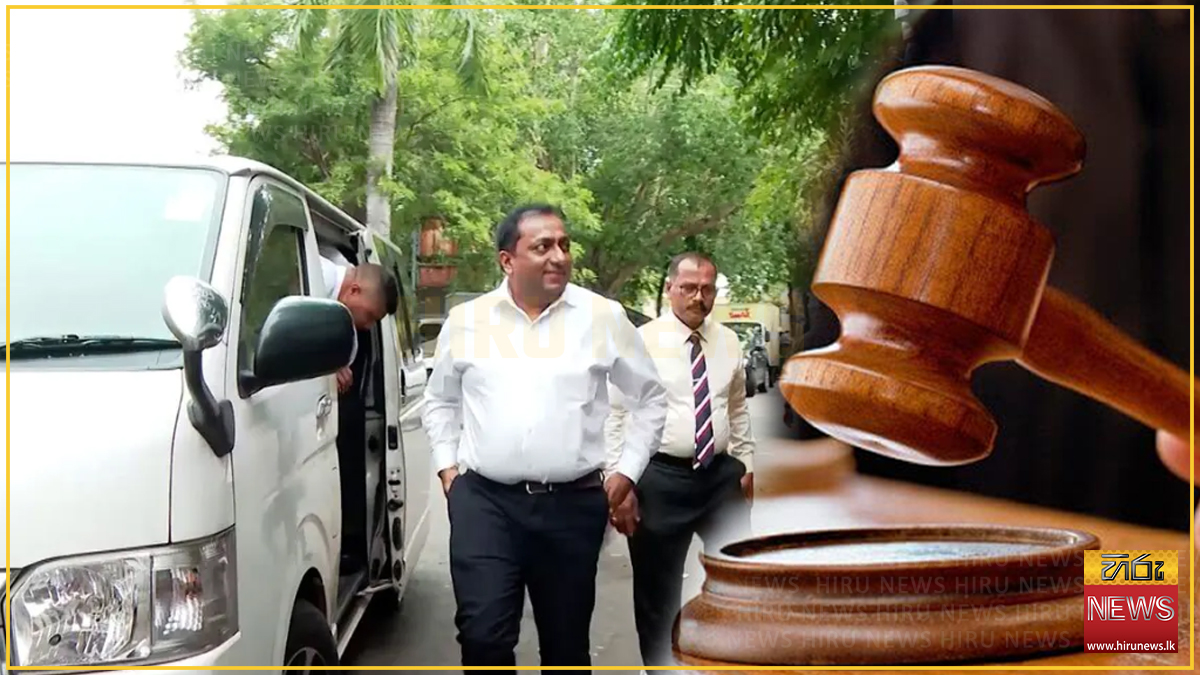
The Anti-Corruption (Amendment) Bill is now law. Speaker Dr. Jagath Wickramaratne endorsed the certificate on Monday, enacting it as the Anti-Corruption (Amendment) Act, No. 25 of 2026 — the final step in a passage that a constitutional challenge had held up since August.
The endorsement was announced by the Parliament Communications Department and carried by Parliament’s news service. The Daily Mirror reported the same release at 3.56 p.m.
What the Act changes
The legislation amends the Anti-Corruption Act, No. 9 of 2023. According to Parliament, it is intended to:
- resolve legal, interpretative, administrative and technical problems identified while implementing the 2023 Act;
- reconcile inconsistencies between the Sinhala and English texts of that Act;
- address difficulties in investigating and prosecuting corruption offences;
- improve the administrative functions of the Commission to Investigate Allegations of Bribery or Corruption (CIABOC); and
- move declarations of assets and liabilities onto a centralised electronic system.
Parliament says the amendments are expected to strengthen the country’s existing legal and institutional framework against corruption.
The two months in between
The Bill was presented for its First Reading on 19 August by Prime Minister and Minister of Education, Higher Education and Vocational Education Dr. Harini Amarasuriya. The Second Reading debate was held on 8 October, after which Parliament passed it with amendments, without a division.
Between those two dates the Bill was challenged in the Supreme Court. Transparency International Sri Lanka petitioned on 31 August, arguing several clauses were unconstitutional. In a determination the Speaker read to Parliament on 22 September, the court found that three sets of provisions could not pass on a simple majority:
- Clause 17, restricting bail for offences under the Act, required a two-thirds majority and approval at a referendum;
- Clause 6(7), extending asset-declaration duties to owners, chairpersons and directors of registered media institutions and TRC-licensed entities, required a special majority;
- Clause 7, dropping the duty to declare the assets of anyone sharing a declarant’s household for more than six months, was found inconsistent with Article 12(1), with withdrawal recommended unless passed by a special majority.
Clauses 3, 4, 6(4), 6(5) and 11 were cleared for a simple majority.
On 30 September, Cabinet Spokesman Nalinda Jayatissa said the government would drop or amend Clause 17 rather than hold a referendum, without saying which.
What enactment settles, and what it does not
No referendum has been held. Sri Lanka has not held one since 1982. Clause 17 therefore cannot have become law in the form the Supreme Court examined — it was either removed or rewritten at the committee stage. The enactment confirms that much.
It does not confirm anything further. Neither Parliament’s release nor the Daily Mirror’s report says what became of Clause 17, Clause 6(7) or Clause 7, and neither gives the terms of the amendments the Prime Minister moved on 8 October. This remains the open question our coverage of the passage flagged, and the Speaker’s certificate does not answer it.
There is a second unexplained point. The Bill was passed “without a division” — meaning no recorded vote was taken. A two-thirds majority is ordinarily demonstrated by a recorded division. Taken together with the absence of a referendum, that is consistent with the clauses requiring special majorities having been amended or dropped rather than carried at the higher threshold. No source states this, and it is recorded here as an inference from the published facts, not as a reported finding. The text of the Act as certified has not been published in the filings seen.
The context the Act lands in
The new law reaches the statute book in a week when CIABOC — the body whose administrative functions it reorganises — has been unusually visible. The commission summoned former foreign minister G.L. Peiris and arrested Namal Rajapaksa’s private secretary on the same day the Speaker signed the certificate.
The 2023 Act it amends was itself passed as part of the governance commitments Sri Lanka made alongside its International Monetary Fund programme, and the government has presented these amendments as aligning the law with UN standards and meeting IMF conditions.
Not reported
Ada Derana also filed on the endorsement (adaderana.lk/news/250195). It is not cited here because the site has returned an HTTP 403 to this desk for 32 consecutive days, which makes it impossible to verify a publication date under our sourcing rule. The aggregator Newswire also carried the release; aggregators earn no credibility weighting on this site.
Sources: Parliament of Sri Lanka, 19 October, Daily Mirror, 19 October.