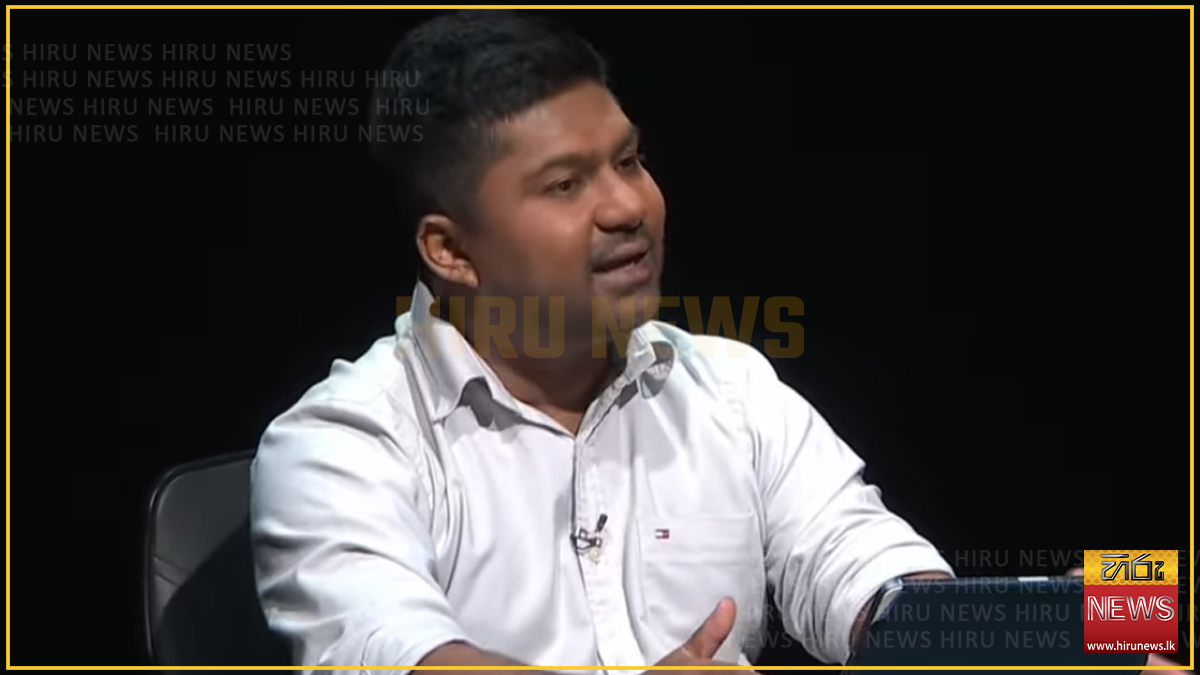
The islandwide power failure of 17 October was caused by substandard coal, Sri Lanka Podujana Peramuna MP D.V. Chanaka said on Monday, putting the blackout and the power cuts that followed it down to the coal procurement controversy the government has already costed at more than Rs. 15 billion.
Chanaka made the claim on the political programme Salakuna, broadcast on Monday, Hiru News reported.
“Clearly, it was inferior coal that brought the Norochcholai power station to this state,” he said. “It is not only us saying it — it is in the reports the Ceylon Electricity Board itself gave to Parliament, that the effect lasts not just at this moment but for years.”
He said the CEB’s report to Parliament stated that the damage caused “cannot be calculated,” and that the consequences could continue “even for a year or two.”
What the record already holds
The claim lands on top of three things this desk has separately reported.
On 8 October, Energy Minister Anura Karunathilake told Parliament that inferior coal had cost the country Rs. 15.765 billion, and that Rs. 16.989 billion in penalties and performance bonds had been withheld from suppliers. So the existence of a costly coal problem is not contested between government and opposition.
On 17 October, the national grid suffered a total system failure. The Energy Minister said at the time that a glitch reported a day earlier at Upper Kotmale was under investigation, and the National System Operator said separately that Norochcholai had collapsed.
On 19 October, the PUCSL approved rotational power cuts running 19–21 October, in a schedule that attributes the shortfall to the unavailability of the Lakvijaya plant following the blackout.
What is claimed and what is established
Chanaka is asserting a cause the official investigation has not stated. The suspected trigger named by the minister on the day was Upper Kotmale; that Norochcholai went down and stayed down is on the record, but no published finding yet says coal quality is why the grid failed.
The two accounts are not necessarily incompatible — a plant can be brought offline by one event and kept offline by another — but nothing published so far resolves which applies. This article records Chanaka’s claim as a claim.
He is not a disinterested witness, and he is not new to the subject: as a former State Minister of Power and Energy he told the Special Presidential Commission on coal in August that the 2025/2026 tender had been held back to suit one supplier.
Not reported
Hiru’s filing does not identify which CEB report to Parliament Chanaka is quoting, give its date, or quote the “cannot be calculated” passage directly from the document. No government response to Monday’s claim is recorded, and the National System Operator’s investigation into the 17 October failure has not reported publicly.
Sources: Hiru News.