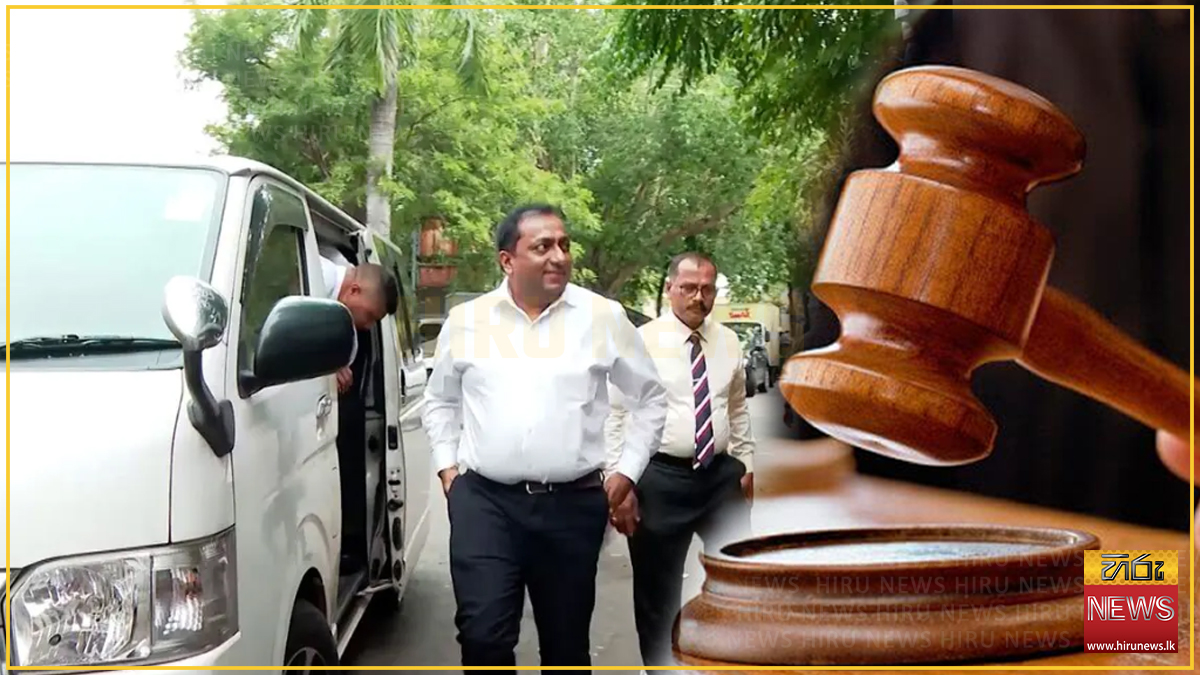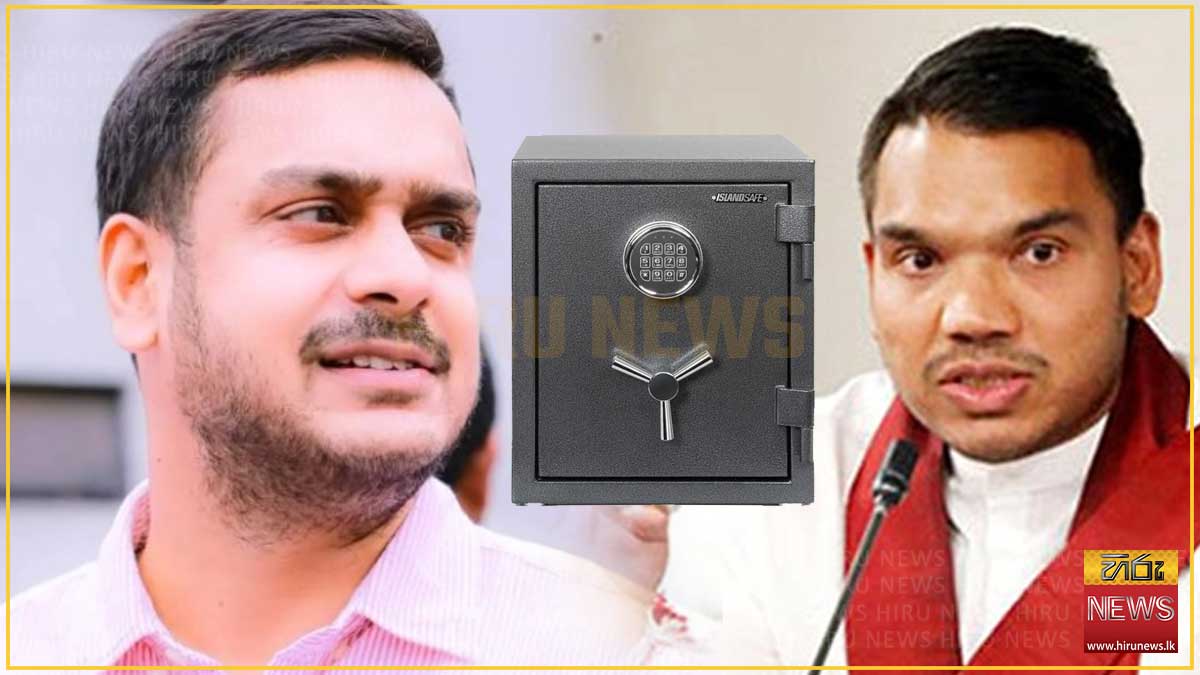
The Commission to Investigate Allegations of Bribery or Corruption has arrested Sanje Samarasinghe, private secretary to SLPP MP Namal Rajapaksa, over the safe officers removed from his Mount Lavinia home three nights earlier.
The Daily Mirror reported the arrest at 9.06 p.m. on Monday and Hiru News at 9.22 p.m.
The Daily Mirror reports that CIABOC arrested him after recording statements in connection with the safe found at his residence. The arrest follows the investigation into that safe, taken during a search by a joint team of commission officers and police.
This answers a question that had been open since Saturday
When this desk reported the search on 17 October, the central fact was an absence: a six-hour overnight operation by CIABOC, the police and the Special Task Force, with no agency stating why it was conducted. The only public account came from the Rajapaksa family’s lawyer. When a safe was later taken into commission custody, this archive noted that “a safe taken into custody is not a disclosure of its contents.”
Monday’s arrest supplies the subject. Hiru reports the suspicion as a failure to disclose the source of a sum of money — which establishes, for the first time, that money is what the investigation turns on.
The headline and the body do not locate the money in the same place
Hiru’s headline says the suspicion concerns the source of the money in the safe. Hiru’s own body text says it concerns “an allegation of failing to disclose the source of a sum of money in his possession.”
Those are different claims. Money in the safe is money the commission has; money in his possession is a broader category that need not be the safe’s contents at all. The Daily Mirror avoids the question entirely, saying only that the arrest followed statements recorded “in connection with the safe.”
So the most that is established is that the arrest concerns unexplained money and that the safe is central to how the commission got there. No filing states what was inside the safe, or how much money is at issue.
What has not changed
No filing attaches this to any of the cases already against Rajapaksa himself — the Krrish bribery matter over Rs. 70 million, or the Airbus proceedings on which he was indicted on 13 October with a separate money laundering case set for 18 November. Nor does any filing report the outcome of the bail ruling in the Krrish case that was due on 16 October, which remained unreported when this desk last checked.
Neither newsroom explains the Special Task Force’s role in the original search, which remains the unusual element of the operation.
The name
Three spellings are in circulation: the Daily Mirror writes Sanjaya, Hiru’s English URL writes Sanjay, and Hiru’s Sinhala text writes සංජේ — Sanje, which is the form this desk has used since the first filing. Same person.
Not reported
Neither filing gives the time of the arrest, says whether Samarasinghe has been produced before a magistrate or when he will be, names the statute he is held under, or quotes a lawyer acting for him. Neither reports a response from Rajapaksa, the SLPP, or the family’s spokesman Attorney Manoj Gamage, who was the sole source for the original account of the search.
Sources: Daily Mirror, Hiru News.
Update, 20 October — bail granted, and the statute named
Samarasinghe was released on bail on Tuesday by Colombo Chief Magistrate Asanga S. Bodaragama, the Daily Mirror reported at 2.48 p.m.
The magistrate ordered his release on two surety bails of Rs 1 million each and imposed a travel ban preventing him from leaving the country. The case was fixed for 10 December for further proceedings.
This closes three of the four questions left open above. He has been produced before a magistrate; the statute is named; and there is a date.
The statute is the significant detail
CIABOC arrested Samarasinghe over the alleged possession of property suspected to have been derived from criminal activity — and the Daily Mirror reports the court acting under the Proceeds of Crime Act, No. 5 of 2025.
That is a different instrument from the bribery and corruption provisions CIABOC has historically used. A proceeds-of-crime case does not require proving that the accused committed a predicate offence in the ordinary way; it turns on whether property can be accounted for. It fits the shape of the original allegation — a failure to disclose the source of money in a safe — more closely than a bribery charge would, and it explains why the case was framed around the contents of the safe rather than around any transaction.
The Act is recent, passed in 2025, and this is among the early reported applications of it to a political staff figure.
Still not reported. Neither filing quotes a lawyer acting for Samarasinghe, states the sum said to be unaccounted for, or carries a response from Rajapaksa, the SLPP, or Attorney Manoj Gamage. — the sum and the lawyer are both now on the record, below.
Update, 20 October (second): the safe held Rs 1.8 million, and the court heard both sides
NewsFirst filed twice on the same hearing, and its second filing is by far the fullest account published of what was actually argued. It closes the two gaps recorded above.
What was in the safe
Bribery Commission officers told the court that, acting on a complaint received on 16 October and a warrant issued by a Bribery Commissioner, they searched the suspect’s residence at around 10.00 p.m. that Friday and took into custody a safe kept inside a cupboard, NewsFirst reported.
The suspect said he could not remember the code, telling officers the safe had been locked for about five years. It was opened later by a technician at the Bribery Commission in his presence. Inside, according to the investigating officer’s submission, were:
- Rs. 1.805 million in cash
- eight anklets believed to be gold
- a wristwatch valued at about Rs. 800,000
Asked about the money, the suspect said Rs. 1.5 million had been placed in the safe after he sold a vehicle about 18 months earlier, and that the remaining Rs. 350,000 belonged to his mother and father. Officers told the court there were inconsistencies in his statements, that investigations were continuing, and that releasing him on bail “may hinder the investigation” — they asked for him to be remanded.
The defence
Counsel for the suspect was President’s Counsel Sampath Mendis, the first lawyer named for him in any filing. He told the court his client “was not investigated as a heroin, cannabis or narcotics trafficker” but “was arrested because he serves as Namal Rajapaksa’s secretary.”
On the search, Mendis said officers arrived at about 10.00 p.m., searched with a warrant until around 4.00 a.m. and “were unable to find anything,” taking the safe only afterwards. On the inconsistencies, he accepted there “may well have been” some in the initial statement, saying his client had not remembered the date of the vehicle sale, then checked the documents at home and gave a corrected statement. He put the vehicle at about Rs. 11 million in value, sold for Rs. 7 million, of which Rs. 1.5 million went into the safe. The wristwatch, he said, was a gift from a former girlfriend.
The magistrate ordered bail after hearing both sides.
The statute, more precisely
NewsFirst gives the provisions as Sections 7 and 15 of the Proceeds of Crime Act, where the Daily Mirror named only the Act. Officers also told the court that the law requires a suspect to be produced within 72 hours of arrest, and asked for an investigation order under the Act.
NewsFirst names him two different ways on the same day
Its two filings do not agree on who the suspect is.
- The first calls him “Sanjaya Samarasinghe”, and describes him as a coordinating secretary to former President Mahinda Rajapaksa.
- The second calls him “Sanjaya Vishnu Ravindra”, and describes him as former personal secretary to Mahinda Rajapaksa and current personal secretary to Namal Rajapaksa.
Both filings are unambiguously the same hearing: the same magistrate, the same two Rs. 1 million sureties, the same travel ban, the same seized safe. The likeliest reading is that these are parts of one longer name — a Sanjaya Vishnu Ravindra Samarasinghe — but neither filing gives it in full, and this desk does not assert it. Taken with the Daily Mirror’s Sanje, Hiru’s Sanjay and NewsFirst’s Sanjaya, there are now four renderings of his first name and a second surname in circulation.
The role is a separate discrepancy: coordinating secretary to Mahinda in one filing, personal secretary to Mahinda in the other, and private secretary to Namal in the Daily Mirror’s and Hiru’s accounts. His current post is the one all outlets agree on.
Still not reported
No filing carries a response from Namal Rajapaksa, the SLPP, or Attorney Manoj Gamage, who was the sole source for the original account of the search. None gives the suspect’s full name, says what the anklets are valued at, states whether the vehicle sale documents were accepted by investigators, or reports what conditions attach to the bail beyond the travel ban. Nothing attaches this case to the proceedings already against Rajapaksa himself.