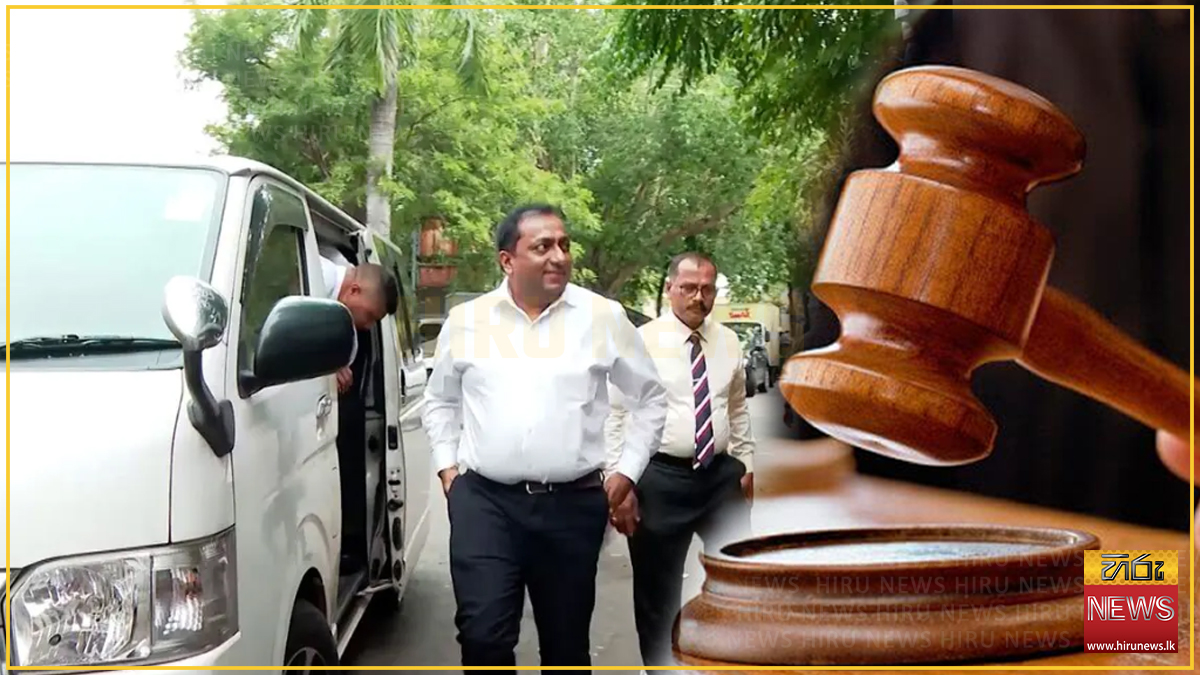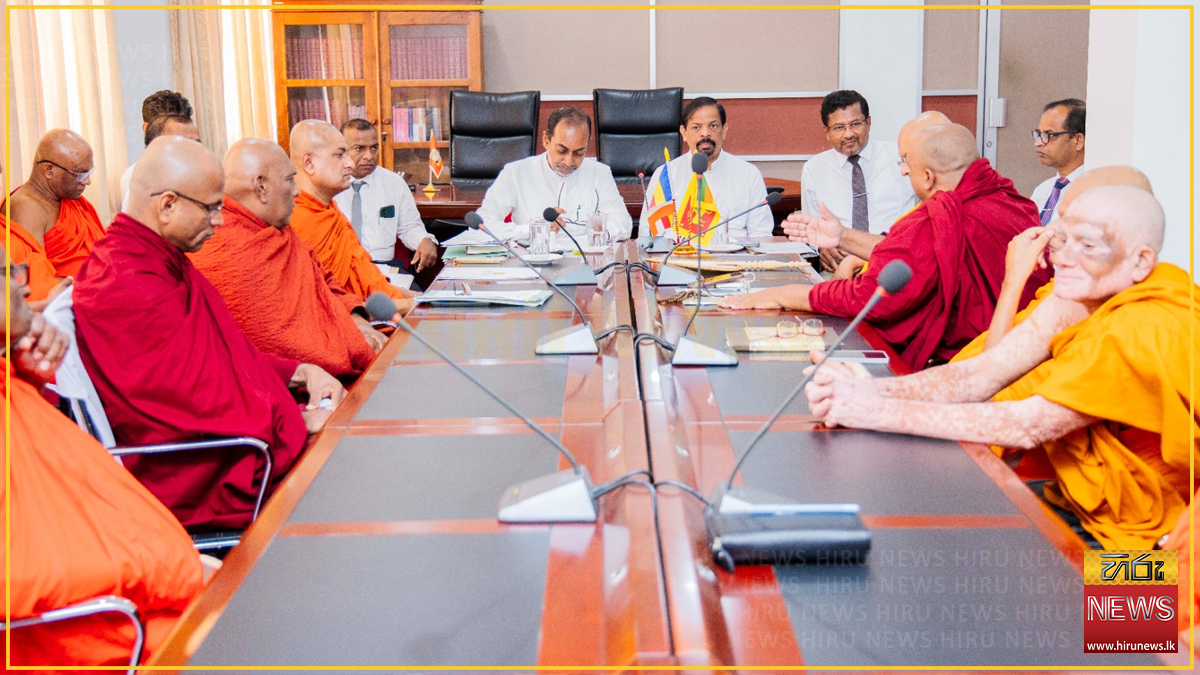
The Buddhasasana Council met at the Ministry of Buddhasasana on Tuesday over the removal of Ven. Galagodaatte Gnanasara Thera’s robe, and approved a presidential committee’s proposal on how imprisoned monks are to be handled — while asking that all 31 chapters of the Tri-Nikaya Maha Sangha first agree a common procedure for applying it.
The meeting was attended by the Tri-Nikaya Maha Sangha and led by Most Ven. Dr. Medagama Dhammananda Nayaka Thera, Maha Lekhakadhikari of the Asgiri Chapter of the Syamopali Maha Nikaya.
It had two stated purposes: to take the Maha Sangha’s views and proposals on the situation that has arisen in society over the removal of Gnanasara Thera’s robe, and to brief the Sangha on what the government has done in response.
What was put to the Sangha
Prince Senadhira, Secretary to the Ministry of Buddhasasana, Religious and Cultural Affairs and chairman of the committee appointed by the President, set out the committee’s proposals.
The core proposal is that when an imprisoned Buddhist monk is produced in court again, or taken outside prison for any other purpose, whether he goes in his robe should be decided on the recommendation of his own Nikaya chapter or of the Sangha Sabha — not by the prison authorities alone.
The Maha Sangha approved that recommendation. Its own view, recorded at the meeting, was that on the practical application of the rule, the 31 chapters of the Tri-Nikaya Maha Sangha, or the Sangha Sabha, should meet, discuss the matter and draw up a suitable common procedure.
Which instrument is being changed
Hiru’s account refers to amending “sections 356 and 550 of the Act.” That description does not match what this desk reported when the committee’s interim report was handed over.
As set out on 14 October, the two instruments are Prison Regulation 356, to be revised by inserting a new provision 356A, and Departmental Order 550, to be amended so that monks leaving prison premises for an official purpose may wear their robes. They are prison regulations and a departmental order, not sections of a statute.
Hiru is the third outlet to compress them: the Daily Mirror earlier rendered both as a single “Standing Order 356.” The distinction matters, because a regulation and a departmental order are changed by different means and bind differently from an Act of Parliament.
The robe circular itself has already taken effect — Prisons sent Buddhist Affairs a list of jailed monks on 17 October.
Also present were Buddhasasana, Religious and Cultural Affairs Minister Dr. Hinidduma Sunil Senevi, Deputy Minister Gamagedara Dissanayake, Secretary Prince Senadhira and Commissioner of Buddhist Affairs R.M.G. Senarath.
Not reported
The filing does not say when the 31 chapters are expected to meet, who convenes them, or whether the amendments proceed before or after that common procedure is agreed. It does not say whether the council discussed Gnanasara Thera’s own case or only the general rule, nor whether any chapter dissented. No timetable is given for the amendments, and the committee’s full recommendations have not been published. Hiru is the only verified newsroom to have filed on the meeting; no English-language account was available at the time of writing.
Update, 8.43 p.m. — the rule has a date, and a case
The Department of Buddhist Affairs has said Ven. Galagodaatte Gnanasara Thera will be taken to court in his monk’s robes on 23 October, following the changes to the relevant Standing Orders, the Daily Mirror reported.
This is the point at which the general rule discussed at Tuesday’s council meeting becomes a specific, dated act — and it closes part of the question this article left open above.
The procedural care being taken is notable. The Commissioner General of Buddhist Affairs has informed the Most Venerable Maha Nayaka Thera of Gnanasara Thera’s Nikaya about the arrangements, and has sought the Maha Nayaka Thera’s guidance on the proper way to take the monk to court, requesting the monastic leadership’s approval and consent. That is the council’s “common procedure first” request being honoured in a single case before the 31 chapters have met — the department asking the Sangha how to apply its own new rule, rather than applying it and informing them.
The Daily Mirror’s filing also records a dissenting intervention from outside the council. Ven. Dr. Kotapitiye Rahula Thera, Deputy Nayaka Thera of the Kotte Sri Kalyani Samagri Dharma Maha Sangha Sabha, told a press conference that calls to remove Gnanasara Thera’s robes could cause serious harm to the Buddhist Sasana and its long-standing role in the country. He also addressed the President’s response to the issue and the responsibilities of Buddhist monks.
The two filings therefore describe the same rule from opposite ends: the council endorsing a procedure for robing imprisoned monks, and a senior monk outside it objecting to the disrobing demands that prompted the procedure in the first place.
Still not reported. Neither filing says which court Gnanasara Thera is to appear before on 23 October or in what matter, nor whether the Maha Nayaka Thera has yet replied to the Commissioner General’s request for guidance.