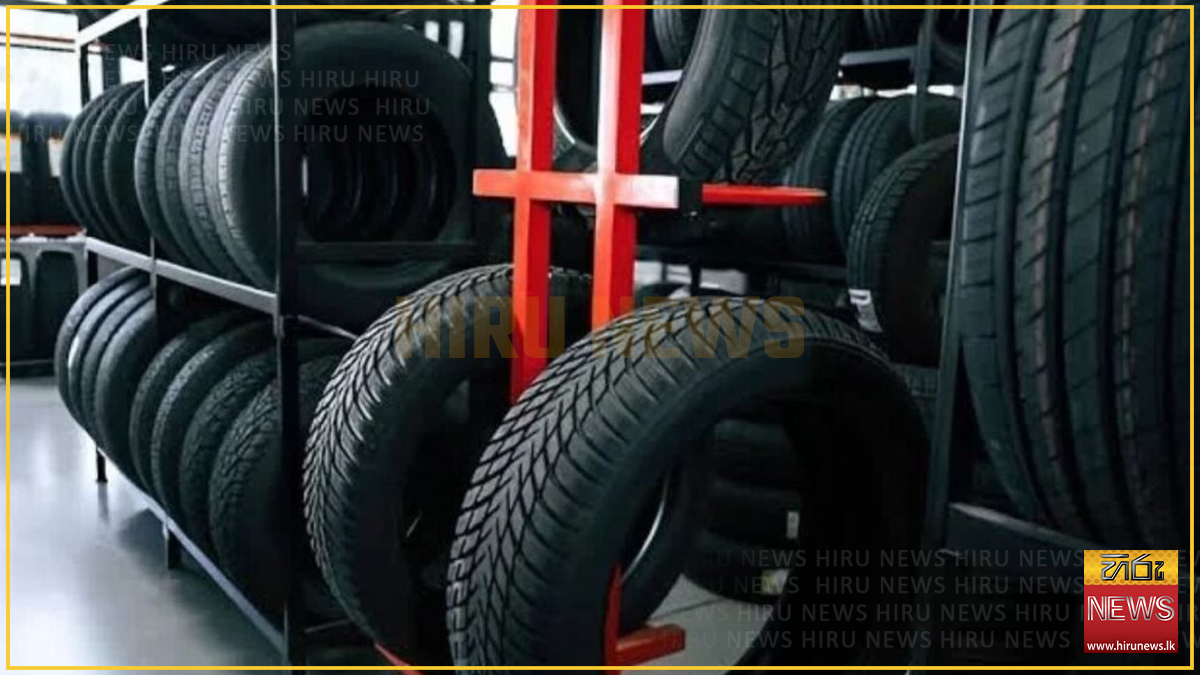
The Cabinet has approved making Sri Lanka Standards and prescribed testing procedures mandatory for imported tyres, a step the government says is intended both to protect consumers and to give local tyre manufacturers a fair competitive footing.
The measure takes up recommendations from the Ministry of Industry and Entrepreneurship Development. It works by amending regulations already in force — the Imports and Exports (Control) Regulations No. 08 of 2026, published in Extraordinary Gazette No. 2508/27 of 1 October 2026.
Cabinet approval was granted to a proposal submitted by President Anura Kumara Dissanayake in his capacity as Minister of Finance to place the regulations before Parliament for approval.
The two standards
| Product | HS code | Standard |
|---|---|---|
| Passenger motor car tyres | 4011.10.90 | SLS 1212 |
| Pneumatic tyres for three-wheelers | 4011.90.10 | SLS 1347 |
The two filings agree exactly on the codes and the standard numbers, and on the three-wheeler entry.
They do not agree on what the first code covers. Hiru News describes 4011.10.90 as passenger motor car tyres. The Daily Mirror’s text describes the same code as “rubber-insulated wires for motor vehicles” — though that paper’s own headline reads “New import control regulations for motor vehicle tyres.”
The code settles it. HS heading 4011 is new pneumatic tyres of rubber, and subheading 4011.10 is the one used for tyres of a kind fitted to motor cars. Hiru’s reading is the correct one, and the Daily Mirror’s body text appears to be a slip that its own headline contradicts.
What is still a proposal
The gazette amending the import and export control regulations was issued on 1 October, nearly three weeks before this decision. What the Cabinet approved on Tuesday is the step of putting those regulations to Parliament for approval — so the requirement is not yet through its final stage.
The two outlets also give the President’s finance portfolio different names: Hiru has Minister of Finance, Planning and Economic Development; the Daily Mirror has Minister of Finance, Economic Stabilisation and National Policies.
Not reported
Neither filing says when the standards take effect, what happens to tyres already ordered or in bonded storage, or which body will carry out the testing and at whose cost. Neither gives the share of the local market currently held by imports, nor names the domestic manufacturers the measure is intended to help. No importer, trade chamber or consumer body is quoted in either account, and neither says whether motorcycle or heavy-vehicle tyres are to be covered in a later phase.
Sources
- Cabinet approval to impose mandatory Sri Lankan standards for imported tyres — Hiru News, October 20
- New import control regulations for motor vehicle tyres — Daily Mirror, October 20
- Govt tightens import regulations to shield domestic tire manufacturers — Lanka Business Online, October 20
Update — a third newsroom calls it protectionism
Lanka Business Online has filed on the same decision, confirming every technical particular above — the regulations number, the gazette, both HS codes and both SLS standards — and adding two things.
It names the proposer: the President, in his capacity as Minister of Finance, Planning and Economic Development, acting on the Industry Ministry’s recommendations. And it reports the decision was announced in the Cabinet media statement of 19 October, subject to confirmation at the next meeting — so Tuesday’s briefing conveyed a decision taken the day before.
The difference worth recording is the lead. Hiru and the Daily Mirror present the measure as a standards and consumer-safety matter. LBO leads on it as trade policy, writing that while the measure is “framed primarily around consumer safety and product standards, these regulatory barriers act as key instruments of state protectionism, creating entry hurdles for foreign vendors to support local industrial capacity.”
Both readings describe the same regulation. A mandatory standard applied at the point of import is simultaneously a safety rule and a trade barrier, and which function dominates depends on whether importers can actually obtain certification — a question none of the three filings answers. That LBO’s own headline says the government is acting “to shield domestic tire manufacturers,” where the Cabinet’s stated rationale is standards compliance, is the clearest signal that the measure’s purpose is read differently inside the business press than it is presented at the briefing.