The wildlife veterinary surgeon who treated the tusker Kavantissa before the animal died has submitted letters of resignation, after what his colleagues describe as a sustained campaign of allegations against him on social media.
Isuru Hewakottage, a veterinary surgeon attached to the North Western Wildlife Zone, has sent the letters to the Director General of Wildlife Conservation, the Daily Mirror reported in a filing from Puttalam by Hiran Priyankara Jayasinghe at 11.17 a.m.
He is the first individual to be named in the public argument over Kavantissa’s death.
A ten-year record
Hewakottage joined the Department of Wildlife Conservation as a wildlife veterinary surgeon in 2016 and served at Pandulagama, Anuradhapura, until 2018. He was then transferred to the Nikaweratiya Wildlife Unit, and subsequently to the North Western Wildlife Zone.
The Daily Mirror describes him as having carried out extensive work saving the lives of wild elephants and tuskers, and as well known for developing an expertise in rescuing sea turtles in difficulty and returning them to the ocean after treatment.
The allegations
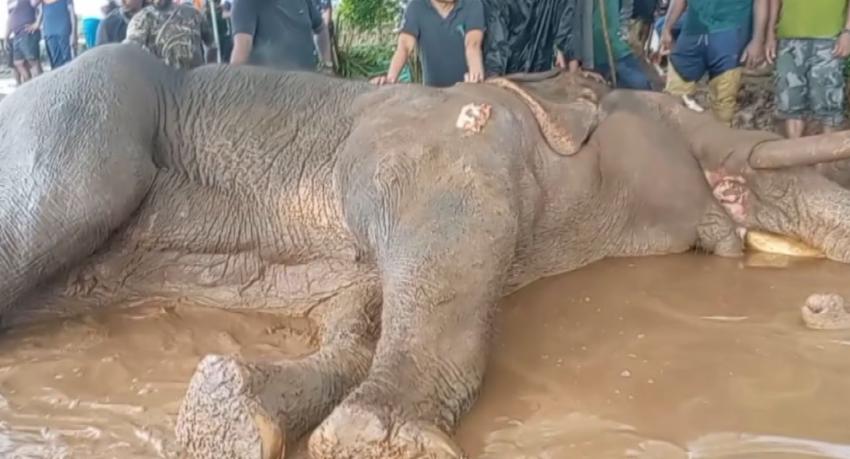
Criticism of Hewakottage did not begin with Kavantissa. He had already faced public attack over the deaths of the tuskers Thekka Raja and Bhathiya, both of which he treated and neither of which survived. After Kavantissa died while under his care — Hewakottage having been the first vet assigned to the animal — allegations spread online that the tusker had died from a lack of proper care, and, in some versions, from incorrect medication dosages.
The Daily Mirror reports that, on the information available so far, all treatments given to Kavantissa were administered in accordance with the prescribed dosages.
A former department director defends him
Tharaka Prasad, a retired Department of Wildlife Conservation veterinary surgeon and former Director of Wildlife Health, told the Daily Mirror that wildlife vets do not administer medication arbitrarily in the course of their duties. A veterinary surgeon, he said, can do nothing other than treat using the prescribed dosages, and Hewakottage had treated in accordance with the relevant procedures.
Hewakottage is reported to have said that the continuous public criticism following Kavantissa’s death had seriously affected both his professional duties and his personal life, and that despite having performed his duties with dedication he had decided to leave his position in response to the allegations.
The resignation is not yet complete
One detail in the Daily Mirror’s own filing qualifies the headline. Although Hewakottage has stated he will leave the North Western Wildlife Veterinary Unit, the paper reports that he has not yet formally notified the Department of Wildlife Conservation of his resignation from the Department itself.
The Daily Mirror says it attempted to contact Director General of Wildlife Conservation Ranjan Marasinghe to establish what action would be taken, and that the attempt was unsuccessful.
Marasinghe did speak publicly on the underlying question the same day. He told NewsFirst that the Department is conducting an internal independent investigation into the incident in which negligence by doctors was alleged during Kavantissa’s treatment. He added that steps are being taken to obtain the support of the Sri Lanka Army to protect wild elephants and tuskers.
That is a second investigation into the same death. The President appointed an expert committee to examine it on Monday.
Where this sits
Kavantissa’s death has produced an unusually fast sequence of official responses. The Prime Minister promised enforcement against wildlife crime on Monday, and the Wildlife Department has since reported sick and injured elephants across the country. A separate criminal line of inquiry is running into the shooting.
Today’s filing is the first in which the public reaction has cost a named official their post.
Not reported
Neither outlet states the date on which the resignation letters were submitted, whether the Director General has accepted or will accept them, or whether Hewakottage remains on duty in the interim. Neither says whether the Department’s internal investigation is examining Hewakottage specifically or the treatment generally, who is conducting it, or when it will report — and neither says how it relates to the President’s expert committee.
No filing reports Hewakottage’s own account of the treatment in his own words; the statements attributed to him are reported indirectly. Nothing published establishes the cause of Kavantissa’s death, which remains the subject of the two investigations.
Reports attributed elsewhere to Marasinghe, that he had received no notification of any resignation, appear only in outlets this desk does not count as verified newsrooms and are not relied on here — though they are consistent with the Daily Mirror’s own statement that the Department has not been formally notified.
Update, 20 October: the minister gives a cause of death — gunshot injuries
Kavantissa died of gunshot injuries, Environment Minister Dhammika Patabendi told Parliament on Tuesday, the Daily Mirror reported at 11.48 a.m.
This closes the question recorded above as unanswered — that nothing published had established the cause of death. It is the first attributed official statement of a cause, and it comes from the responsible minister on the floor of the House.
It also reconciles an account this desk had logged as contradictory
This archive has carried, since Kavantissa died on 16 October, a genuine conflict between newsrooms over how the animal died. NewsFirst reported that the tusker “succumbed to severe injuries sustained from gunshot wounds,” without attribution. The Daily Mirror attributed the death to health complications, and separately reported that a post-mortem had been convened to determine the cause. Hiru described a gunshot wound that had largely healed, alongside a separate and unexplained illness.
The minister’s statement fits all three. He said the animal had initially recovered but fell ill again before its death — which is the sequence Hiru described, while attributing the ultimate cause to the gunshot injuries as NewsFirst did, and leaving room for the “health complications” the Daily Mirror reported as the proximate state. The outlets were describing different stages of one process rather than contradicting each other.
The minister did not say the post-mortem had reported, and the filing does not state whether his account rests on it.
Two further points
- Foreign expertise was sought. Patabendi said advice had been obtained from veterinary experts in Thailand and India. That has not previously been reported in this thread, and it bears on the criticism directed at the treating vet: the department was taking outside advice on the case.
- A conspiracy is still being investigated. The minister said investigations continue into whether there had been a conspiracy to kill the animal — language that goes beyond the shooting itself to the question of whether it was organised.
What this means for the allegations against Hewakottage
An attributed cause of death does not resolve the dispute over the veterinary care, and this desk is not treating it as doing so. A cause of gunshot injuries is consistent both with the allegation that better treatment might have saved the animal and with the defence that the wound was ultimately fatal regardless. The departmental investigation and the President’s expert committee remain the processes that would address the treatment question, and neither has reported.
What the statement does settle is the factual predicate the online campaign disputed: on the minister’s account, Kavantissa did not simply sicken and die — he was shot, and the shooting killed him.