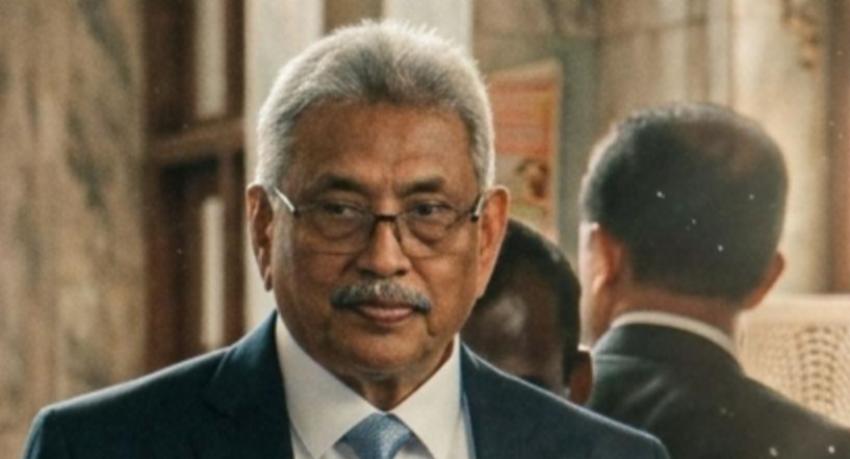
The Colombo Fort Magistrate’s Court on Wednesday rejected former President Gotabaya Rajapaksa’s motion seeking permission to travel abroad for medical treatment — not on its merits, but because of a date defect in the document itself.
The more consequential development came from the prosecution. Additional Solicitor General Dileepa Peiris, appearing for the Attorney General, told the court that Rajapaksa has not yet been named as a suspect in the Criminal Investigation Department’s reopened inquiry into the 2019 Easter Sunday attacks.
Why the motion failed
The application never reached argument. Magistrate Pasan Amarasena told the court that the court Registrar had rejected the motion because of a defect in it, Hiru News reported. NewsFirst puts the defect more precisely: the rejection was due to a date conflict in the submitted motion, the broadcaster reported at 4.14 p.m.
The motion was signed by Attorney-at-Law Sanath Wijewardena, and the Additional Solicitor General confirmed that both the Attorney General’s Department and the CID had received it.
This desk reported the filing of that motion on 16 October. Its outcome has now turned on a clerical point rather than on whether a former head of state under investigation should be allowed to fly.
”If required” — the condition both filings carry and one headline drops
The prosecution’s position is conditional, and the distinction matters.
NewsFirst reports the Additional Solicitor General as saying that because Rajapaksa has not been named a suspect, the request to lift the travel ban “could be considered on humanitarian grounds if required.” Hiru’s Sinhala body carries the same qualifier — අවශ්ය නම්, “if required.”
Hiru’s headline, however, states it as settled: that the request “is being considered on a humanitarian basis.” Its own body does not support that reading. Nothing published on Wednesday indicates that the Attorney General has agreed to the relief, only that he has indicated he would not oppose considering it, should a properly drawn application be made.
The Additional Solicitor General also told the court he had verbally instructed the CID to act humanely in the matter.
On the medical ground, he said the motion sought permission to travel for follow-up treatment after surgery performed at a hospital in Singapore — which settles a point left open in this desk’s earlier report, where NewsFirst had presented Singapore only as the intended destination while Hiru described the operation as already having taken place there. Hiru’s version is the one the prosecution has now confirmed in open court. Neither filing names the hospital.
He prefaced the application with a remark whose bearing neither filing spells out: “My Lord, there are many people in Sri Lanka who cannot obtain treatment.”
The same hearing, the other suspects
Wednesday’s sitting was the regular calling of the CID’s Easter investigation, and the court’s orders on the other parties are reported separately: the case against retired Major General Suresh Sallay was adjourned to 25 November, with the first and second suspects remanded to 4 November.
Two former intelligence officers remain in remand custody. Sallay, the former State Intelligence Service director and the third suspect in the investigation, is being held and questioned by the CID under detention orders.
The contrast is the story’s substance. At one hearing, the prosecution confirmed that the former Defence Secretary at the time of the bombings is not a named suspect, while the former intelligence chief who served under him is in CID custody.
The ban this motion was aimed at
The travel ban was imposed on 3 June 2026 by this same magistrate, on a CID motion, and also barred Army Colonel Mohamed Ansar and former intelligence officer Premananda Udalagama. Rajapaksa was Defence Secretary in April 2019, when coordinated bombings at three churches and three hotels killed more than 270 people. He became president later that year and left office in July 2022.
Not reported
Neither filing says whether a corrected motion has been or will be filed, or how quickly a re-filed application could be heard. Neither gives the date of the surgery, the hospital, the treating physicians, or any clinical statement that the follow-up care is unavailable in Sri Lanka — the question on which a humanitarian application would ordinarily turn.
Neither states whether the Attorney General’s confirmation that Rajapaksa is not a named suspect reflects a decision taken, or merely the investigation’s present stage. Neither reports any objection from the CID, nor whether the two officers barred by the same June order have made similar applications.
Ada Derana’s site has returned a CloudFront block to this desk for more than a month, so its coverage of the hearing could not be fetched or dated and is not cited here. The Daily Mirror had not filed on the travel motion at the time of writing, although it carried other items from the same court day.
