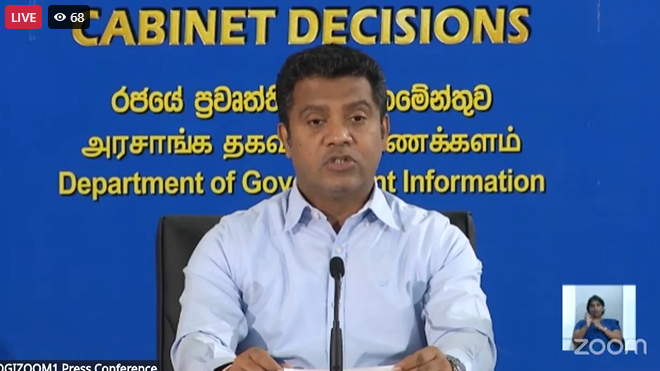
The government has not decided whether to seek a new arrangement with the International Monetary Fund when the current programme ends, and will not make that call until next year, Cabinet Spokesman Minister Nalinda Jayatissa said on Tuesday.
Speaking at the weekly Cabinet decisions briefing, the minister said it was too early to comment on any future agreement with the Fund, the Daily Mirror reported at 4.35 p.m. Colombo time.
The two things the decision waits on
Jayatissa named two inputs, one external and one domestic:
- The global situation, including the ongoing conflict in the Middle East
- Sri Lanka’s own economic conditions
The government expects to announce its decision by next year, he said.
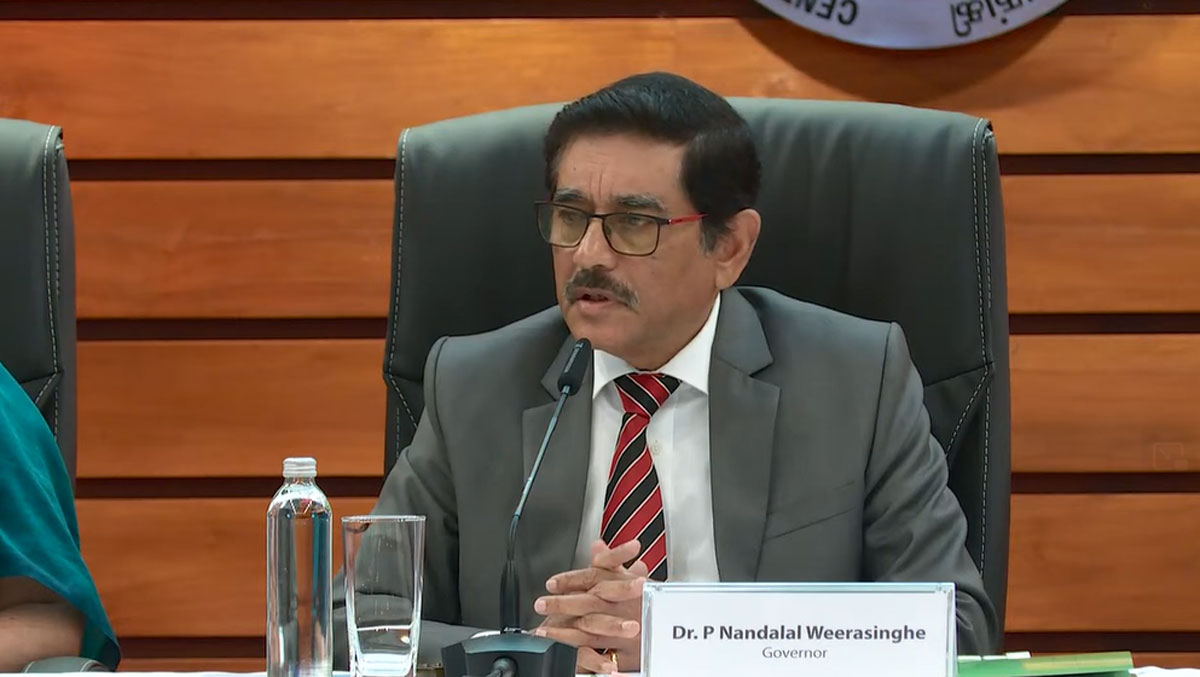
The Middle East reference is not incidental. On the same day, Central Bank Governor Nandalal Weerasinghe told a Colombo forum that the conflict’s effect on petroleum bills had cost the country roughly US$2 billion of foreign reserve accumulation this year. The same shock that has slowed reserve building is being cited as a reason the government cannot yet commit on the Fund.
What “the current programme” is
The filing does not say when the present arrangement ends, which is the fact a reader needs to size the statement.
Sri Lanka’s programme is an Extended Fund Facility, approved in March 2023 after the 2022 default, and EFF arrangements run for four years as standard — placing the end of the current programme in 2027. This desk notes that as the ordinary term of such a facility rather than as a date given in the filing; the Daily Mirror does not state an end date, and none should be read into this report.
That timing makes “by next year” less vague than it first sounds. If the programme concludes in 2027, a decision taken during 2027 would come close to the wire, and a decision announced in 2027 for a programme ending that year is roughly the normal window in which countries signal whether they want a successor arrangement.
Why the question is live
A successor programme is not automatic, and governments with completed IMF programmes often face a choice between the discipline and the signalling value of staying in one, and the policy freedom of leaving. Sri Lanka’s reform commitments — including the Asian Development Bank’s US$620 million policy-based facility, drawn down in tranches through this year — are explicitly tied to the EFF. Concessional lending from multilateral partners is routinely conditioned on an IMF programme being in place, so the decision reaches beyond the Fund itself.
The minister did not address that linkage, and the filing does not raise it.
Not reported
The filing does not say when the current programme ends, how many reviews remain under it, or whether all disbursements to date have been made on schedule. It does not say whether the government has had any preliminary contact with the Fund about a successor arrangement, or whether the IMF has indicated a view.
It does not say what form an extension might take — a continuation of the existing EFF, a new facility, or a non-financing arrangement such as Post-Programme Monitoring. It gives no indication of which way the government is leaning, and reports no dissent or alternative position from within the coalition.
No figure is given for what Sri Lanka has drawn under the programme so far.
On sourcing: this report rests on a single verified newsroom. The weekly Cabinet briefing is widely covered, but a check of the NewsFirst and Hiru News homepage rails and of EconomyNext’s Tuesday output found no other filing on the minister’s IMF remarks specifically — other outlets carried different decisions from the same briefing. Ada Derana has returned a CloudFront block to this desk for 45 consecutive days and could not be checked.