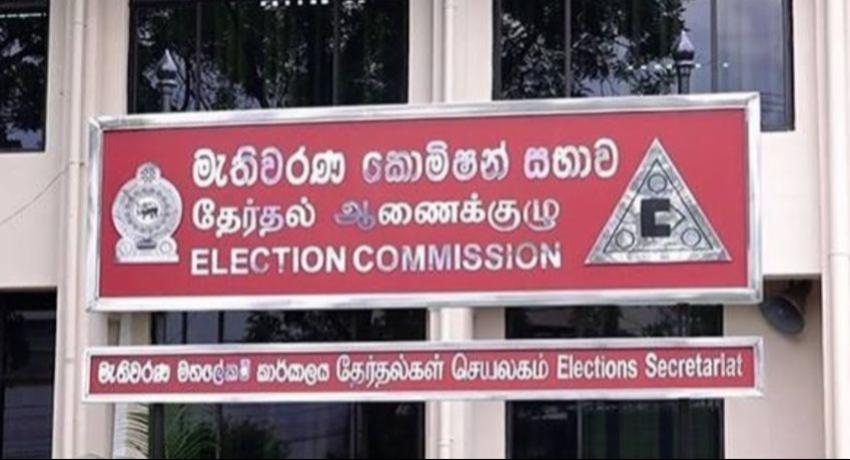
A framework to allow Sri Lankans living abroad to vote is to be drawn up from next year, in collaboration with the Ministry of Foreign Affairs, the Commissioner General of Elections has said — but the mechanism by which they would actually cast a ballot has not been settled.
Another round of discussions on the legislative amendments needed to enable overseas voting was held on Tuesday, NewsFirst reported. The meeting brought together officials of the Election Commission and the committee appointed to examine the question and make recommendations.
Registration first
Commissioner General of Elections Rasika Peiris said voter registration for expatriates was discussed at length — the practical problem that precedes any question of method, since Sri Lanka’s register is built on residence.
He said a framework is scheduled to be drawn up starting next year, with the Ministry of Foreign Affairs, whose missions would be the obvious point of contact for citizens abroad.
The method is still open
On how an overseas vote would be cast, Peiris said deliberations are continuing over whether to use advance voting, postal voting, or another suitable method. Whichever is chosen will be formally proposed and finalised in due course.
That is the central unresolved question. Advance voting and postal voting place very different demands on the Commission, on diplomatic missions and on the timetable of an election, and the choice determines how much of the enabling legislation has to change.
Context
Enfranchising the diaspora has been raised repeatedly over successive administrations without a mechanism being adopted. The report sets no date beyond “next year” for the framework and no date at all for a first overseas poll.
The Commission has been active on several fronts this month, including guidance on social media and AI-generated content aimed at voters.
Not reported
The filing does not name the committee, say who appointed it or when, or say how many of its recommendations have been delivered. It does not give the number of Sri Lankans abroad who might be covered, or distinguish between migrant workers on fixed-term contracts and long-settled emigrants — a distinction that matters for any residence-based register.
It does not say which statutes require amendment, whether a draft bill exists, whether the framework would apply to presidential, parliamentary or local elections, or whether dual citizens are included. No cost estimate is given, and no minister is quoted.
Single source. This desk checked the Daily Mirror’s breaking-news listing and the Hiru News homepage rail directly; neither carried a filing on Tuesday’s meeting at the time of writing. Ada Derana has returned an HTTP 403 block to this desk for some 48 consecutive days and could not be consulted. Readers should treat the “next year” timing as reported by one outlet until a second confirms it.
