Smart classrooms with remote learning facilities have been introduced at Sri Lanka’s National Colleges of Education for the first time, with the government saying it intends to extend them to all 20 colleges.
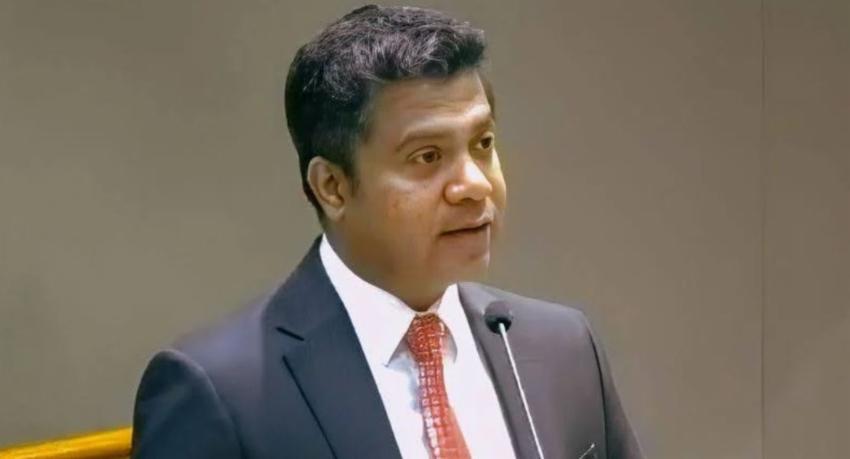
The Daily Mirror reported that Prime Minister Dr Harini Amarasuriya, who also holds the Education, Higher Education and Vocational Education portfolio, opened model smart classrooms at the Maharagama and Ruwanpura National Colleges of Education.
The facilities were provided as a grant from the Government of China. The Chinese Ambassador to Sri Lanka, Wei Huaxiang, attended the Maharagama ceremony alongside the Prime Minister.
Dr Amarasuriya also launched a Learning Management System built for the Maharagama college. A model teaching and learning session was then run over the new remote-learning equipment, with several other National Colleges of Education taking part — the first demonstration of what the link is for.
The stated purpose is the teacher shortage
The Prime Minister said one of the main objectives of the government’s education transformation was to produce teachers with the digital skills the future requires. The Daily Mirror reports the programme is also intended to strengthen teacher development and help address difficulties in the sector, including the shortage of teachers.
She said cooperation from the Chinese government and Huawei would help teachers acquire the knowledge and skills to use digital technology effectively in classrooms, and thanked China for its continued support to Sri Lanka’s school system. Developing confident and skilled teachers, she said, would help produce a generation of talented and creative students.
Also present were Education Ministry Secretary Nalaka Kaluwewa, representatives of the Digital Task Force, Huawei Technologies Lanka Chief Executive Officer Daniel Wu, and Chief Commissioner of Teacher Education Iroshini K. Paranagama.
Not reported
The filing gives no cost or value for the Chinese grant, no timetable for reaching the remaining 18 colleges, and no figure for how many trainee teachers the two opened classrooms will serve. It does not say what equipment a “smart classroom” comprises, who maintains it, or what Huawei’s role is beyond the Prime Minister’s reference to cooperation. Nor does it quantify the teacher shortage it names as a target.
A note on sourcing. This account rests on the Daily Mirror alone. A search of the other verified newsrooms returned earlier and separate items — a China–Sri Lanka education agreement and an India-funded smart-classroom programme in the Southern Province — which are not this event and are not cited. Ada Derana could not be checked: adaderana.lk has returned a CloudFront 403 to this desk for 47 consecutive days.