Sri Lanka counts 527 entities as state-owned enterprises, but only a selected number of them actually run businesses, the Deputy Minister of Finance said on Wednesday — and the government no longer wants to be in the business of running hotels and trading companies.
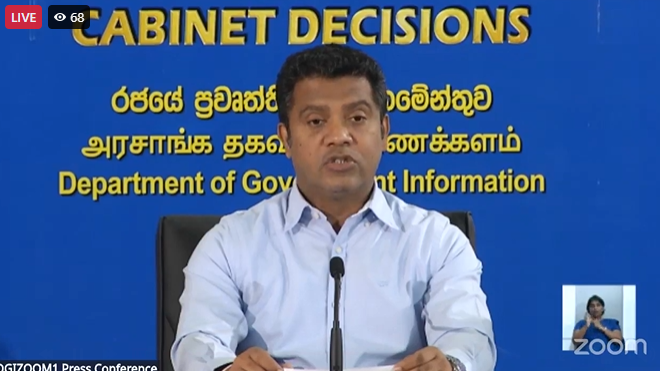
Anil Jayantha Fernando, Deputy Minister of Finance and Planning, set out the government’s thinking at an industry forum held by the Securities and Exchange Commission and the Colombo Stock Exchange. EconomyNext and NewsFirst both reported the remarks on Wednesday morning.
The 527 figure, and what it conceals
“In fact, the state-owned enterprises that we have are not all enterprises in the true sense. We have 527 state-owned enterprises, but only a selected number are actually engaged in enterprise activities. Many others are performing different functions but are still labelled as state-owned enterprises due to legal and administrative requirements.”
This is the load-bearing point. The headline count of 527 is an accounting category, not a portfolio of businesses, and the reform is aimed at the smaller number inside it that trade commercially.
“The government’s policy is clear. We do not want to engage in ordinary economic activities.”
What happens to them
Fernando described a sorted outcome rather than a blanket policy, with a committee already appointed to recommend strategies:
- Divestment — “Some of these SOEs can genuinely be divested.”
- Mergers — “In other cases, mergers may be necessary. Those processes are now underway.”
- Retention — certain entities stay, “in some cases with private sector collaboration and in others solely through government investment.”
He said the test is whether an entity is “linked to economic policy objectives or critical national strategies.” Energy and selected utility services are likely to remain under government involvement.
One stated reason for retention is unusual enough to record: preventing market manipulation. Fernando said the government “does not want to create opportunities for market manipulation, whether in the stock market or other sectors” — an argument for keeping a hand in certain markets rather than for exiting them.
The legal vehicle
The structural change would come through a new SOE Act:
“A new SOE Act would facilitate separate management structures and allow institutions to be reorganised under a single umbrella framework. These organisations could be incorporated as limited liability companies, giving them greater autonomy and freedom to make decisions based on market conditions, risks and commercial realities.”
Incorporation as a limited liability company under a holding structure is what makes a state enterprise saleable in part — it creates shares to sell, a board to hold accountable, and accounts to the Companies Act standard. It is the step that precedes divestment rather than an alternative to it, and government can retain ownership while it happens.
The piece that was decided this week
The Cabinet approved a performance-based framework for collective agreements in state enterprises on Tuesday, effective 1 January 2027. That decision and these remarks fit together: labour terms settled on a commercial footing are a precondition for incorporating entities as companies.
Not reported
No timetable is given for the SOE Act, for the committee’s report, or for any divestment. Neither filing names a single enterprise to be divested, merged or retained — including the hotels and trading companies cited as examples.
Neither names the committee’s members or who appointed it, says how many of the 527 are judged to be genuine commercial enterprises, or gives the state sector’s aggregate losses or assets. Neither says whether divestment means full sale, partial listing on the Colombo Stock Exchange, or both, or whether proceeds are earmarked.
Neither says how the plan relates to commitments under Sri Lanka’s IMF programme, or whether the SOE Act has been drafted or gazetted.
On sourcing: two verified newsrooms filed independently on Wednesday morning, EconomyNext at 10.33 a.m. The two accounts agree on the 527 figure and on every quotation checked. Ada Derana has returned a CloudFront block to this desk for 47 consecutive days.