A second wave of hoax bomb threats struck European airlines on Thursday, affecting at least 25 flights from Ireland to Bulgaria and forcing unplanned landings, fighter-jet escorts and aircraft searches. No explosive device was found anywhere.
It was the second such episode in a week. This desk reported the first wave, in which at least seven flights and a cruise ship were targeted on Tuesday. Thursday’s disruption was more than three times larger.
Where the threats landed
Bulgaria scrambled fighter jets to escort three airliners to the ground, its air force said. Ryanair services from Copenhagen and Madrid landed at Sofia as planned, while a London–Sofia flight was diverted to Plovdiv, the country’s second city.
In Spain, the Guardia Civil said authorities received three emailed threats in under 20 minutes from around 9 a.m. (0800 GMT), naming two Air Europa departures from Madrid to Paris and four inbound Iberia flights from Rome and Milan. Several aircraft were halted or returned to stands and passengers disembarked for inspection.
Four flights into Prague — two easyJet services from Britain, one from Ireland and one from Greece — landed as scheduled after threats. Czech police assessed their credibility as low.
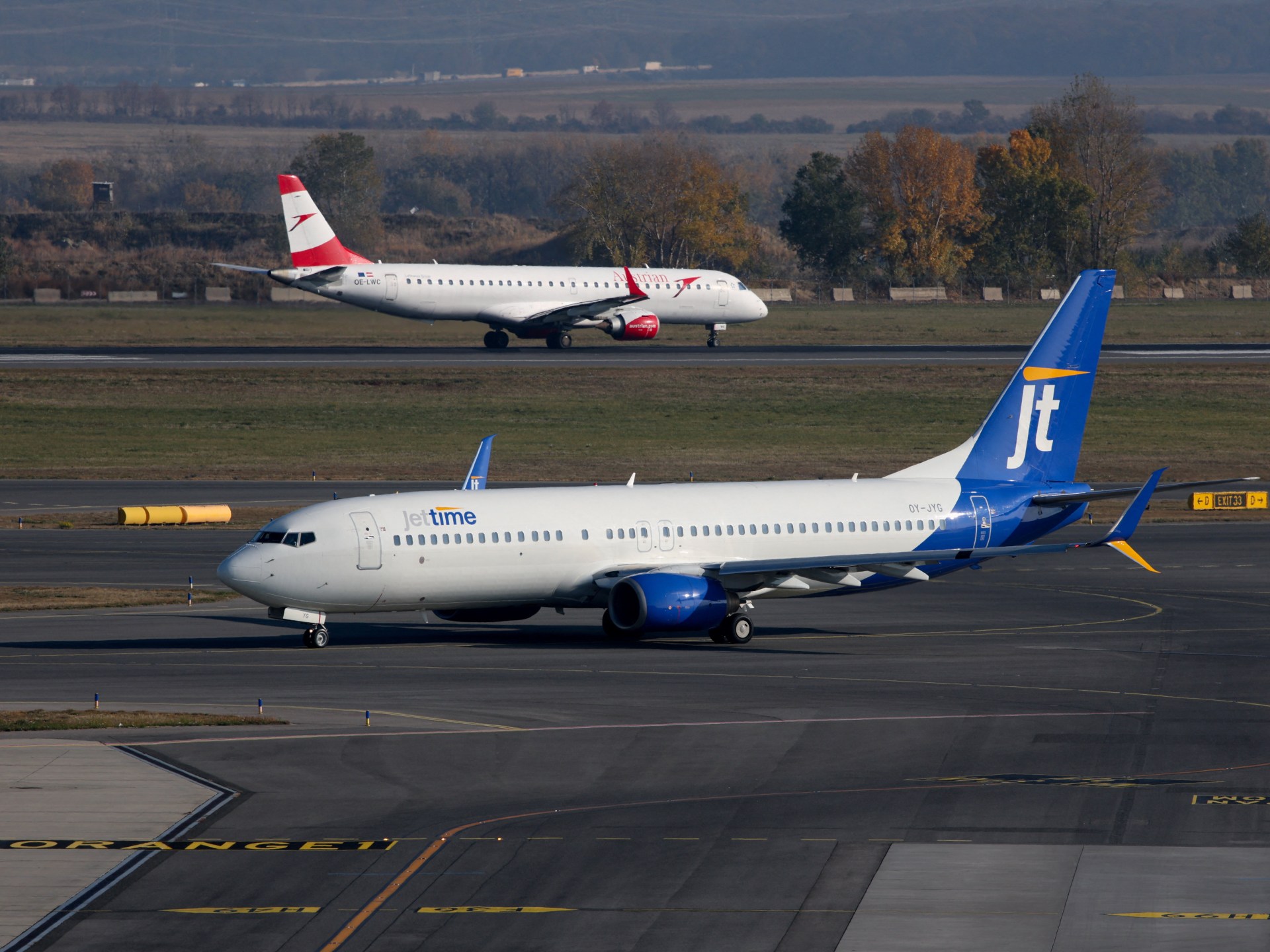
Italy’s air force escorted a Finnair flight from Helsinki into Rome. A second Finnair service from Helsinki, operated by Jettime, landed normally in Vienna. Two aircraft landed safely in Milan, the Italian news agency ANSA said.
A LOT flight from Warsaw landed as scheduled in Brussels; a second LOT aircraft bound for Paris was stopped while taxiing for take-off and its passengers moved to another plane. A Wizz Air flight from Milan landed safely in Bucharest, Romania’s intelligence agency said.
Aer Lingus flight EI402 from Dublin to Rome was diverted to Evreux, about 100 km west of Paris. France’s air force said it scrambled aircraft “as soon as the threat was reported”, Al Jazeera reported. In Denmark, a military bomb disposal unit searched two aircraft at Copenhagen airport and found nothing.
No attribution, but a pattern
No government has publicly blamed anyone. The threats arrive as European officials increasingly accuse Russia of orchestrating sabotage and “hybrid attacks” — cheap, deniable operations below the threshold of armed response. Denmark, Poland and Romania, all affected on Thursday, have previously accused Moscow directly, and Germany blamed Russia for an August attack on Leipzig airport. Russia denies involvement.
Eric Schouten, head of the aviation security group Dyami, noted that most affected countries support Ukraine. “You always have to think about the scenario of hybrid warfare, where a country in this way is attacking us on multiple fronts, from railways to supermarkets to blood banks, most recently,” he told Reuters.
Eliran Almog, chief executive of the aviation cybersecurity firm Cyviation, said repeated threats can serve both to disrupt operations and to observe how airlines, airports and national authorities respond. He linked them to the same period as cyberattacks on supermarket refrigeration systems across Europe — a campaign that struck for a second time this week.
Czech and Italian authorities said the threats were sent by email. A representative of Prague’s Václav Havel Airport told CNN that threats naming four flights arrived in an anonymous email, and Czech police said similar messages went to other European airports.
On the differing counts
Hiru News reported eight flights from six cities — Copenhagen, Dublin, Helsinki, Madrid, Milan and Warsaw. That filing was published at 5.11 p.m. Colombo time; the Daily Mirror’s Reuters dispatch putting the figure at at least 25 was published at 7.44 p.m. All six cities Hiru names appear in the later accounts as departure points, so the gap reflects an earlier snapshot of a still-developing count rather than a conflict.
