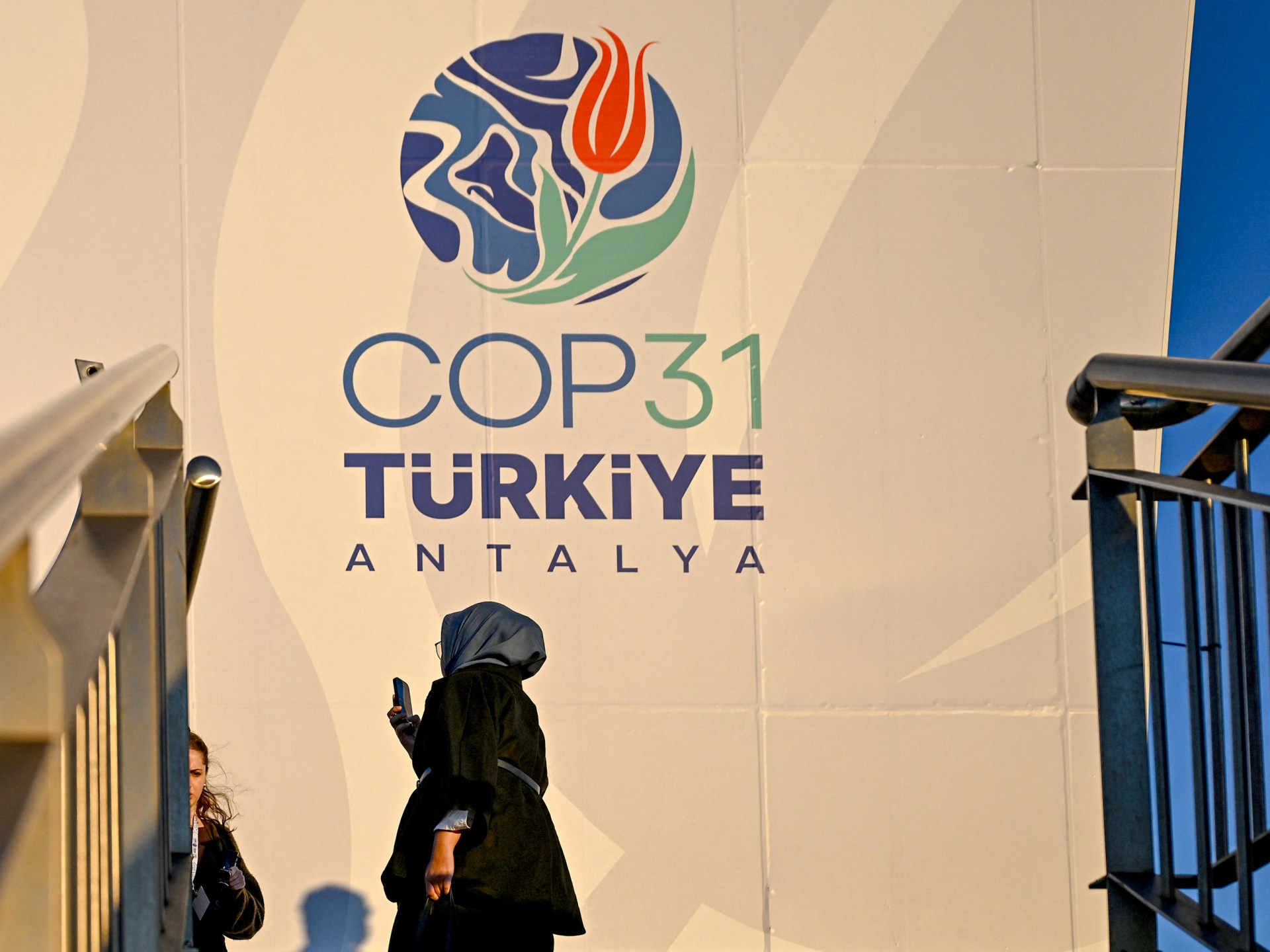
The UN climate conference COP31 opened in Antalya, Türkiye, on Monday alongside two forecasts that agree 2026 has been exceptionally hot but disagree on whether it is the hottest year ever measured.
The split
Berkeley Earth, the independent US research group, says it is 95 percent confident that 2026 will surpass the record set in 2024, even with two months of the year still to run, the Daily Mirror reported, carrying a BBC report.
“We have had a run of record warm years,” said Dr Robert Rohde of Berkeley Earth. “That is what we expect as global warming progresses… glaciers collapsing, record-breaking heatwaves and droughts.” He warned the trend was “just the start” and that there was “potential for much larger and much more dramatic changes down the line”.
The World Meteorological Organization is more cautious. Its own report, published Monday to inform the talks, forecasts that 2026 will be among the four warmest years on record rather than the warmest.
Both agree on what comes next: an unusually powerful El Niño will persist into 2027, pushing temperatures higher. Some scientists expect 2027 may be the hottest year on record, CNN reported.
WMO Secretary-General Celeste Saulo said the findings give “new meaning to the phrase off the charts”, adding: “We are supercharging our weather and El Niño will be a risk multiplier. Heatwaves, tropical cyclones, and rainstorms are intensifying faster than our historical baselines prepared us for.”
UN Secretary-General António Guterres said the world has “entered a new age of climate extremes”, with “a supersized El Niño colliding with a planet already superheated by manmade climate change”.
The year’s toll
The WMO analysis, covering January 2025 to September 2026, catalogues a series of extremes:
- Heatwaves across Europe over the summer, estimated to have killed more than 50,000 people — a figure scientists say is probably an undercount.
- A rock-ice avalanche on the Nepal–China border that killed more than 1,300 people, which scientists say was influenced by climate change weakening the ice binding Himalayan peaks.
- Flooding in Vietnam and a weak monsoon in India, damaging food production and livelihoods.
The EU’s Copernicus climate service confirmed on Friday that October was the hottest October on record.
A note on figures: the BBC report carried by the Daily Mirror describes the Himalayan disaster as a glacier collapse in Nepal killing more than 1,000 people, while CNN describes a rock-ice avalanche on the Nepal–China border killing more than 1,300. These appear to be the same event described with different framing and tolls.
What Türkiye wants from the summit
Türkiye has put electrification at the top of the agenda, launching a non-binding “35 by 35” Global Electrification Pledge to make electricity at least 35 percent of global energy demand by 2035, Al Jazeera reported. Electricity currently accounts for about a fifth of final global energy consumption, according to the International Energy Agency.
“This year’s energy crisis has shocked us… everyone now understands that energy that you import is energy that you do not control,” said COP31 president and Turkish environment minister Murat Kurum. “Electrification is the answer. It protects communities from volatile global markets and cuts emissions.”
Other priority areas include zero waste, methane reduction, climate-resilient cities, green industrialisation, education, and implementation of national climate plans. Climate advocates have criticised the electrification pledge on the grounds that it does not require the additional electricity to come from renewable sources.
The talks open against the backdrop of the US-led war on Iran, which Al Jazeera notes has underlined the world’s continuing attachment to fossil fuels.
UN climate chief Simon Stiell was expected to tell governments that “no single COP is a silver bullet” and that no single conference “can bridge the chasm between the science and reality”, while adding that “the urgency of this moment must drive us forward. Global heating is already costing the Earth.”
The shift from mitigation to adaptation
At earlier summits the focus was on cutting emissions. An increasing number of countries now face doing that while also adapting to weather extremes already arriving.
“We’re designed for a climate of the 20th century that we don’t live in any longer, so it’s going to change all aspects of our lives,” said Stephen Belcher, chief scientist at the UK Met Office.
Why this matters in Sri Lanka
Sri Lanka is among the countries most exposed to the pattern the WMO describes. The Department of Meteorology has confirmed that El Niño conditions are prevailing, and the capital is still dealing with the consequences of flash floods on 6 November that overwhelmed drainage designed for a fraction of the rainfall recorded.
Adaptation finance and drainage capacity — the issues at the centre of the inquest into Colombo’s floods — are the same categories under negotiation at Antalya.
Not reported
The filings do not say what, if anything, Sri Lanka is seeking at COP31 or who represents it. They do not state the size of the adaptation finance package under discussion, how many countries have joined the “35 by 35” pledge, or what the summit’s expected outcome document contains. No date is given for the WMO’s final determination of where 2026 ranks, which will not be settled until the year ends.