Miguel Ángel Félix Gallardo, the founder of the Guadalajara cartel and the man widely credited with building the modern Mexican drug trade, died in a private hospital in Guadalajara on Sunday at the age of 80, Al Jazeera reported, carrying a Reuters account.
Local security authorities said he had been transferred from prison to the hospital two days earlier and died of multiple organ failure at about 2 p.m. local time (20:00 GMT). He had been in custody since 1989 — 37 years.
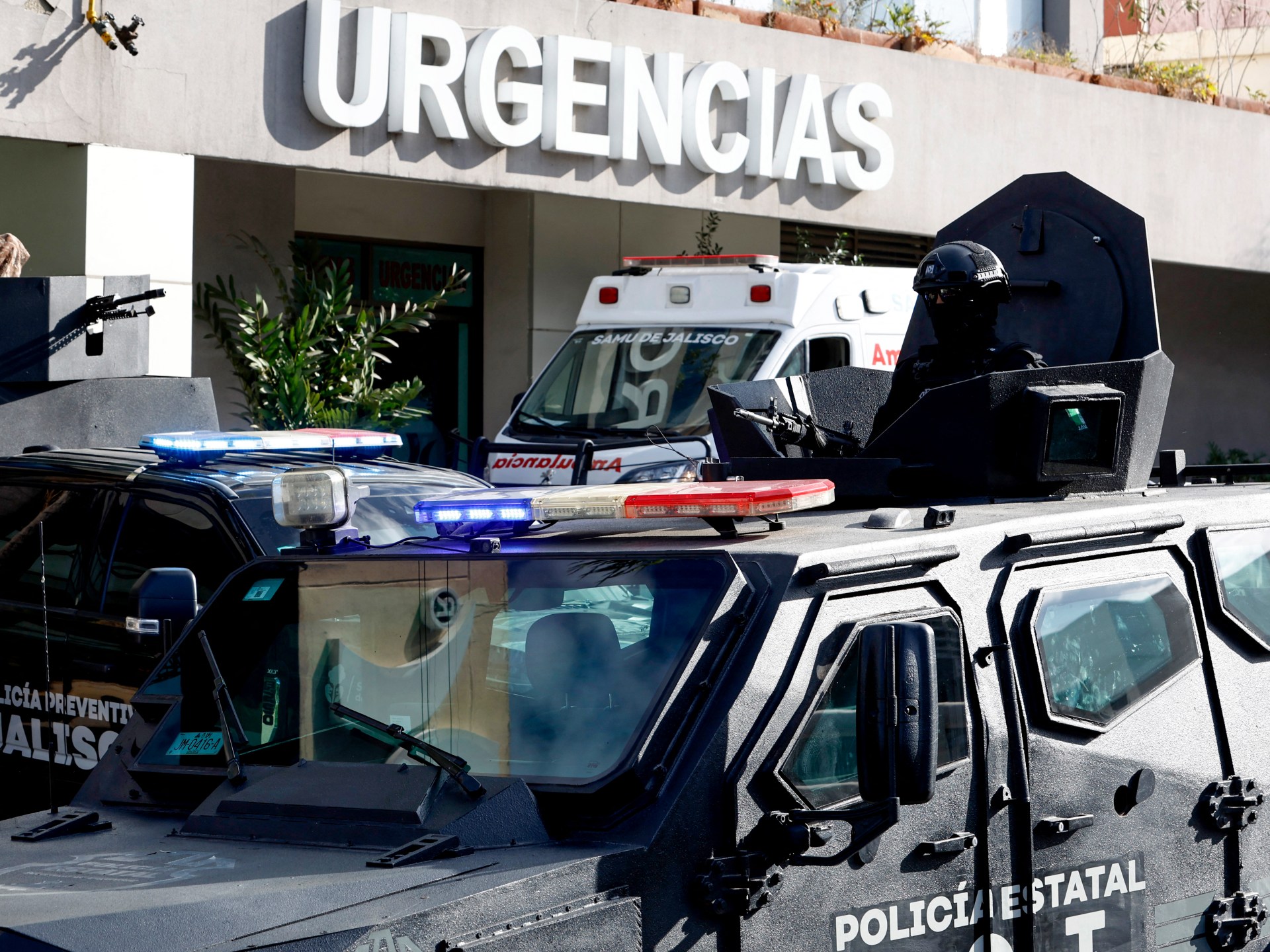
An AFP photograph taken outside the hospital on 13 November shows a Jalisco State Preventive Police armoured vehicle with an armed officer in its turret posted at the emergency entrance, the guard that accompanied his final admission.
The man who industrialised the trade
Known as “El Padrino” — the Godfather — and the “boss of bosses”, Félix Gallardo was, in Reuters’ description, an architect of Mexico’s modern drug-trafficking trade, which ignited turf wars that have since produced hundreds of thousands of deaths and disappearances.
He was born in 1946 in Culiacán, Sinaloa, and worked as a police officer and as a bodyguard to a state governor before turning to trafficking. He and his associates built their organisation in Guadalajara, the Jalisco state capital.
His central innovation was structural rather than criminal in the ordinary sense. His organisation was the first to move cocaine into the United States at scale by forging an alliance with the Colombian cartels — above all Pablo Escobar’s Medellín organisation — pairing Andean production with Mexican transport across the US border. The Daily Mirror’s report, carrying BBC material, says that at its peak an estimated 80% of all cocaine entering the United States came from the Medellín cartel, with Félix Gallardo’s organisation moving a major share of it.
Reuters records further operational innovations — light aircraft to move consignments across the continent, supported by fellow kingpin Rafael Caro Quintero — and an empire expanded through bribes that bought protection from corrupt officials. The BBC account goes further, saying the cartel at its height controlled entire police networks and state governorships and influenced Mexican politics directly.
Both accounts agree the model he created endures to this day.
Camarena, and the end of the operation
The organisation’s collapse began in 1985 with the kidnapping, torture and murder of Enrique “Kiki” Camarena, an undercover US Drug Enforcement Administration agent, and the Mexican pilot Alfredo Zavala Avelar.
Camarena had located and destroyed a vast cartel marijuana plantation in Chihuahua. His killing triggered what the BBC calls one of the largest manhunts the US government has ever mounted in North America, and it permanently changed US–Mexico security relations.
Félix Gallardo was arrested in 1989 and sentenced to 40 years on drug trafficking and weapons charges. While already imprisoned he faced a separate prosecution over the Camarena and Zavala killings, and in 2017 a federal court convicted him and imposed a further 37-year sentence. He was held in a maximum-security prison in western Jalisco.
What came next
From the break-up of his organisation after his arrest emerged the Sinaloa cartel, led by Joaquín “El Chapo” Guzmán — who, the BBC account notes, had been introduced to Félix Gallardo in the 1980s and put in charge of logistics for the operation. Guzmán was sentenced to life imprisonment in the United States in 2019.
Where the two accounts differ
The filings this desk could reach do not agree on two points, and neither resolves the other.
- Birthplace. Reuters states plainly that he was born in 1946 in Culiacán, Sinaloa. The BBC account, by contrast, says he died in hospital in “his native Guadalajara”. Both cannot be right. Reuters makes the more specific claim, giving a year and a state, and Culiacán is the account generally on record; it is used here, with the divergence noted rather than silently resolved.
- House arrest. The BBC account says that, in ill health, he was granted house arrest in 2022, but that technical problems with electronic ankle monitoring prevented his transfer. Reuters says only that his lawyers repeatedly sought house arrest on the grounds of his deteriorating health, and that he remained in a maximum-security prison. The two are not strictly contradictory — an order that was never executed could be described either way — but no filing states which it was.
Why it registers here
This is not a Sri Lankan story, but the trafficking architecture Félix Gallardo built — specialised production in one country, contracted transport through another, couriers carrying the final leg — is the model whose descendants reach this country through the Southeast Asian routes. On the same Monday this obituary was filed, three passengers were arrested at Bandaranaike International Airport with more than 12 kg of Kush brought in from Thailand. The connection is one of method, not of organisation.
Not reported
Neither filing gives the hospital’s name, says what condition prompted the transfer from prison, or states whether any relatives were present. Neither reports a statement from the Mexican government, the DEA or the Camarena family, and neither says what becomes of the remainder of his sentences or where he is to be buried.
Sourcing note
Two verified newsrooms, carrying two different wires. Al Jazeera’s account is a Reuters report; the Daily Mirror’s is BBC material republished in Colombo. This desk fetched and read both pages directly. Al Jazeera timestamps its filing at 00:51 GMT on 16 November, the Daily Mirror at 09:09 Colombo time the same day. Details attributed above to “Reuters” appear only in the Al Jazeera page, and those attributed to the BBC only in the Daily Mirror page; no figure has been merged across the two.