The Asian Development Bank’s Senior Country Economist for Sri Lanka, Liliya Aleksanyan, warned that the rupee’s slide against the dollar is amplifying the cost of oil imports and feeding imported inflation just as the Hormuz crisis drives global energy prices higher.
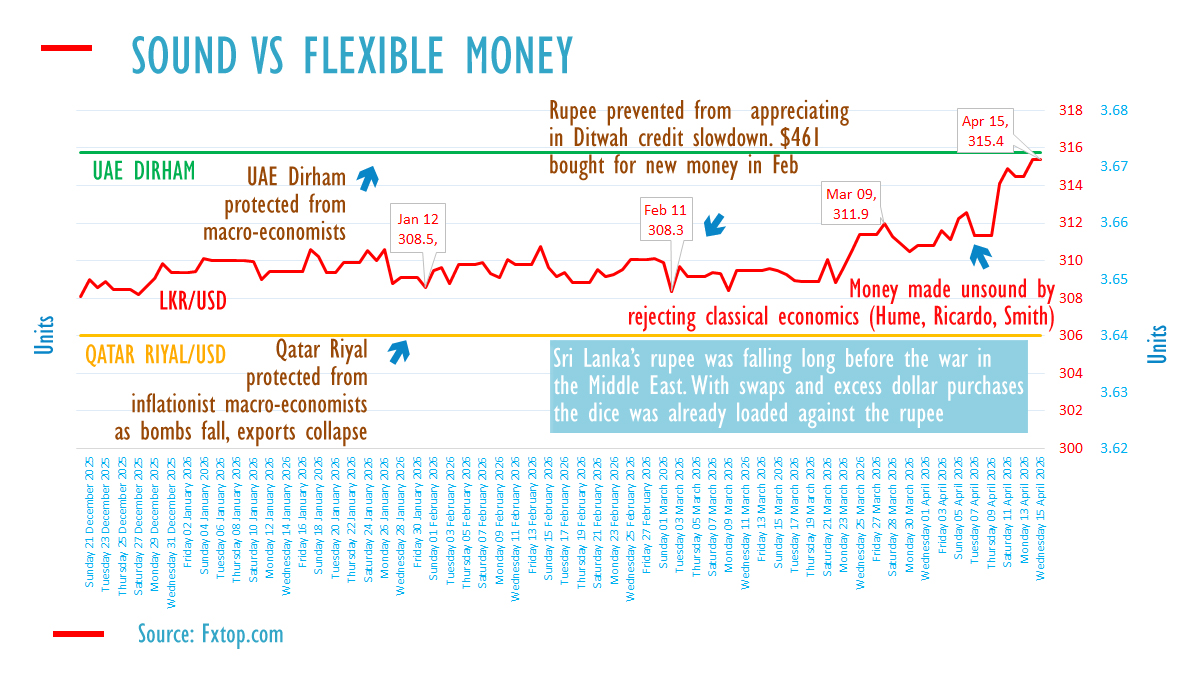
“Currency depreciation, as you know, amplifies the cost of oil imports, and that can also add to imported inflation pressures for the country,” Aleksanyan told reporters after the bank released its 2026 economic outlook on Thursday. The rupee has weakened from 300 to 315 to the US dollar after the Central Bank allowed it to depreciate amid excess liquidity created through buy-sell swaps.
The ADB expects inflation to rise to 5.2 percent in 2026 on higher energy prices and to remain around 4.6 percent the following year. Aleksanyan said the pass-through of a weaker rupee to rupee-denominated import prices hits lower-income households hardest because it raises the cost of food and fuel across the board.
EconomyNext reported that the Central Bank purchased $461 million in February as credit slowed in the wake of Cyclone Ditwah, and that “heavy moral suasion” has been deployed as the rupee came under pressure in April. Analysts cited by the outlet said a central bank that buys dollars in the market but refuses to sell them back risks creating the conditions for further depreciation.
Aleksanyan’s warning compounds existing pressure on Sri Lanka’s macro picture. HSBC Chief Executive Georges Elhedery said this week that Sri Lanka may have paid up to $286 a barrel for oil during the crisis — a premium that rupee weakness translates directly into higher rupee import bills, fuel prices and consumer costs.
The ADB separately flagged a 0.8 percentage-point drag on Sri Lanka’s 2026 growth from the US-Iran conflict, underscoring the compounding nature of the currency and commodity shocks confronting the economy.