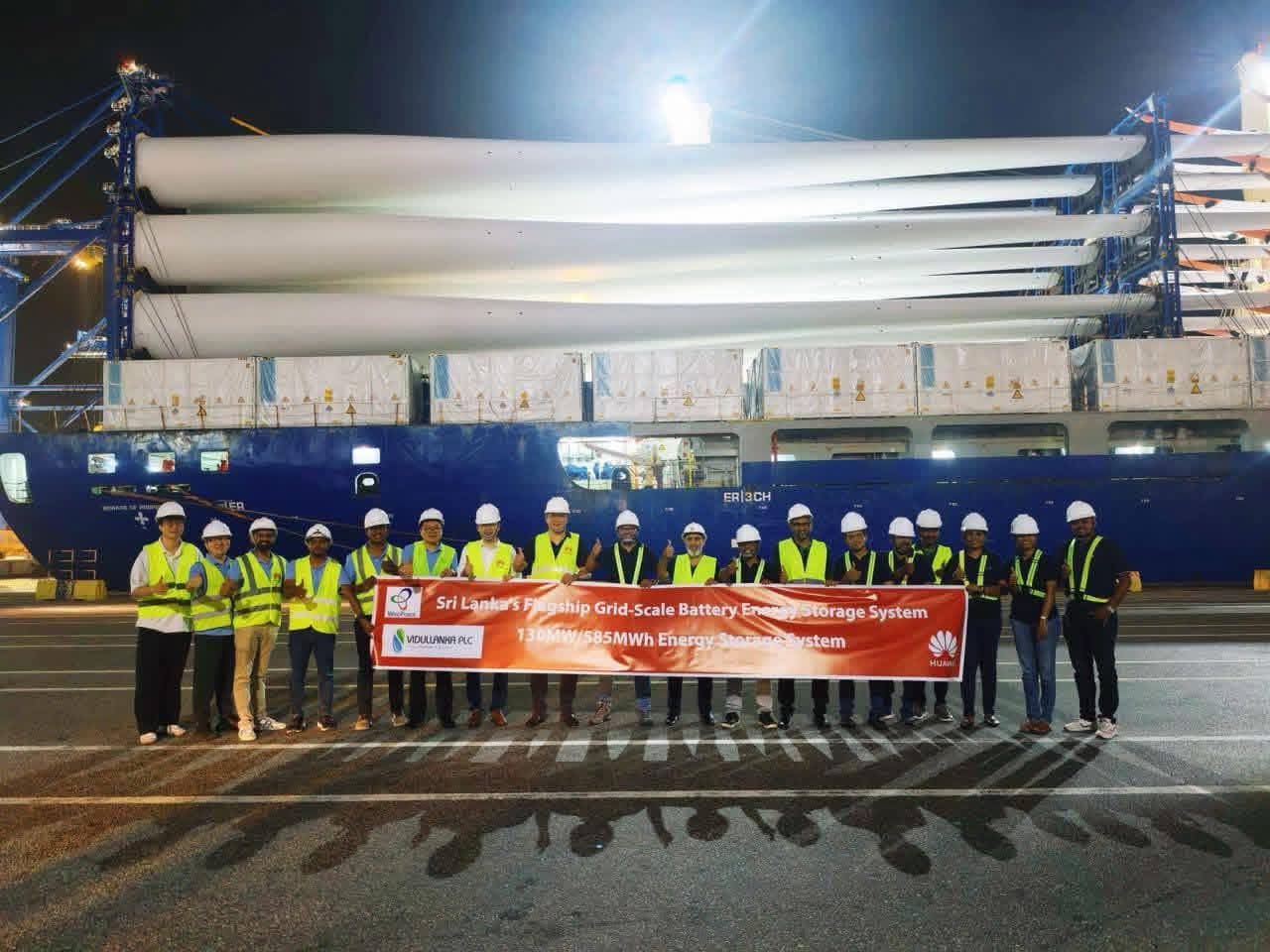
Sri Lanka has received the second batch of its Battery Energy Storage System (BESS) project, with a 60MW system unloaded at the Port of Colombo on Friday night. Combined with a 20MW system delivered earlier this month, a total of 80MW of the planned 160MW capacity has now arrived in the country, Deputy Minister of Power Arkam Ilyas said.
The first 20MW batch arrived at the Galle and Matara substations in late May. The wider project will deploy 16 storage facilities of 10MW and 40MWh each across 16 grid substations: Kilinochchi, Vavuniya, Polonnaruwa, Valachchenai, Ampara, Vavunathivu, Monaragala, Mahiyanganaya, Chunnakam, Beliatta, Galle, Puttalam, Hambantota, Old Anuradhapura, Mahawa and Norochcholai.
Ilyas said the systems will capture excess solar generation during the day and release it into the grid during evening demand peaks. He cited a cost advantage: electricity from diesel generation runs at about Rs. 115 per unit, while energy supplied through the BESS is estimated at around Rs. 35 per unit.
The government says the project will improve grid frequency and voltage control, reduce reliance on diesel peakers, and support Sri Lanka’s target of sourcing 70 percent of electricity from renewables by 2030. The Ministry of Power and Energy, in a separate statement carried by NewsFirst, said total investment in the 160MW programme exceeds Rs. 40 billion and that displacing diesel peakers with the storage fleet is expected to save roughly USD 2.6 million per month in foreign exchange now spent on fuel-based generation. The ministry put the post-BESS unit cost at about Rs. 30 against the prevailing Rs. 115 for diesel-fired generation.
Beyond the 160MW project, the government has approved a 300MW battery storage expansion that also includes a 100MW facility at Kolonnawa and separate 250MW and 50MW projects under evaluation. The battery build-out runs in parallel with the 150MW Kondachchi wind and BESS tender co-financed by the ADB and IFC-backed storage projects by WindForce.