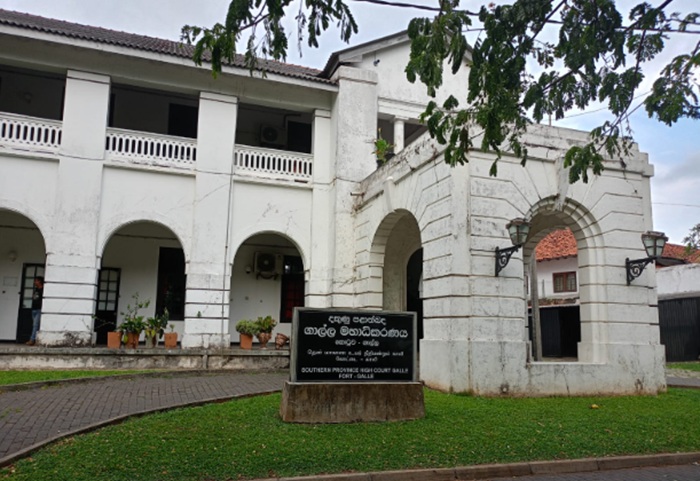
Cabinet on Monday approved the relocation of the High Court and Magistrate’s Court out of the UNESCO-listed Galle Fort to a new judicial complex at Beligaha, on the outskirts of Galle. The vacated heritage buildings inside the Fort will be repurposed for tourism use through public-private partnerships.
The decision is part of the Galle Revival Project under the Greater Galle Development Plan (2021–2030), which designates the seventeenth-century Dutch fortifications as a World Heritage Tourism Zone. The Urban Development Authority will lead the integrated project, conserving archaeologically significant structures while converting them into visitor attractions.
Foreign Minister Vijitha Herath, briefing reporters on the cabinet decision, said more than 300,000 tourists visit the Galle Fort each year. “However, because some roads in the Galle Fort are congested during the day and isolated at night, tourists have had to face obstacles,” he said.
The relocation is expected to ease traffic congestion inside the Fort, reduce administrative use of heritage buildings and improve the visitor experience at one of Sri Lanka’s most-photographed colonial sites.
The Galle Fort, built by the Portuguese in 1588 and substantially expanded by the Dutch in the seventeenth century, was inscribed as a UNESCO World Heritage Site in 1988. It remains one of the best-preserved European-built sea fortifications in South Asia.
The proposal was submitted by the Minister of Urban Development. Implementation timelines and the cost of the new Beligaha court complex were not disclosed in initial reports.