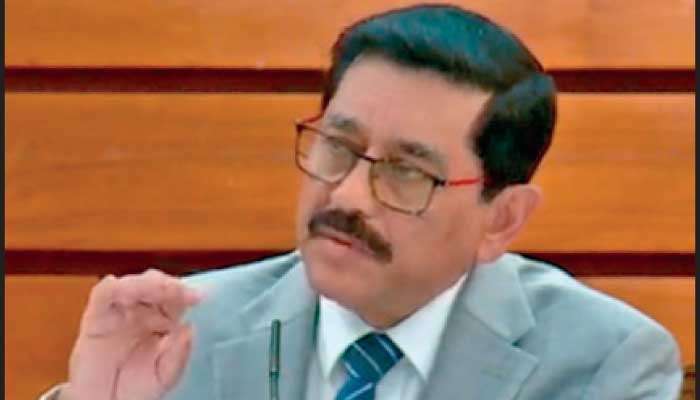
Central Bank of Sri Lanka Governor Dr. Nandalal Weerasinghe has explicitly rejected the notion that the regulator’s role is to drive economic growth, productivity or foreign direct investment, in one of the clearest public attempts yet to draw institutional boundaries around the bank’s post-crisis mandate.
“I want to make it very clear. The CBSL would not promote growth or productivity of the economy,” Weerasinghe told reporters during the release of the bank’s Economic Review 2026, the Daily FT reported. He said the policy instruments needed to lift productivity — digitisation, industrial upgrading and structural reforms — sat with the government, specialised institutions and the private sector, not with the Central Bank.
The remarks come under the new Central Bank Act, which confined the CBSL’s mandate to preserving price stability and financial system stability following Sri Lanka’s 2022 economic collapse. “What we do is maintain price stability and financial system stability,” Weerasinghe said, arguing that macroeconomic stability creates the conditions necessary for private investment.
On foreign direct investment, the Governor said monetary stability alone was insufficient to attract sustained inflows, citing legal certainty, policy consistency and institutional quality as parallel requirements.
The Governor used the same press conference to distance the CBSL from supervisory responsibility over the USD 2.5 million Treasury phishing fraud and the Rs. 13.2 billion NDB internal fraud, saying the bank’s role as banker to government was limited to executing properly received payment instructions, and that monitoring individual transactions within commercial banks was not the CBSL’s responsibility.
On the next monetary policy review, Weerasinghe said decisions would remain data-driven and empirical rather than guided by short-term market expectations.