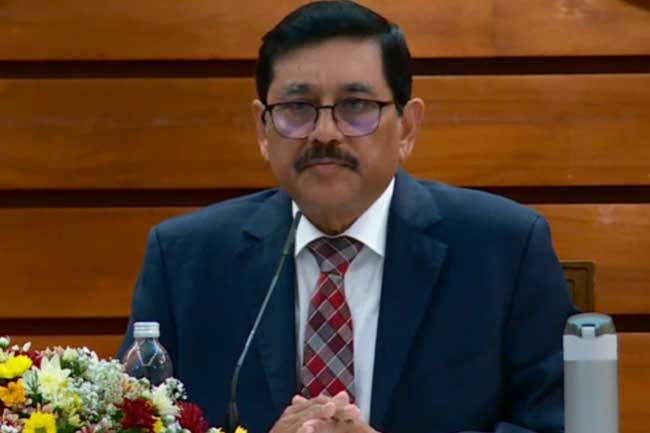
The Sri Lankan rupee’s depreciation this year is being driven by the Middle East conflict and the resulting surge in global oil prices, not by a domestic economic crisis, Central Bank Governor Dr. Nandalal Weerasinghe said at a media briefing on Monday (18).
Rising foreign exchange requirements for oil imports were placing additional pressure on the currency, the Governor said, in the first formal central bank framing of the slide as a global rather than home-grown shock.
Weerasinghe said the Sri Lankan rupee had depreciated 4.8 percent so far in 2026, lower than several regional peers. The Indian rupee weakened 6.4 percent over the same period, the Nepalese rupee 6.2 percent, and the Indonesian rupiah 5.2 percent.
“This is not a situation unique to Sri Lanka,” the Governor said, framing the move as a worldwide shock to oil-importing economies.
He contrasted current conditions with 2022, when the sharp depreciation reflected domestic economic mismanagement during the foreign exchange crisis. The present slide, he said, reflected external pressures from global commodity markets rather than internal imbalances.
Weerasinghe cautioned that interpreting economic strength solely through exchange rate movements was misleading, and pointed to underlying indicators including reserves, inflation and growth.
The remarks come on the same day Weerasinghe told Parliament’s Committee on Public Finance that the Ceylon Petroleum Corporation had spent US$1 billion on petroleum imports in just the first four months of 2026, matching most of 2025’s full-year bill. The rupee touched Rs. 334 to the US dollar at commercial bank counters earlier this month as the oil import shock fed through.
The Governor’s comparative framing aligns with earlier May commentary from the central bank attributing the 2026 slide to external rather than domestic factors.