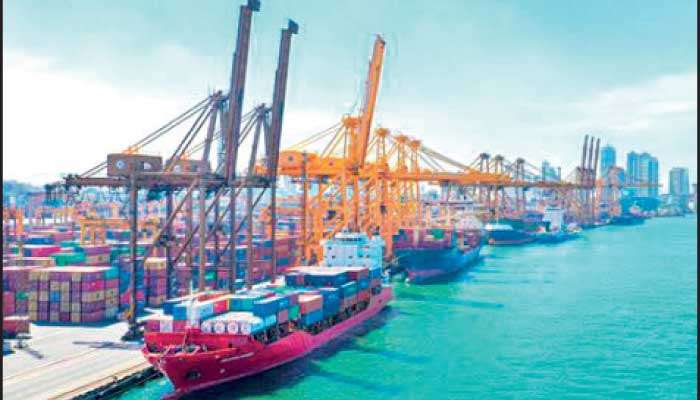
The Port of Colombo (POC) handled 761,096 Twenty-foot Equivalent Units (TEUs) in April 2026, up 22% from 623,719 TEUs in April 2025, the Daily FT reported on Monday.
Cumulative container throughput from January to April 2026 reached 2,915,004 TEUs, a 13.9% — or 355,157 TEU — increase over the 2,559,847 TEUs handled in the same period a year earlier. Transhipment cargo continued to account for more than 80% of total operations, with bulk cargo imports from India a further component. In 2025, the POC handled approximately 8.2 million TEUs.
The Sri Lanka Ports Authority (SLPA) is preparing to call for Expressions of Interest before the end of 2026 for Phase II of the West Container Terminal (WCT), which is expected to add more than 3 million TEUs of annual handling capacity. The expansion is intended to consolidate Colombo’s position along the East-West maritime trade route.
The Asian Development Bank-funded National Port Master Plan is expected within the next year, providing a framework for the future development of all commercial ports. At the Colombo East Container Terminal (CECT), Phase I operations are already underway with four newly commissioned gantry cranes; procurement and construction for the remaining phases are being accelerated.
The port’s long-term capacity was strengthened by the Colombo South Port breakwater project, built at an investment of about US$ 400 million, which enables accommodation of ultra-large container vessels. The April growth comes against a global trade backdrop disrupted by Middle East shipping risks, with Indian and Sri Lankan transhipment volumes increasingly tied to regional re-routing decisions. The broader maritime hub ambition also includes the adjacent Port City Colombo vertical development phase targeting $15 billion in investment.